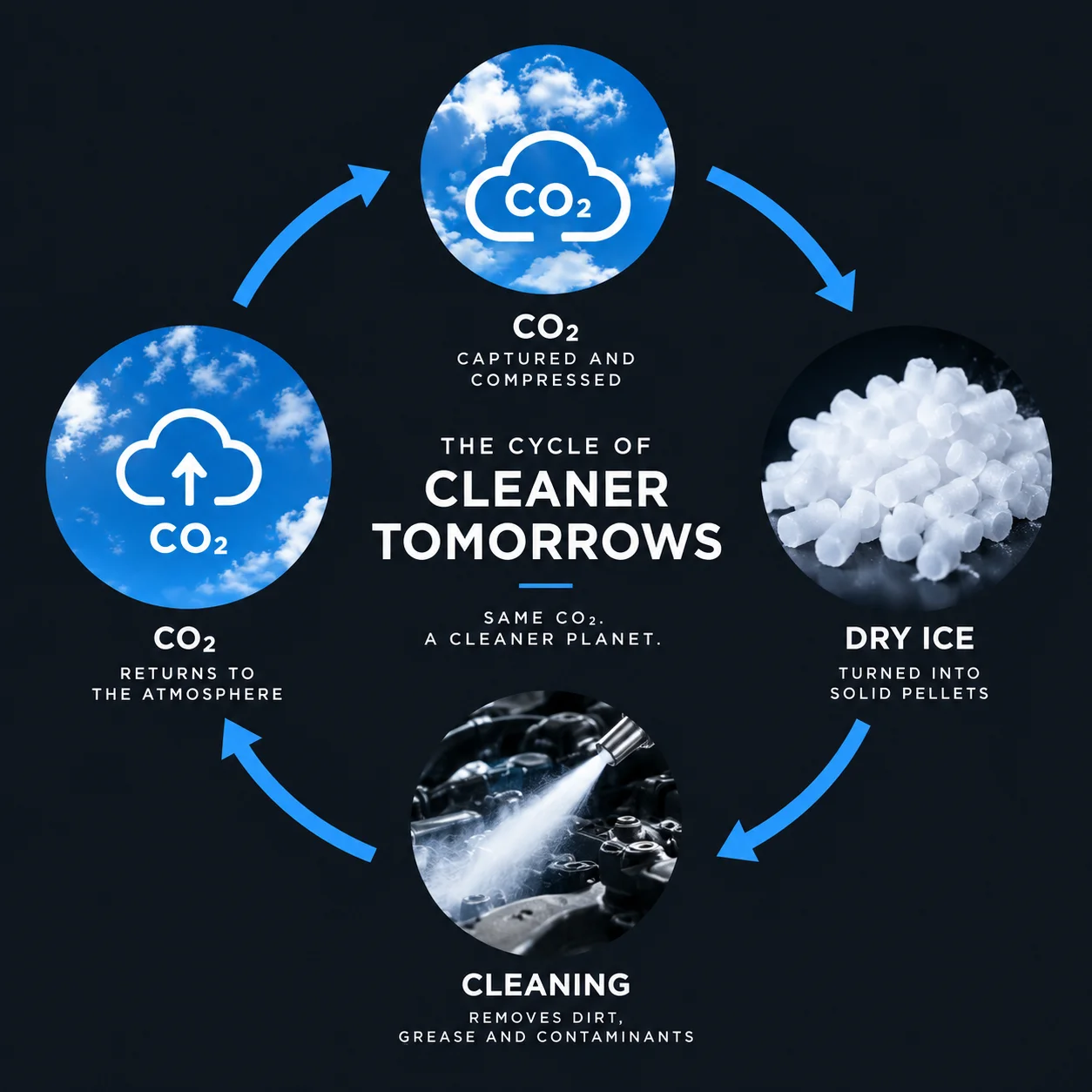
Frozen CO₂ pellets accelerated at high speed lift contaminants and then vanish — sublimating straight from solid to gas. No grit, no water, no chemical residue. Just a clean, original surface.
/ Precision
/ Preservation
/ Magic
The benefits of cryogenic cleaning
Why dry ice is our method of choice for engines, chassis, underbodies and restoration work.
Despite its impressive cleaning power, dry ice blasting is a non-abrasive process that won't grind away or wear down surfaces when performed correctly.
Dry ice cleaning is significantly faster than many traditional cleaning methods. It can remove built-up grease, oil, road grime and contaminants in a fraction of the time it would take to clean by hand.
Dry ice cleaning is one of the most environmentally friendly cleaning methods available. The dry ice used is made from recycled carbon dioxide and sublimates into gas on contact.
Dry ice cleaning reduces the need for harsh chemical cleaners, degreasers and solvents, creating a cleaner and safer working environment.
One of the biggest advantages of dry ice cleaning is that it creates no water, no chemicals and virtually no secondary waste.
Dry ice vs other blasting methods
Every blasting method has its place. The real difference is what each one takes off your vehicle, and what it leaves behind. Here's how dry ice compares with the three methods it's most often weighed against.
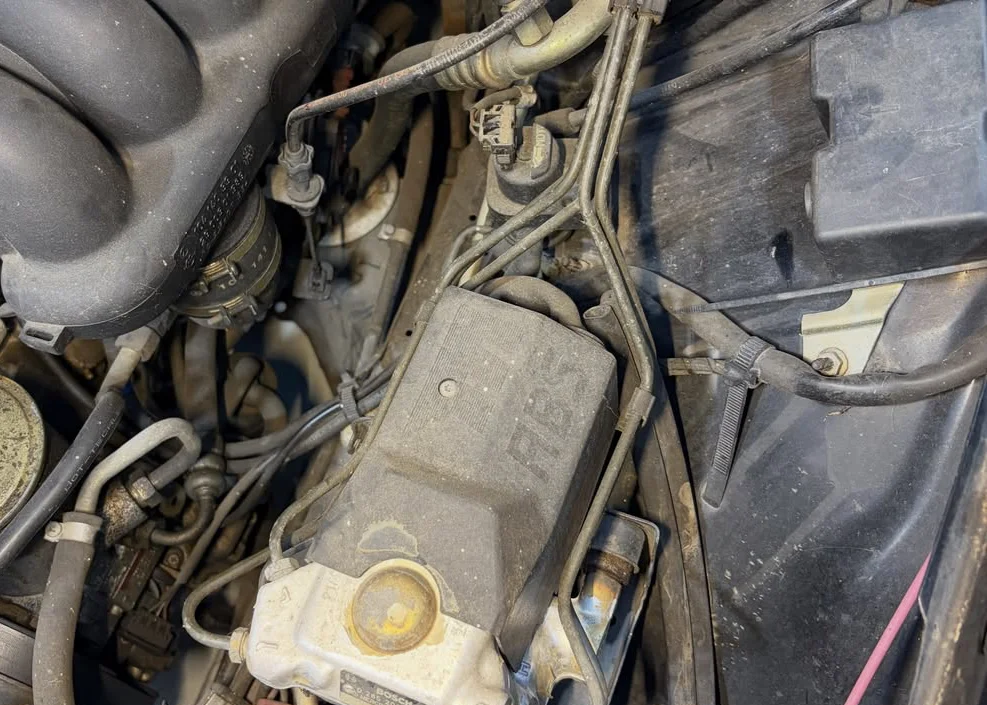
Before
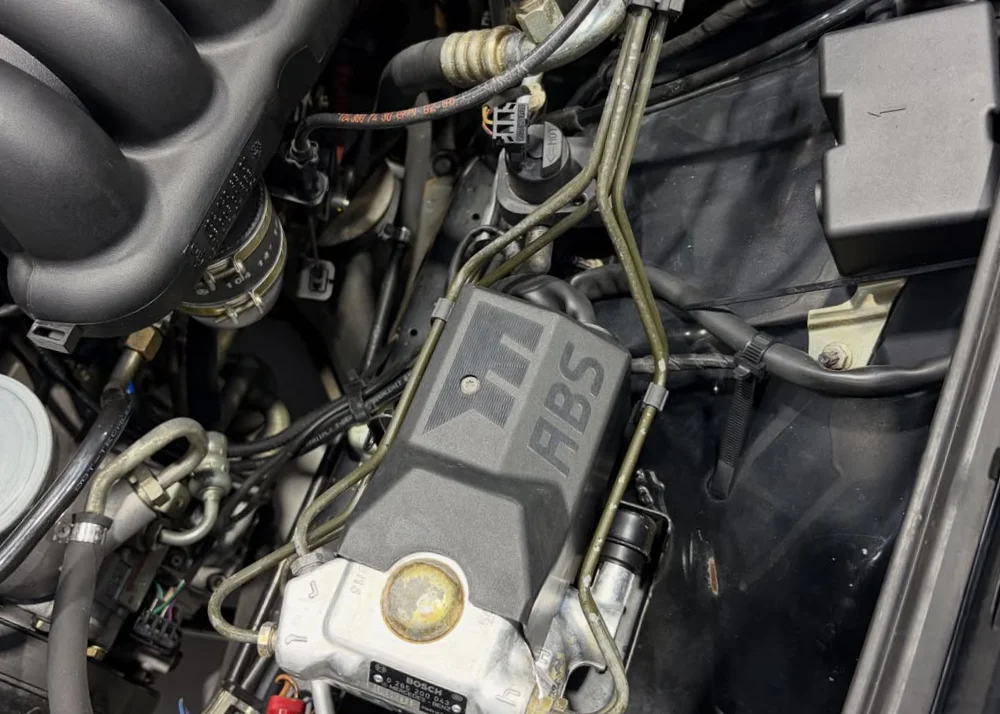
After
Best for cleaning and preservation
01
Non-abrasive when correctly applied, helping preserve original paint, metal and factory coatings.
02
Adds no water, reducing moisture-related corrosion concerns.
03
Turns straight into gas, leaving no blasting media behind.
04
Lifts built-up grease, oil, grime and underbody contamination.
05
Makes it easier to inspect the vehicle's true condition.
// engine bay : before / after dry ice
/ Alternative 01
Blasts with a mild abrasive.
+
Can be gentle on many automotive surfaces.
−
Leaves soda residue that needs cleaning away, often with water.
−
Residue collects in crevices and complicates clean-up.
−
May need extra surface preparation before certain coatings.
Dry ice advantage
No residual blasting media and no rinse water required.
Where soda still fits: some delicate paint-stripping jobs.
/ Alternative 02
Aggressively removes rust, paint and old coatings.
−
Can damage delicate components, thin panels and existing finishes.
−
Leaves abrasive grit that can become trapped in seams, cavities and mechanical components.
−
Requires significant containment and clean-up.
Dry ice advantage
Cleans contamination without the same abrasive action, so it's better suited to preserving sound surfaces on an assembled vehicle.
Where sand still fits: stripping parts back to bare metal.
/ Alternative 03
Uses water with abrasive media to clean or refine surfaces.
+
Can produce an excellent finish on suitable components.
−
Introduces moisture and leaves slurry or media residue to manage.
−
Often better suited to individual components than an entire assembled vehicle.
Dry ice advantage
Keeps the process dry and avoids wet-blasting slurry, which matters around complex assemblies where moisture and clean-up are concerns.
Where vapour still fits: refining the finish on individual components.
Not sure which method suits your vehicle? Tell us what you're working on and we'll give you a straight answer.
Ask usA better clean, without the mess left behind.
We think there's a smarter way to clean a vehicle. One that's kinder to your car and to the place we all live in. Traditional methods lean on water blasting, solvents, degreasers and abrasive grit, and every one of them leaves something behind. Dry ice cleaning doesn't. No water, no nasty chemicals, no blasting media to clean up afterwards.
We take reclaimed CO₂, turn it into dry ice, and fire it at the surface. On impact it simply vanishes back into the air, so the only thing left is the dirt, grease and grime we've lifted off. That means no contaminated wastewater running off into the ground, and nothing hazardous to dispose of.
It's gentle, too. Because there's no grit or scrubbing involved, we can clean right into the tricky spots without wearing down your components or finishes.
The upshot? A proper clean that uses no water, no chemicals and creates next to no waste. Better for your car, better for our patch of the world, and a cleaner way to keep things running the way they should.