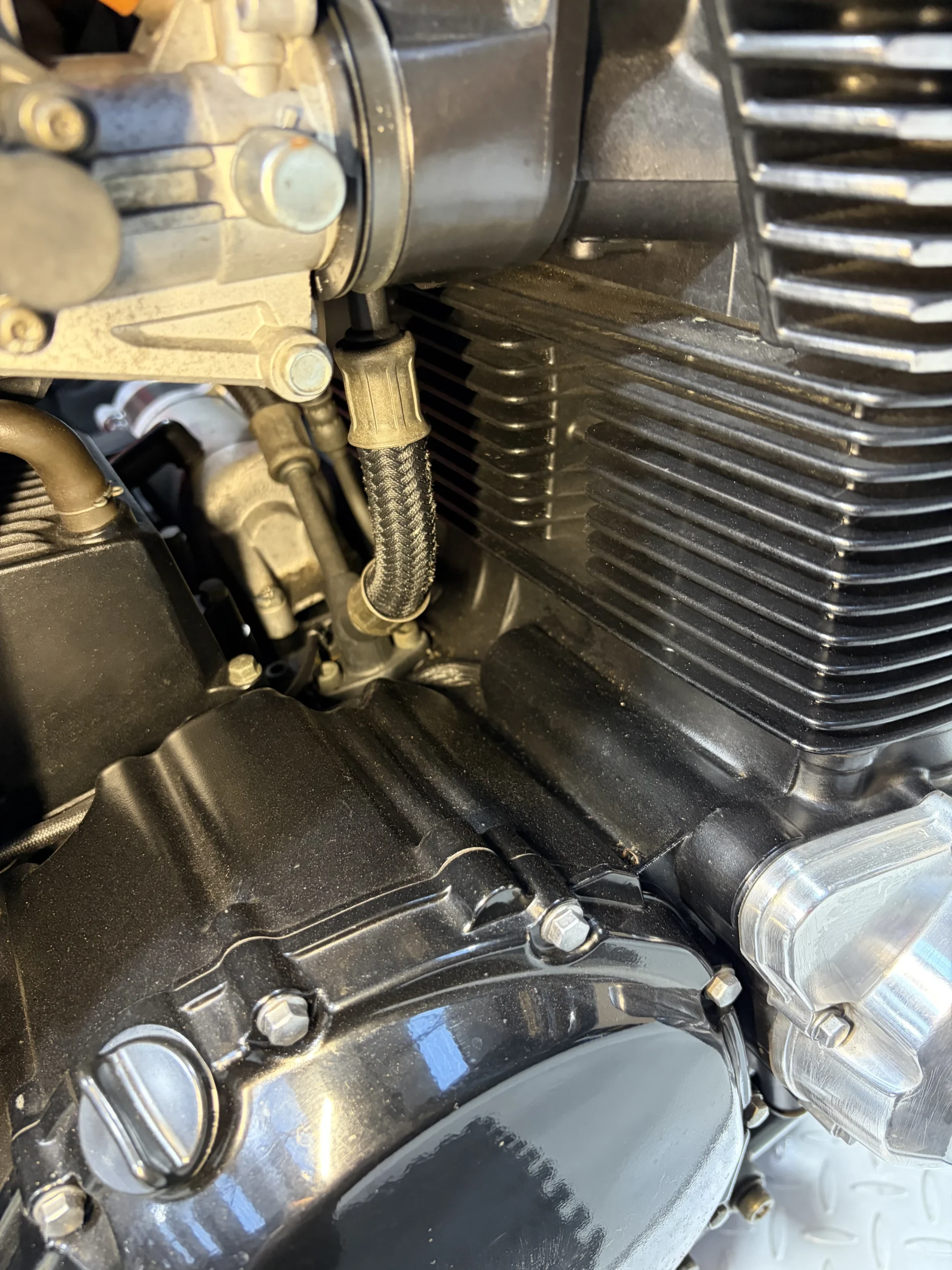
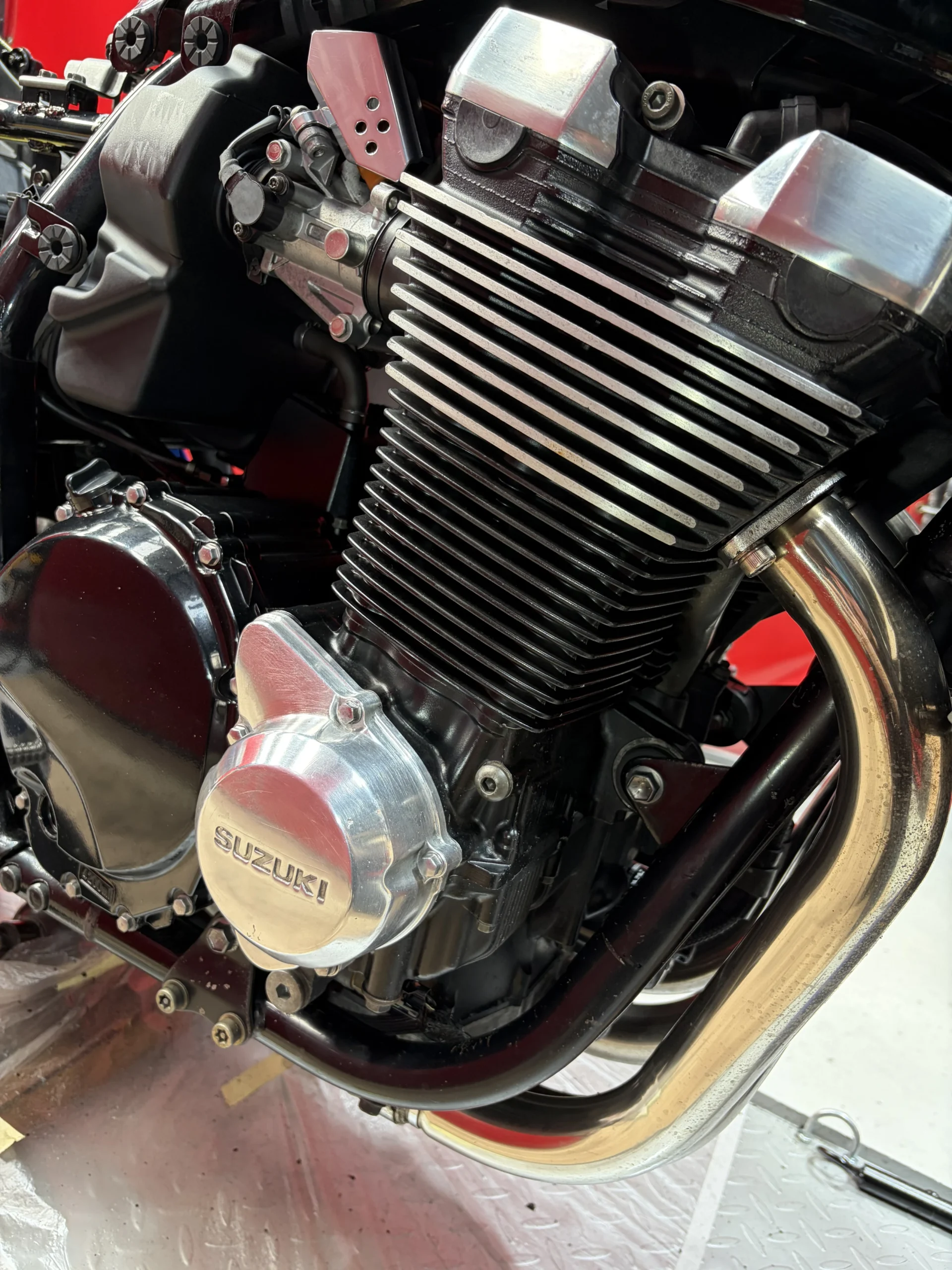
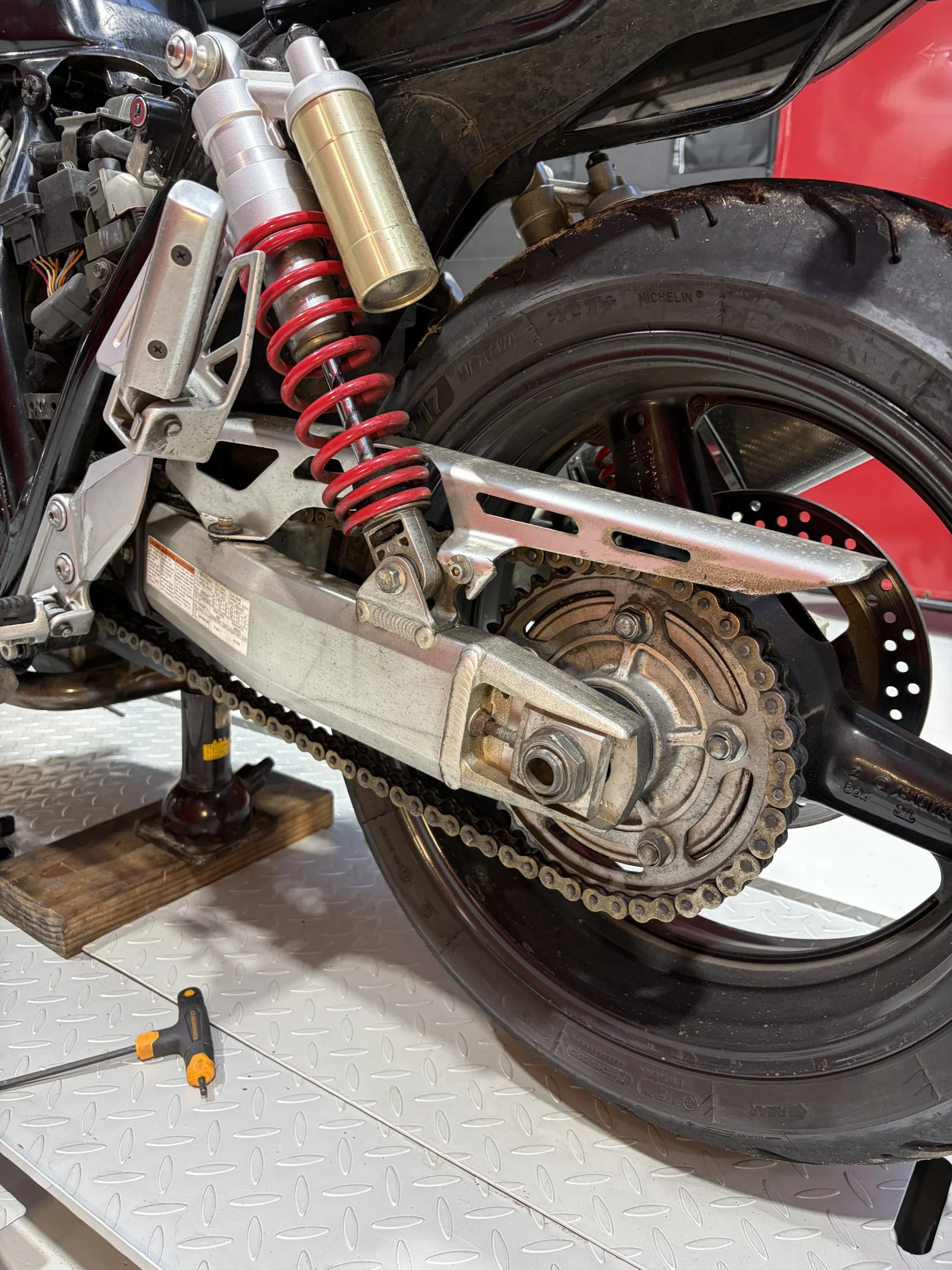
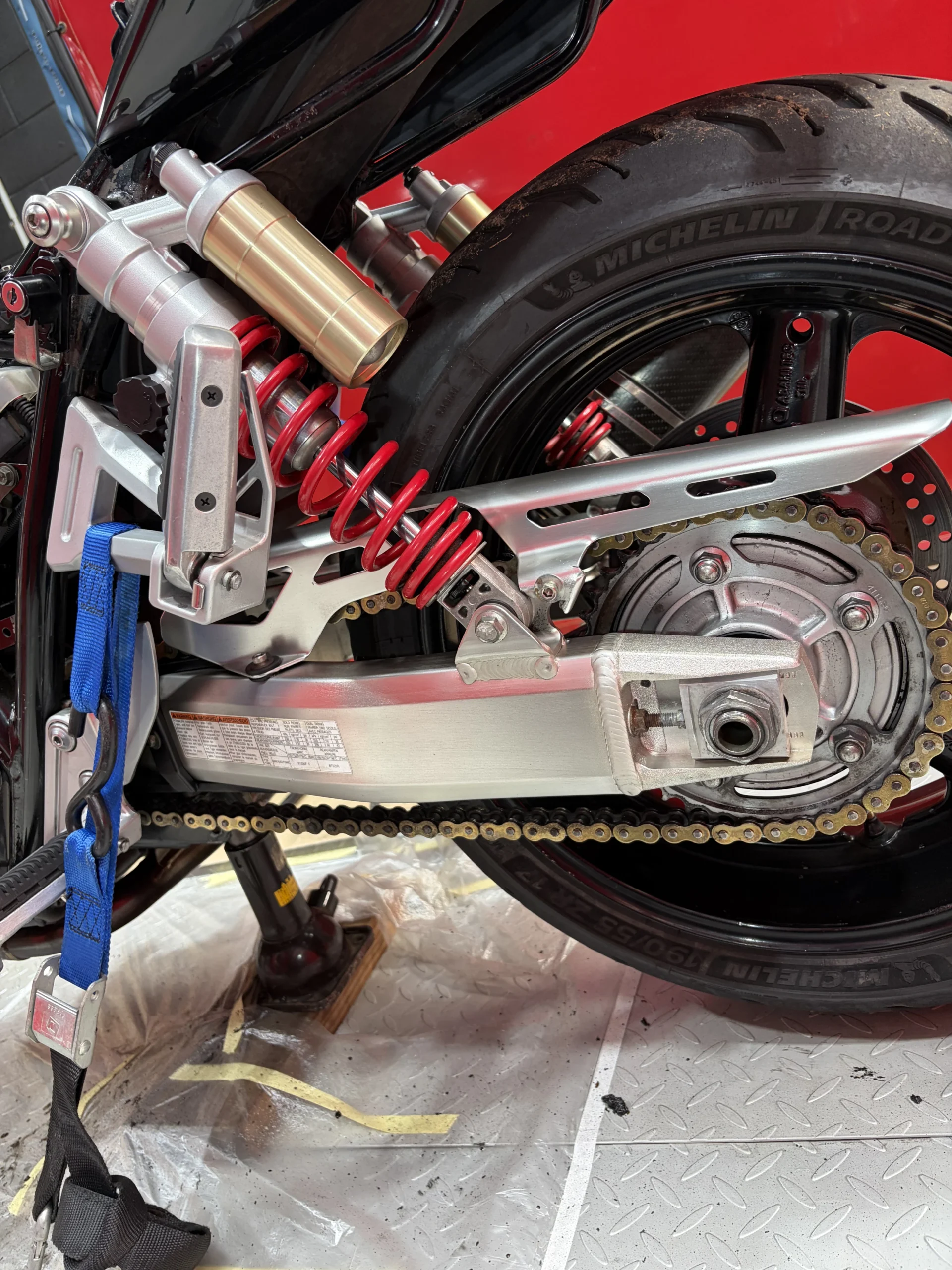
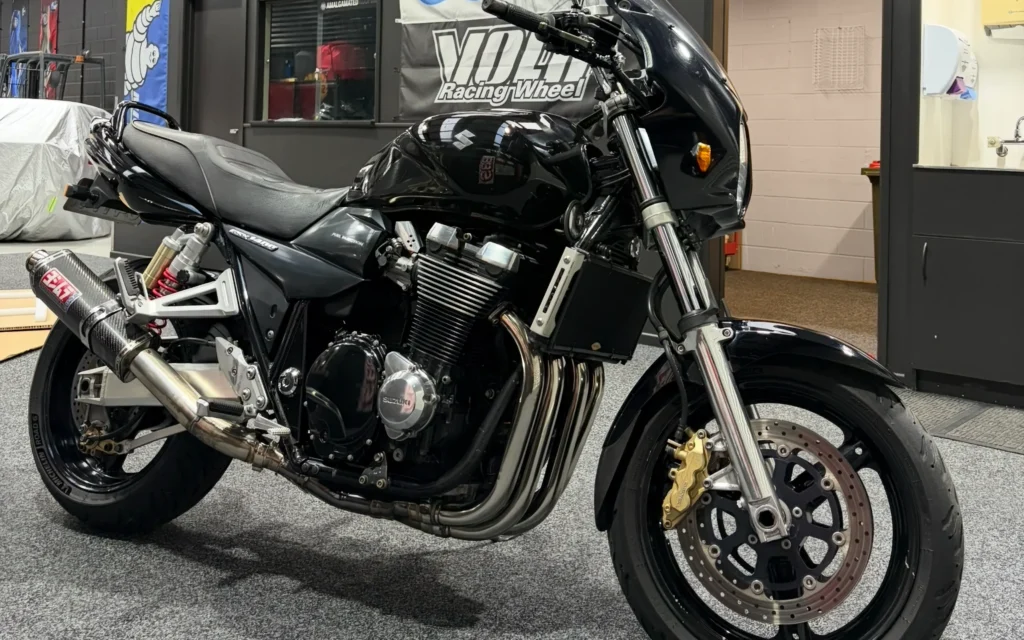
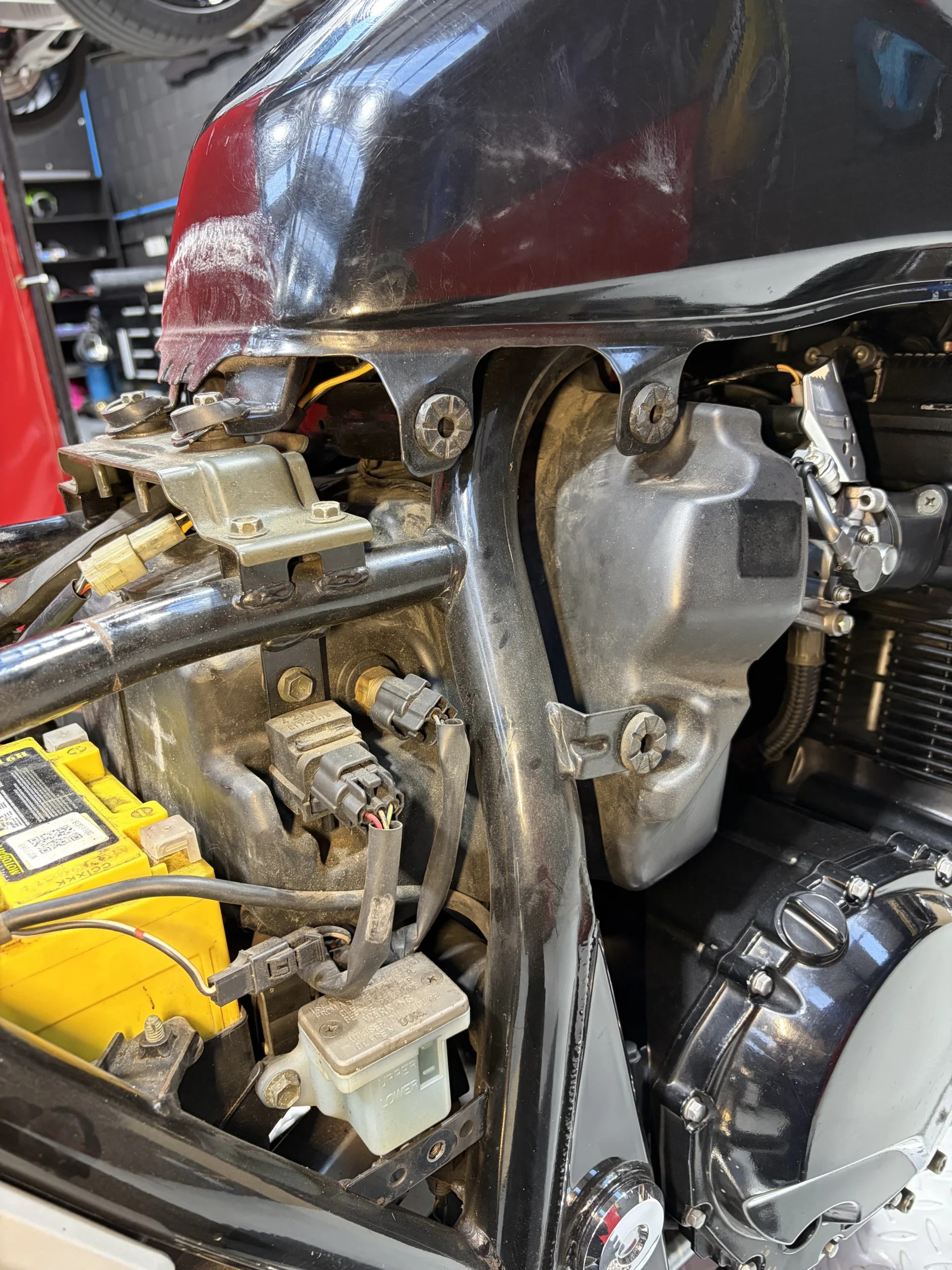
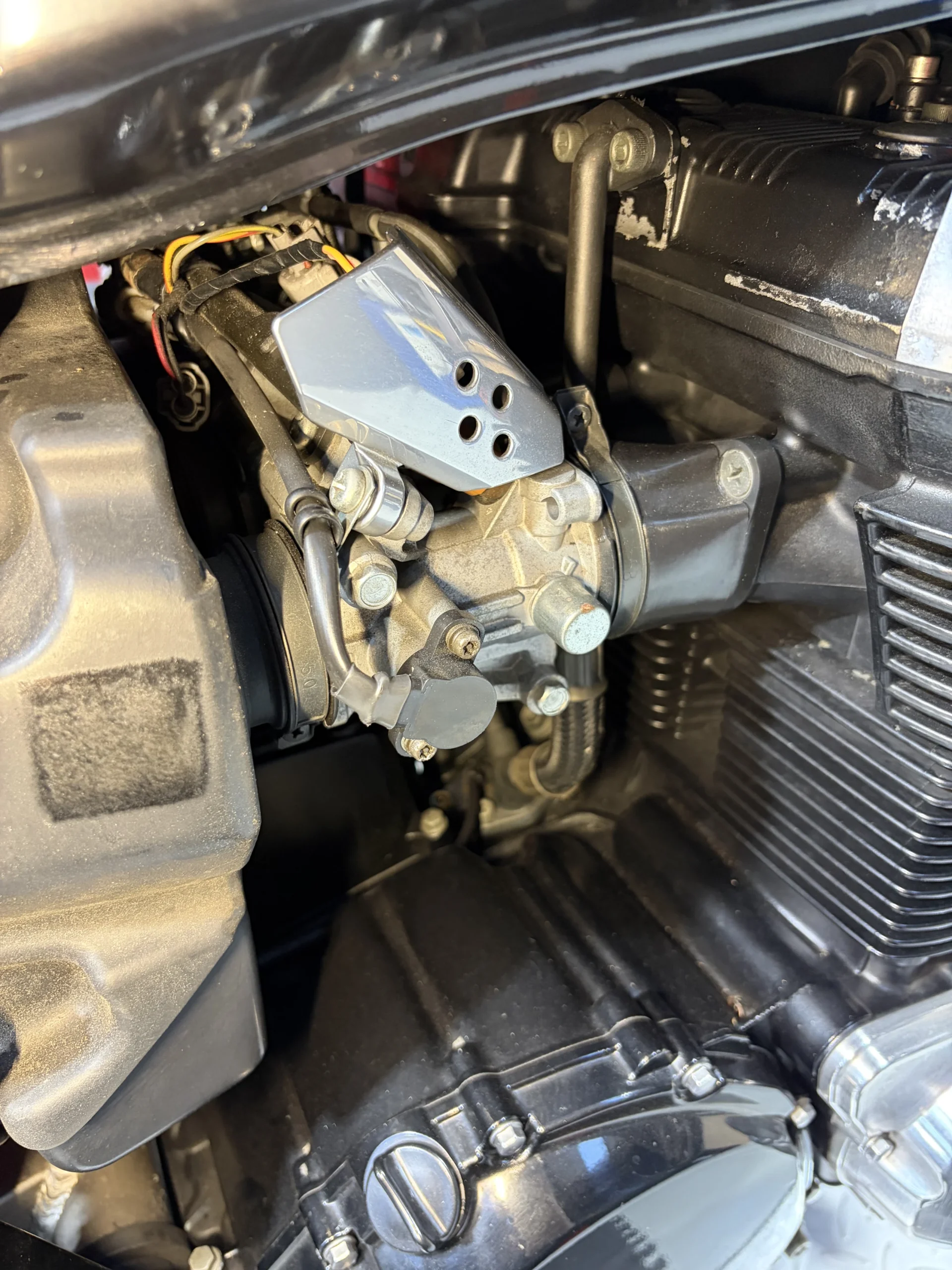
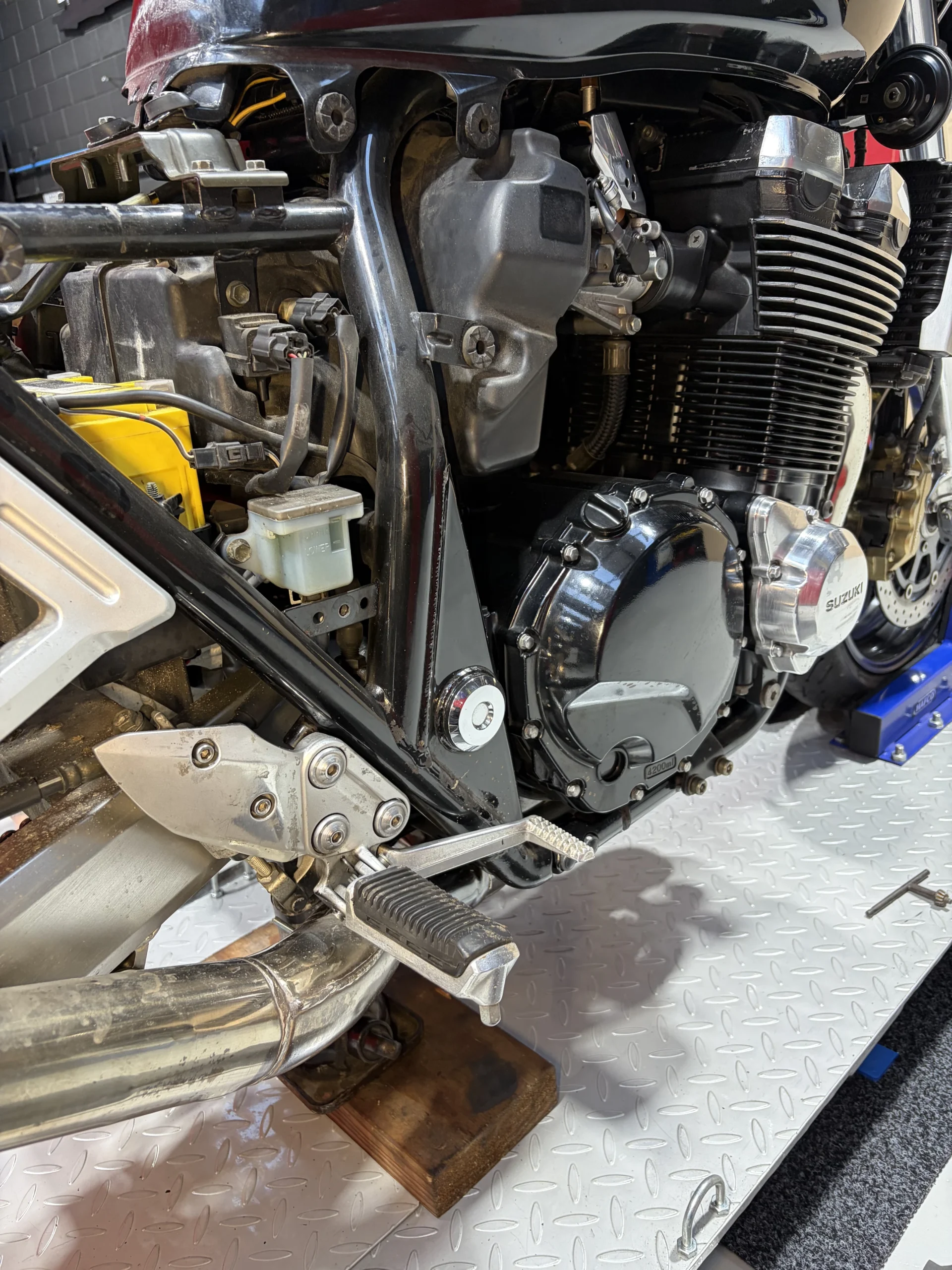
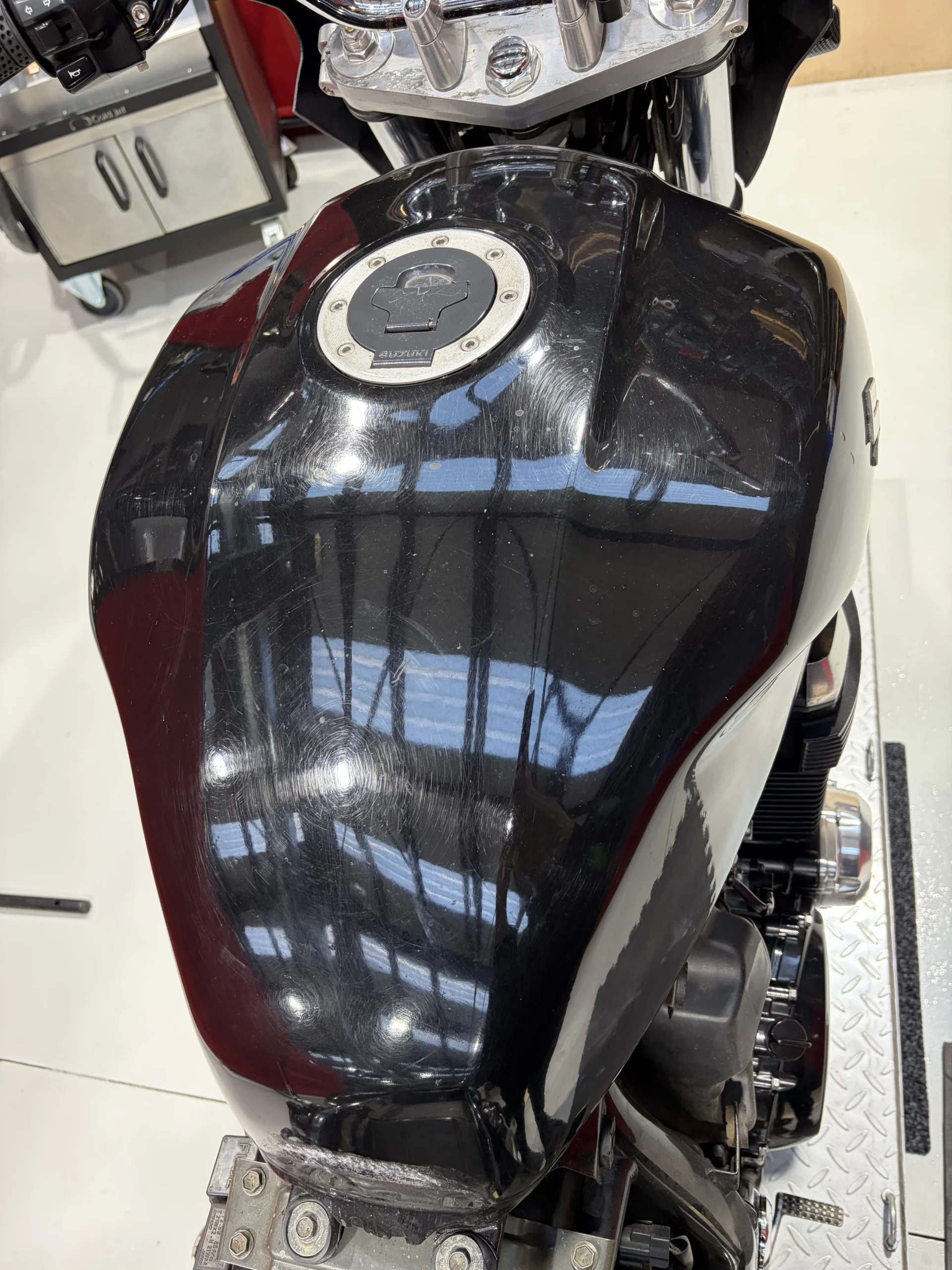
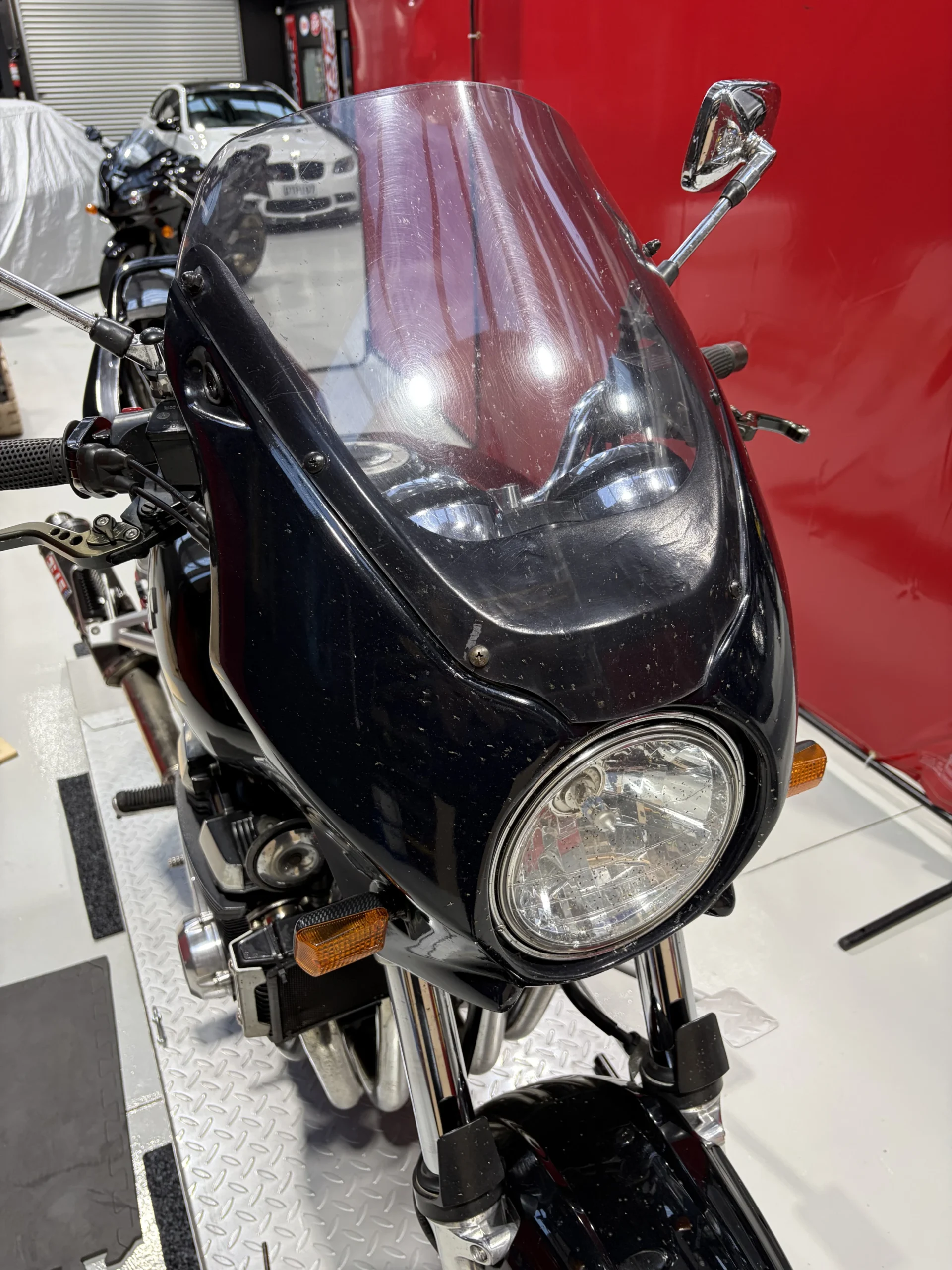
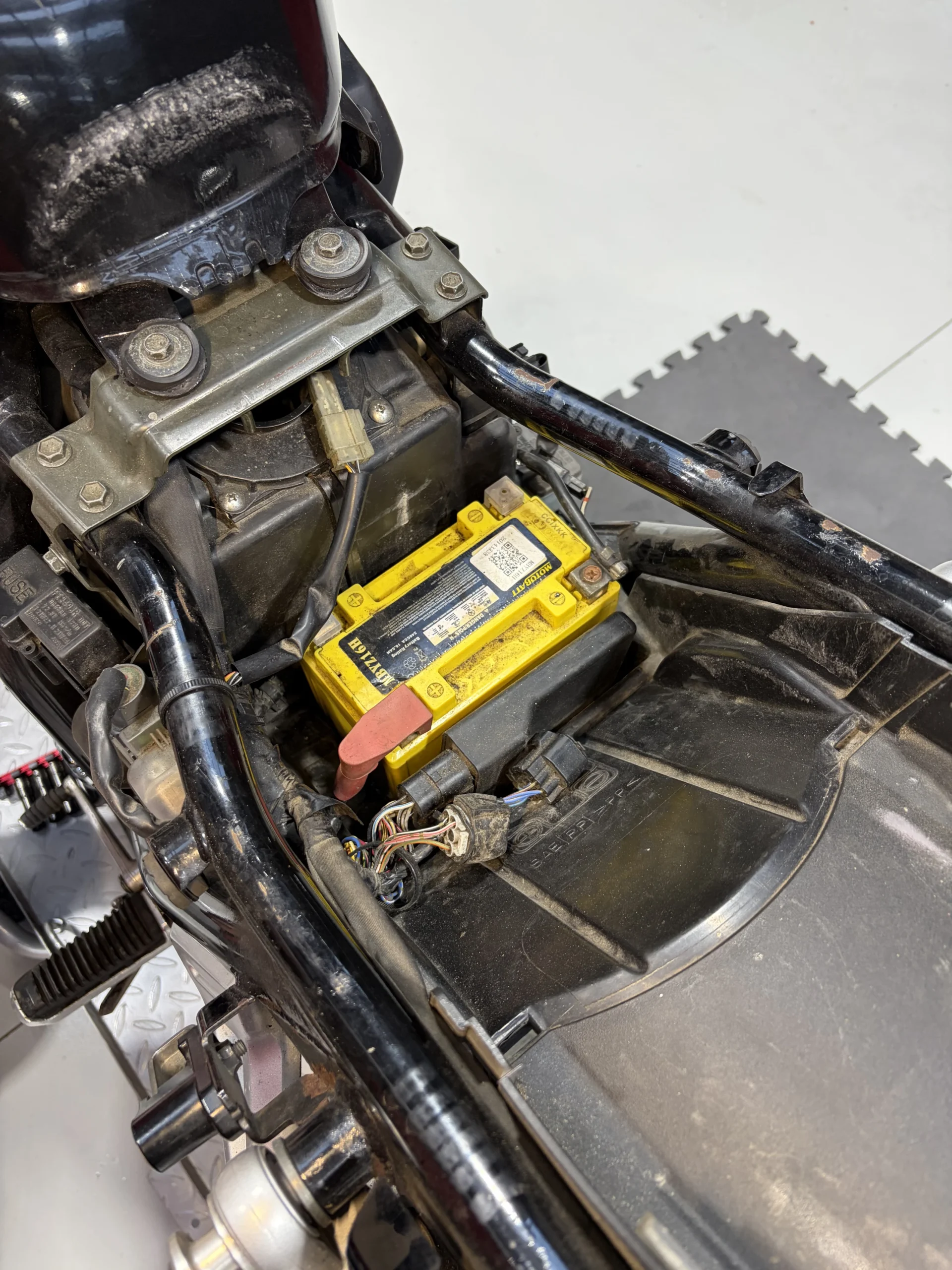
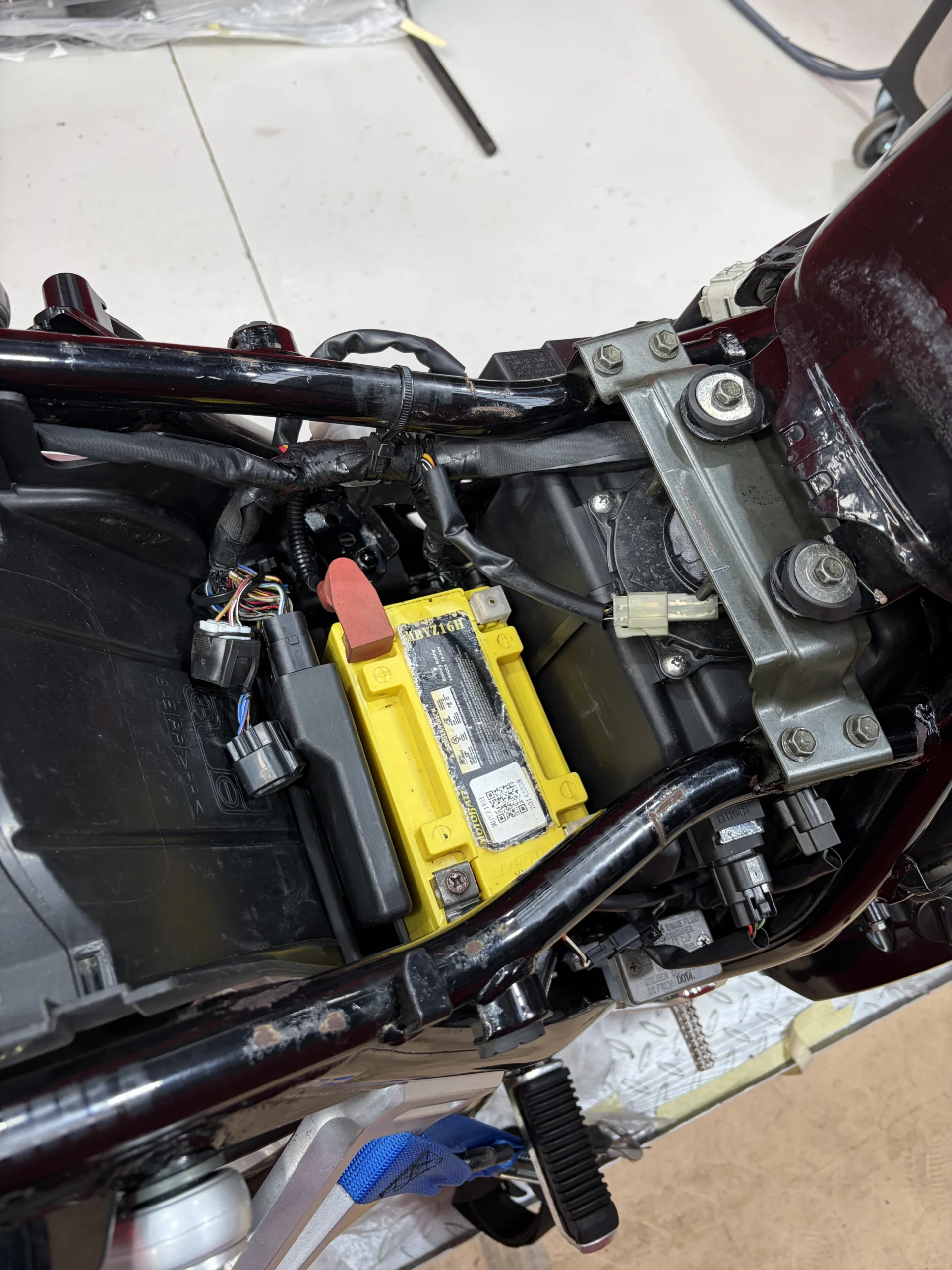
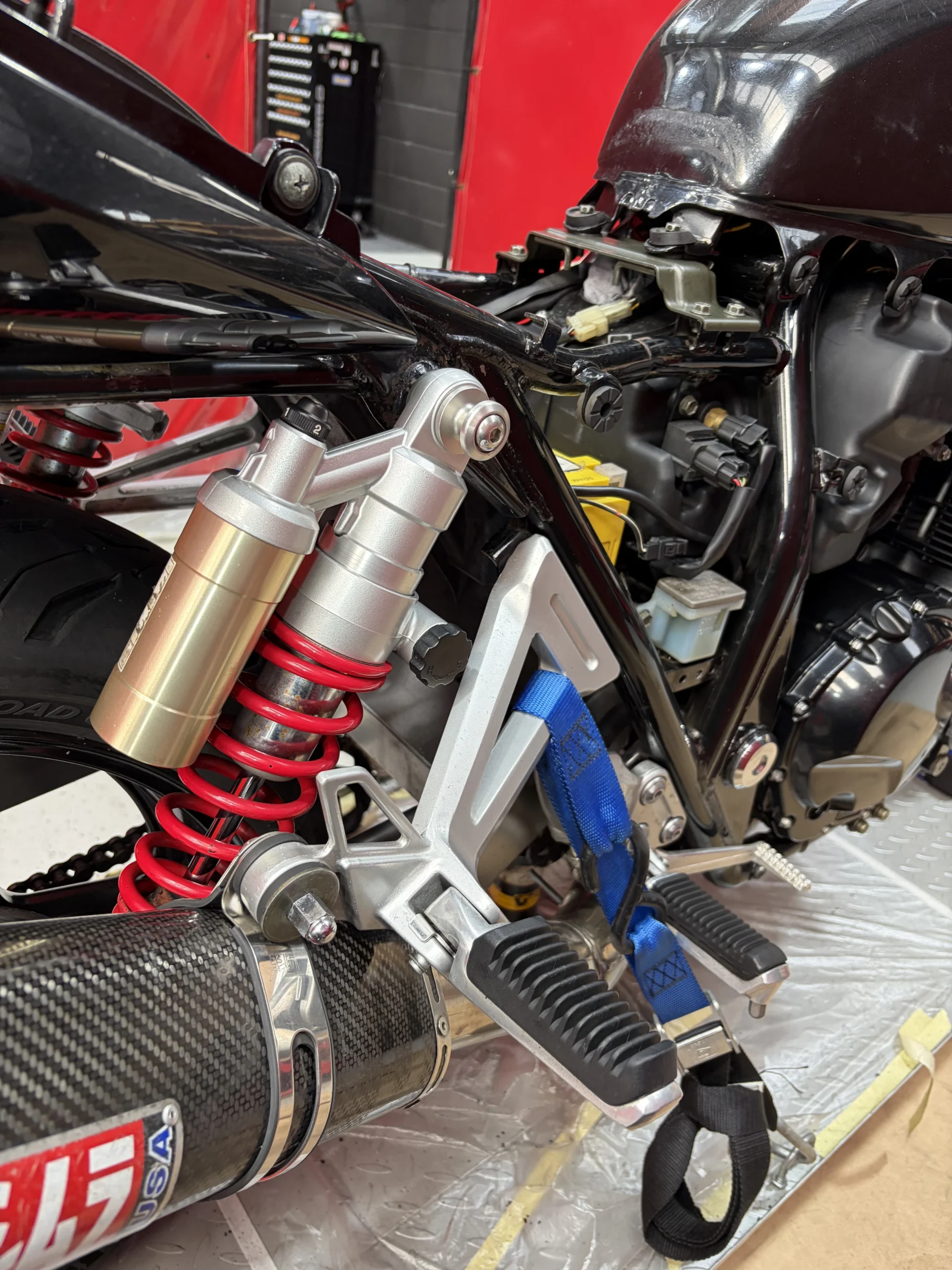
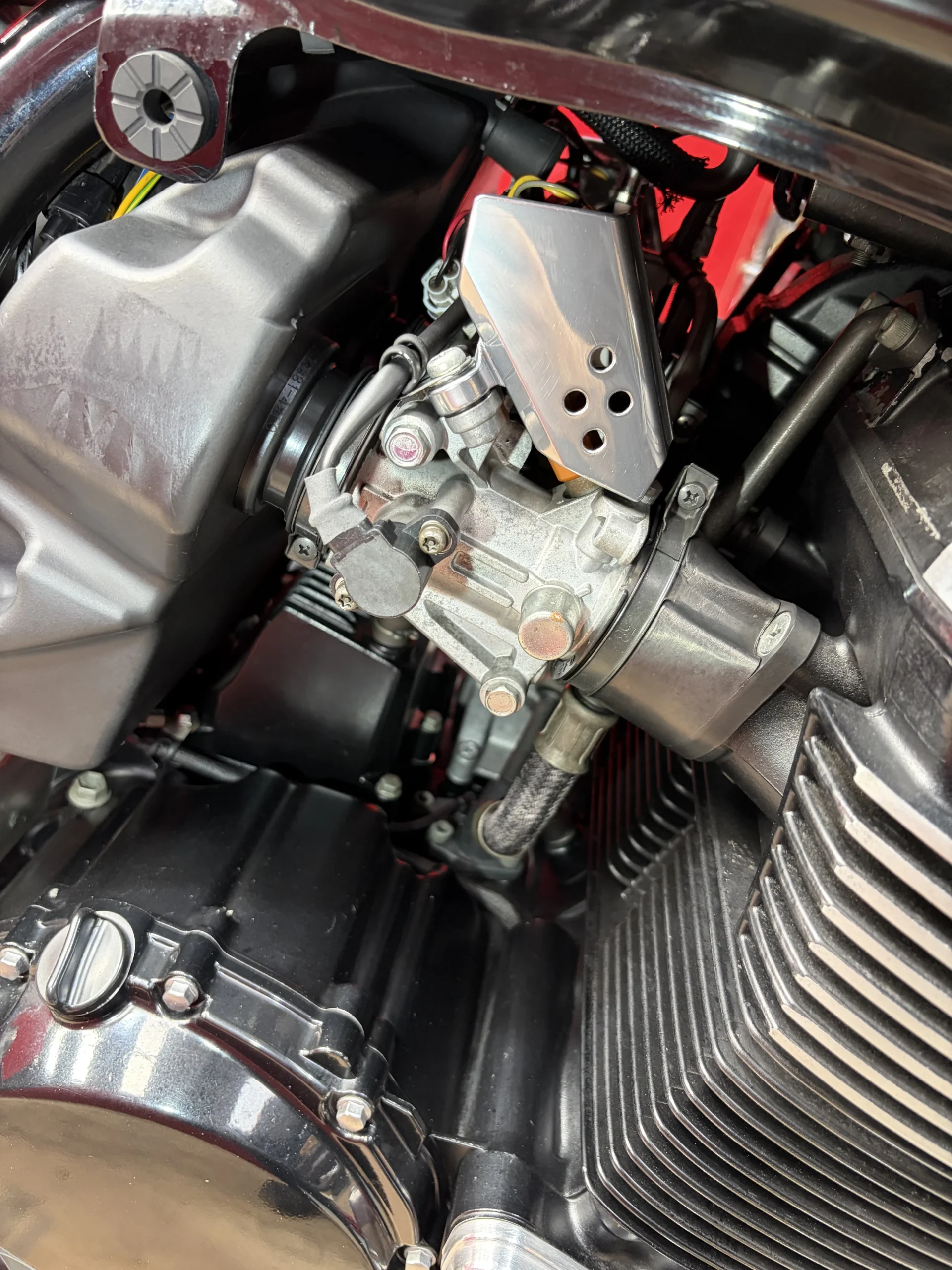
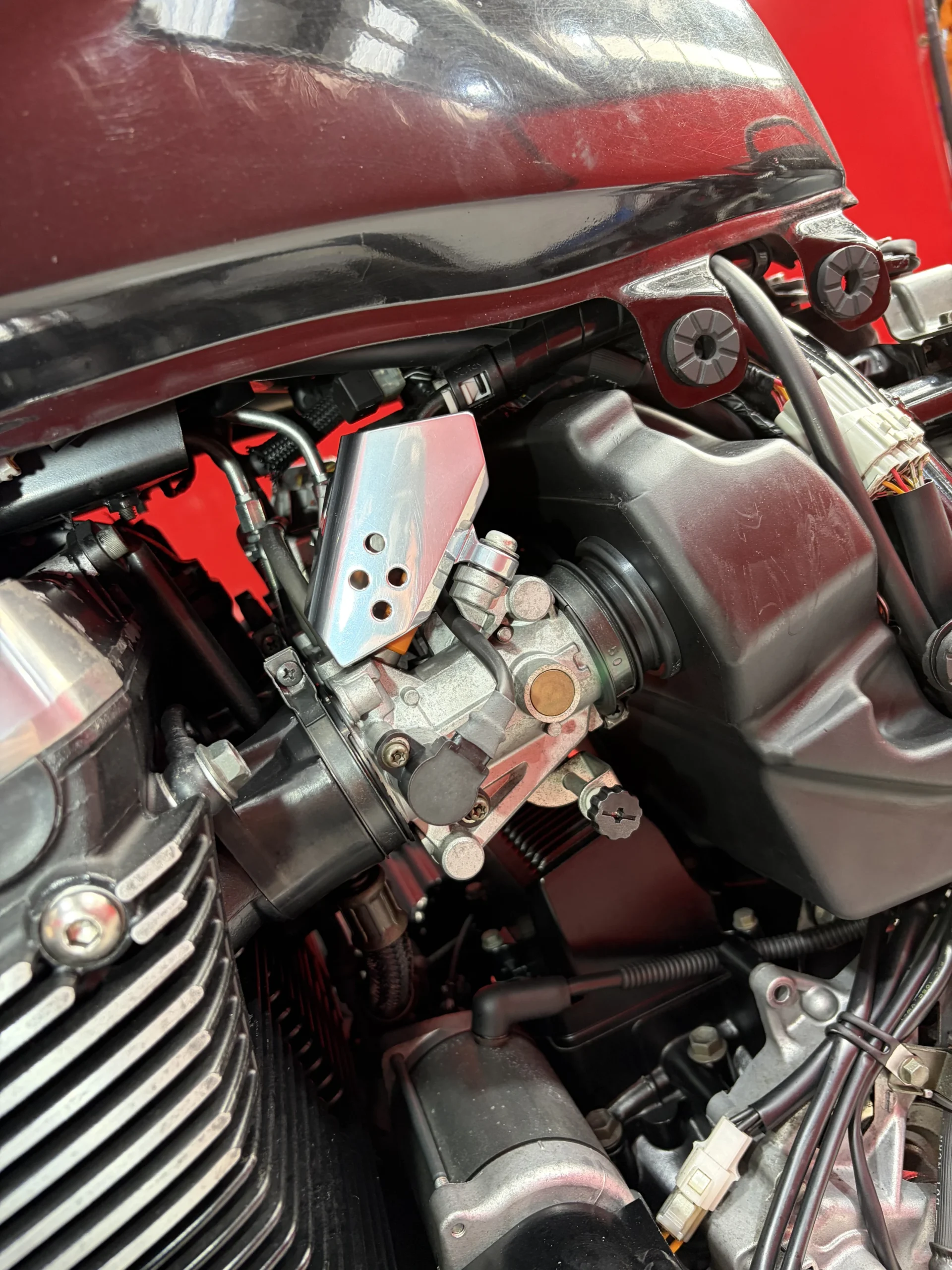
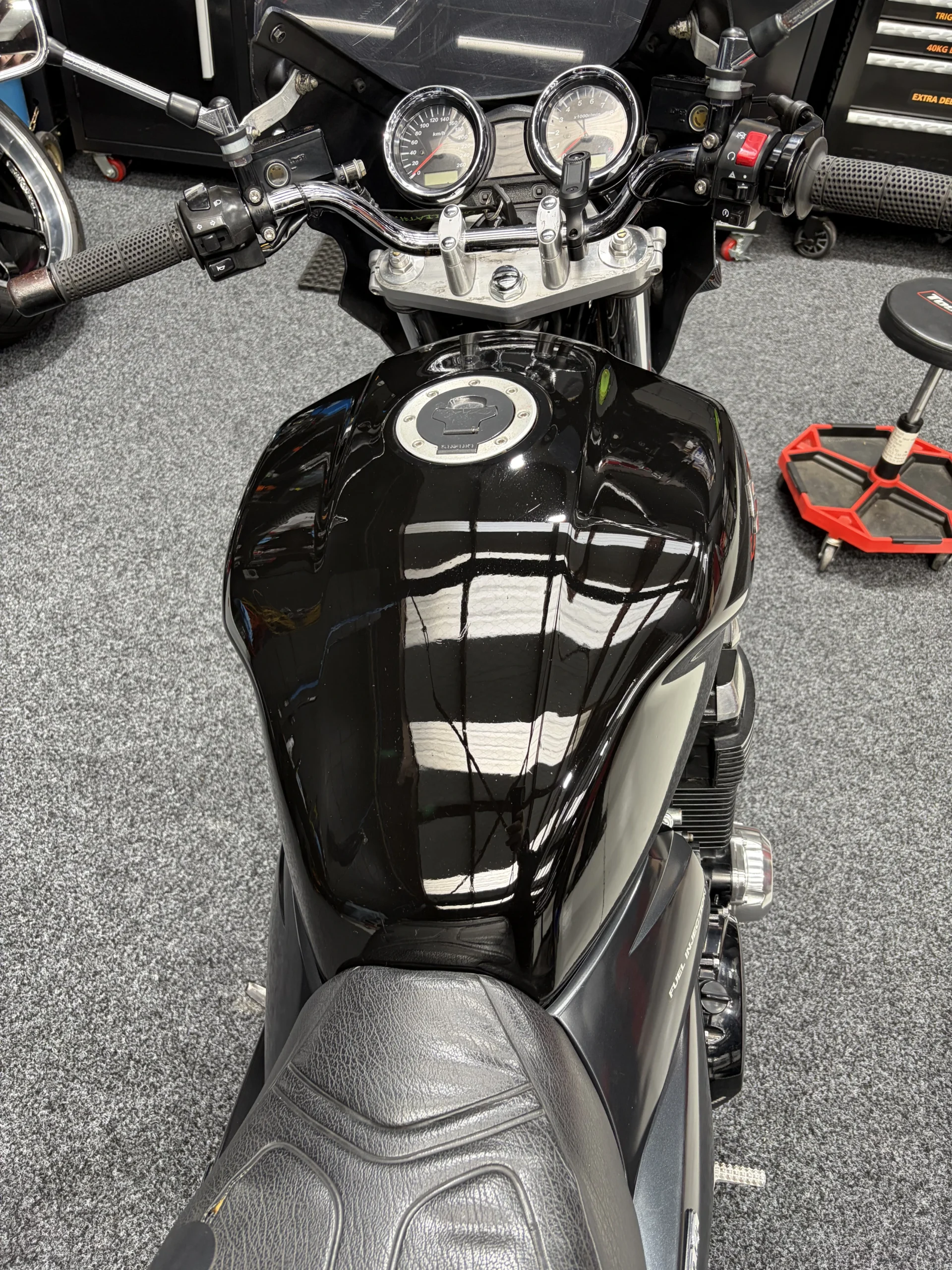
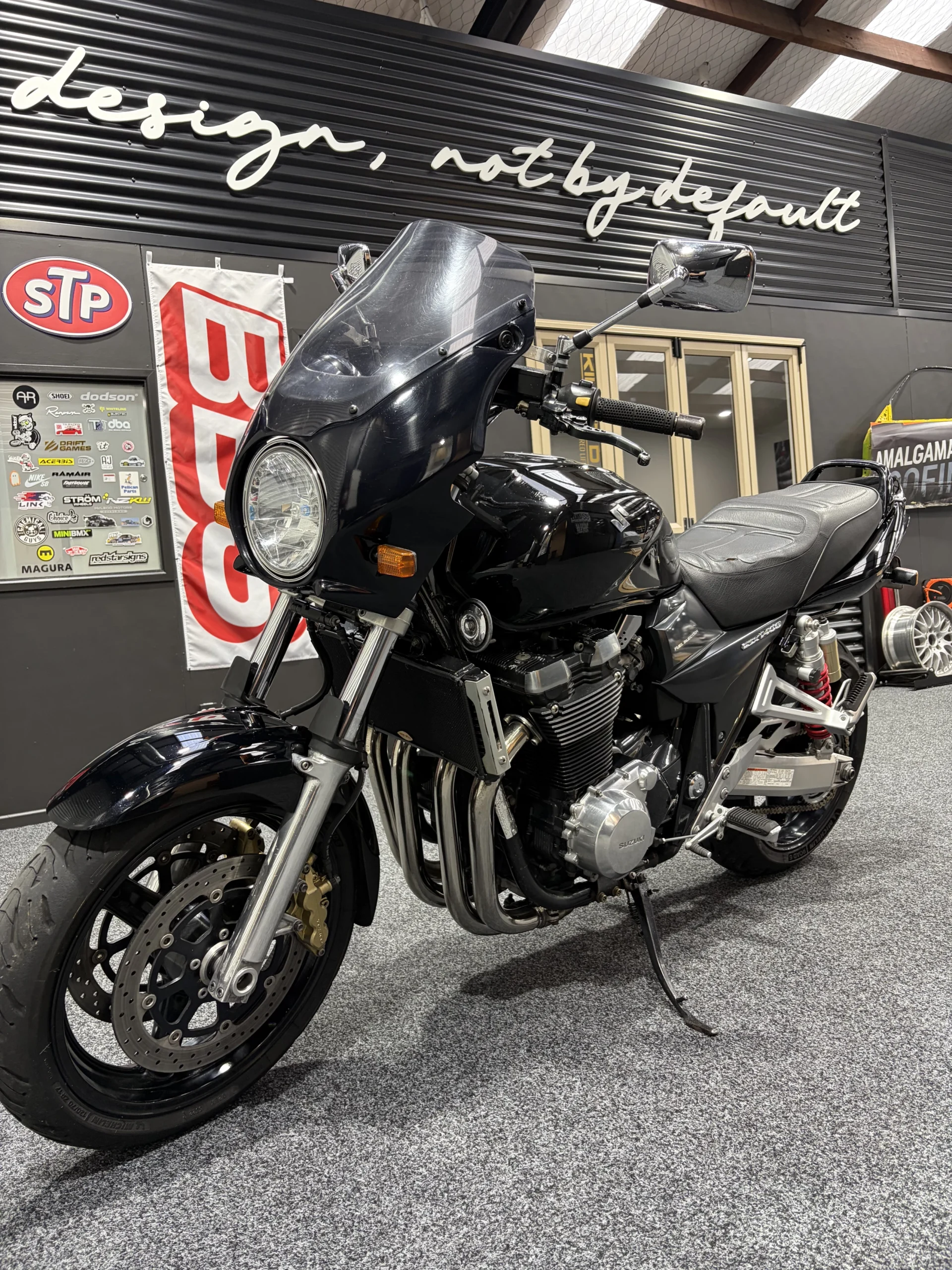
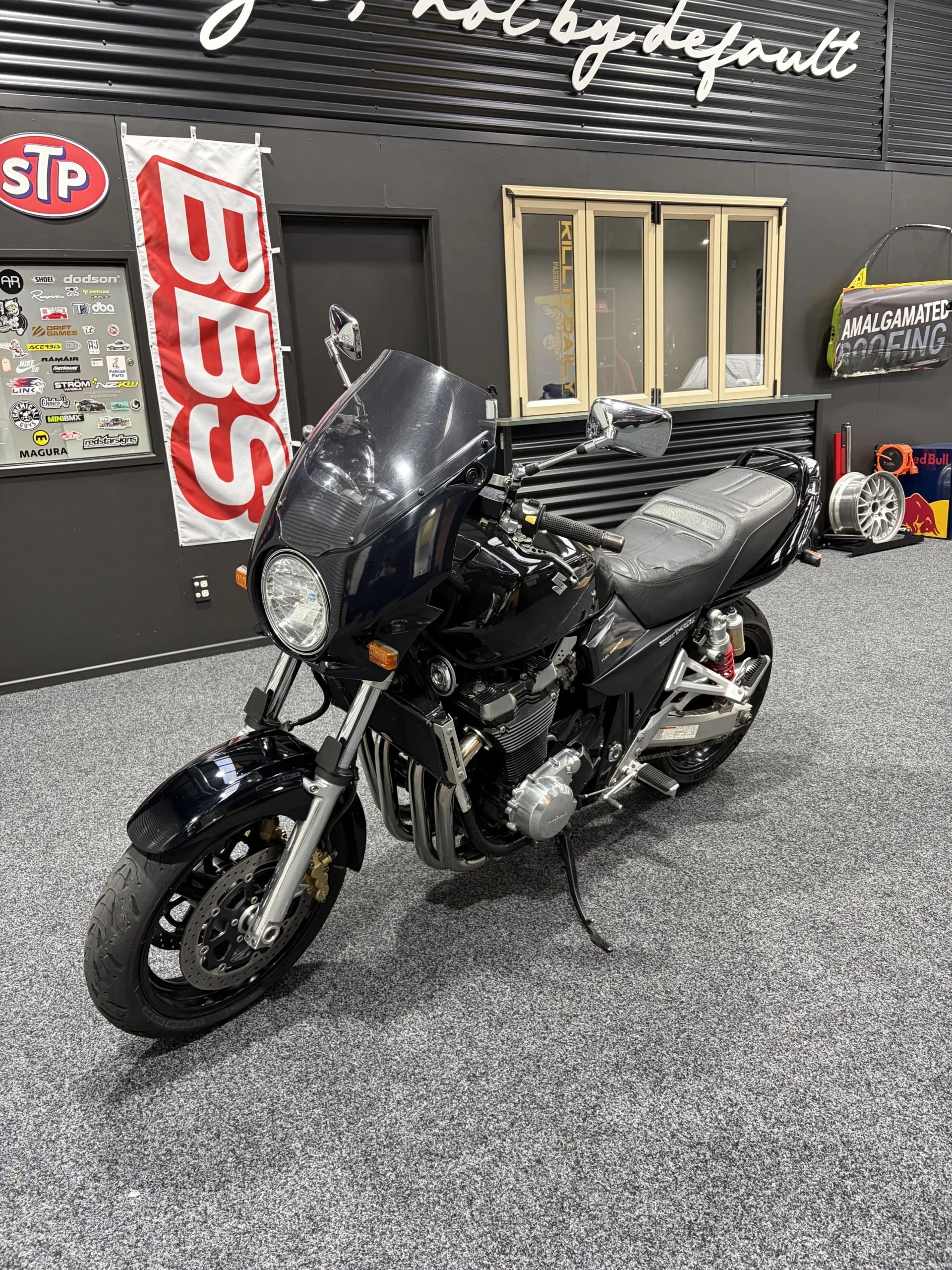
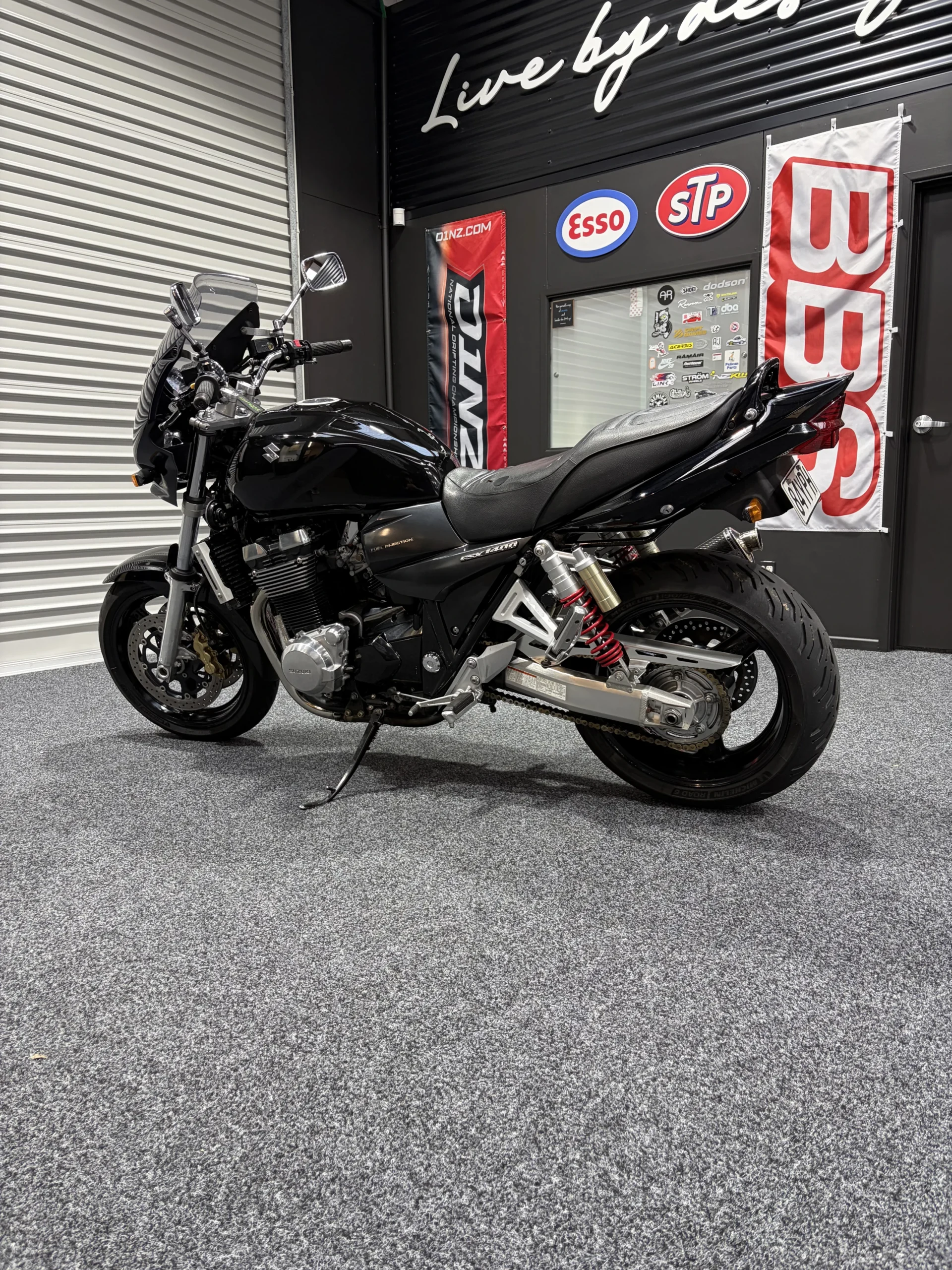
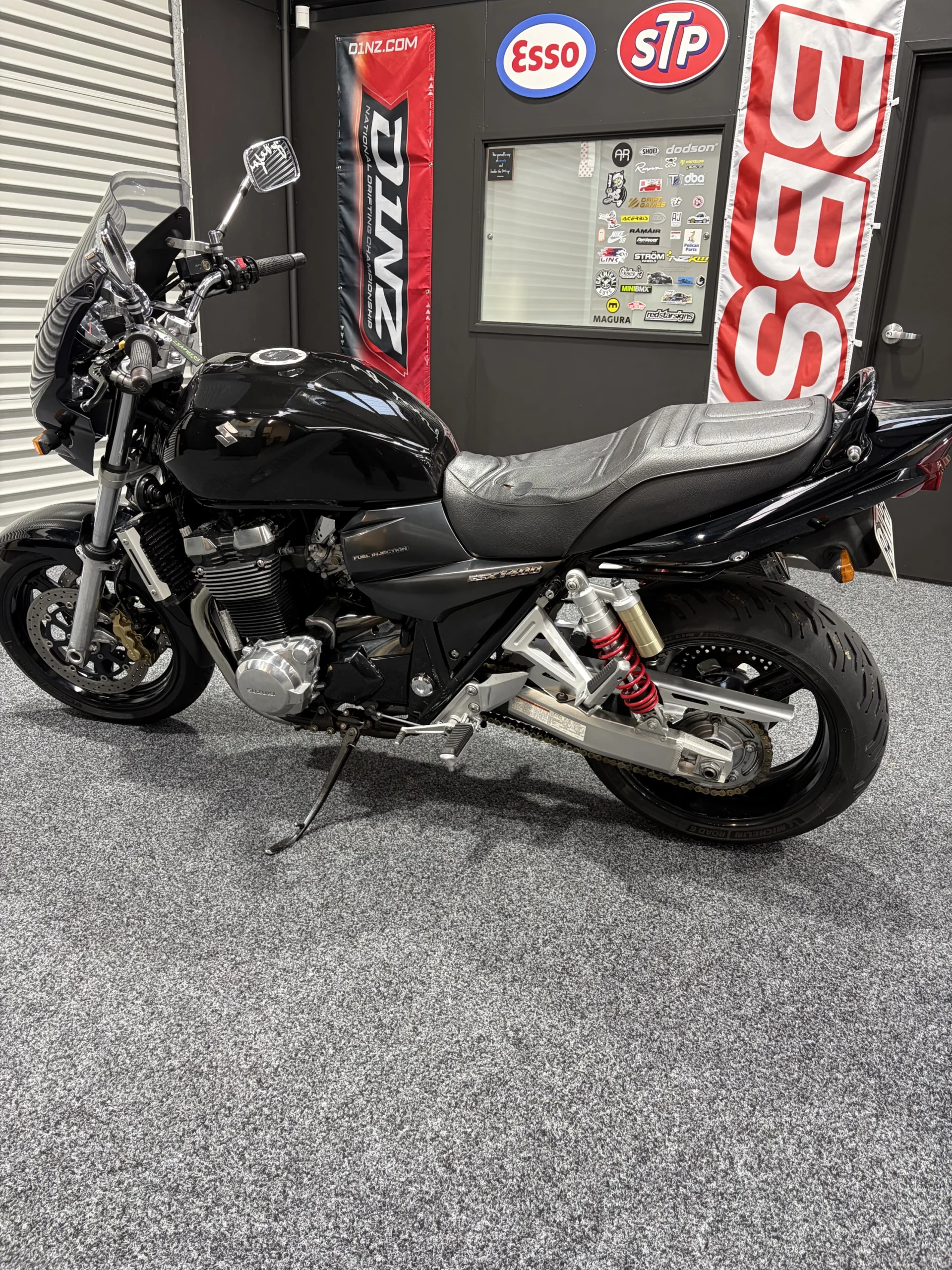
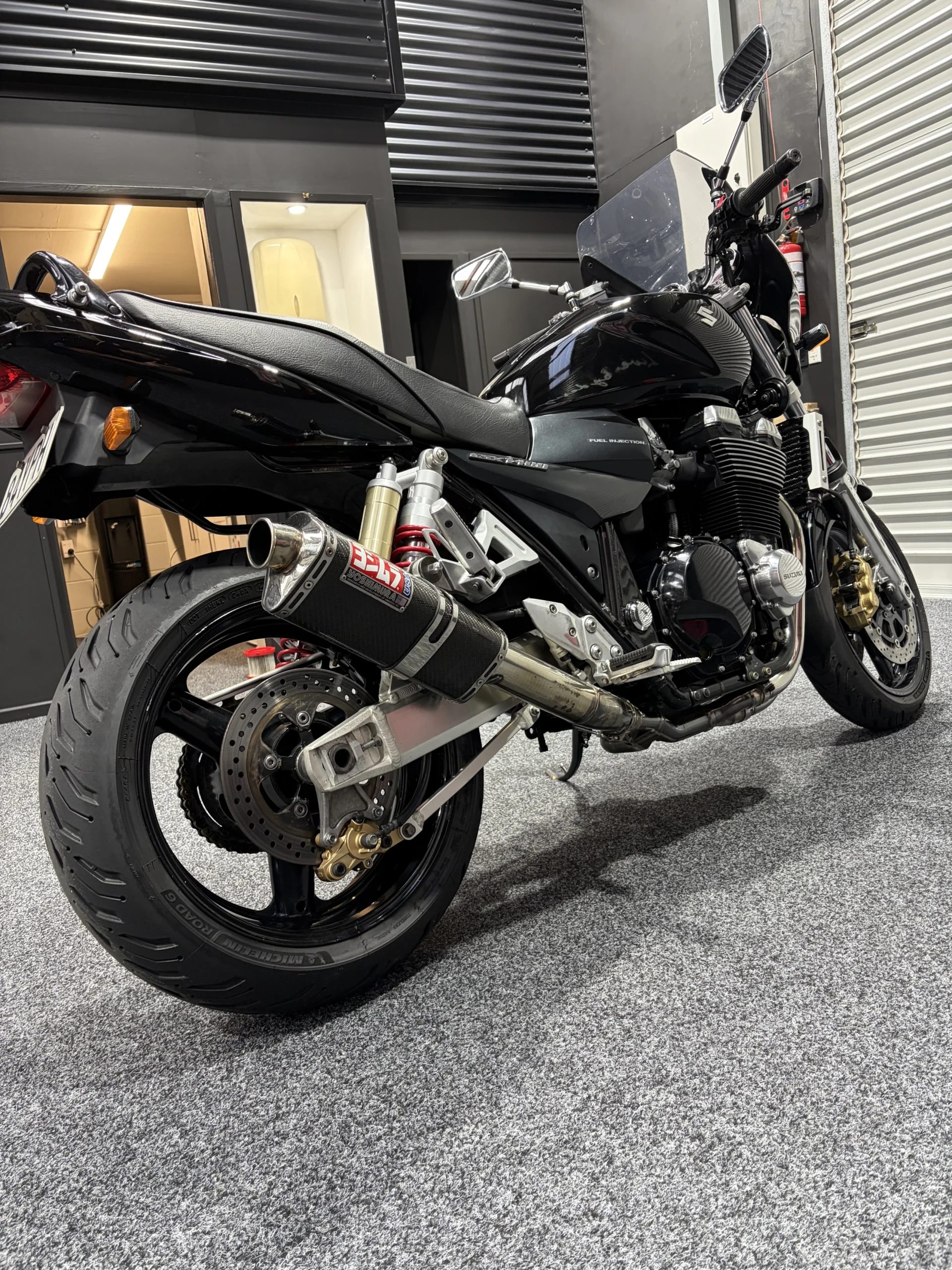
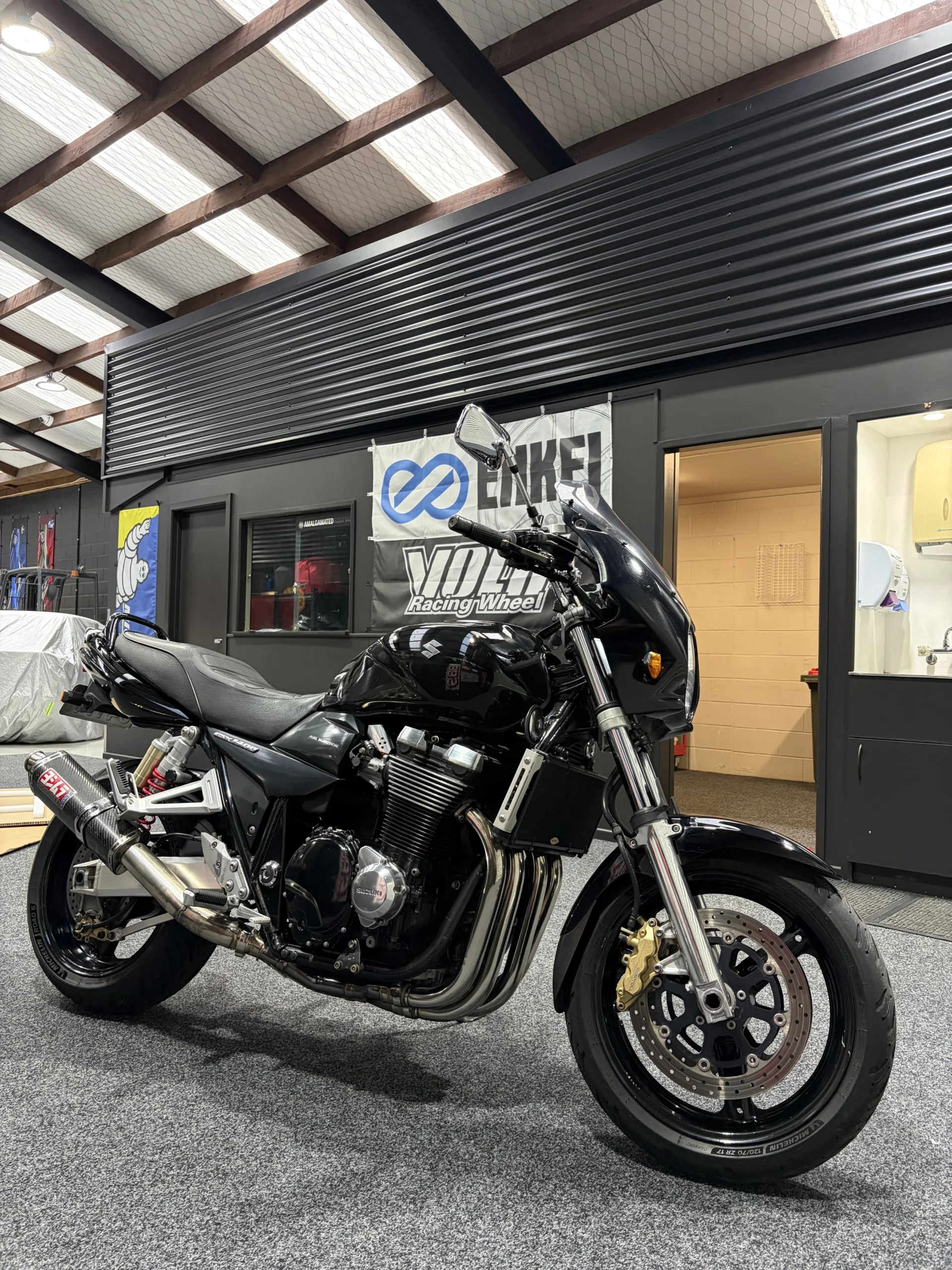
A big air-cooled four with two decades of road film packed between every cooling fin. Cases, calipers, swingarm and linkage brought back with the bike assembled — no water, no chemicals, nothing dismantled.
2007 Suzuki GSX1400
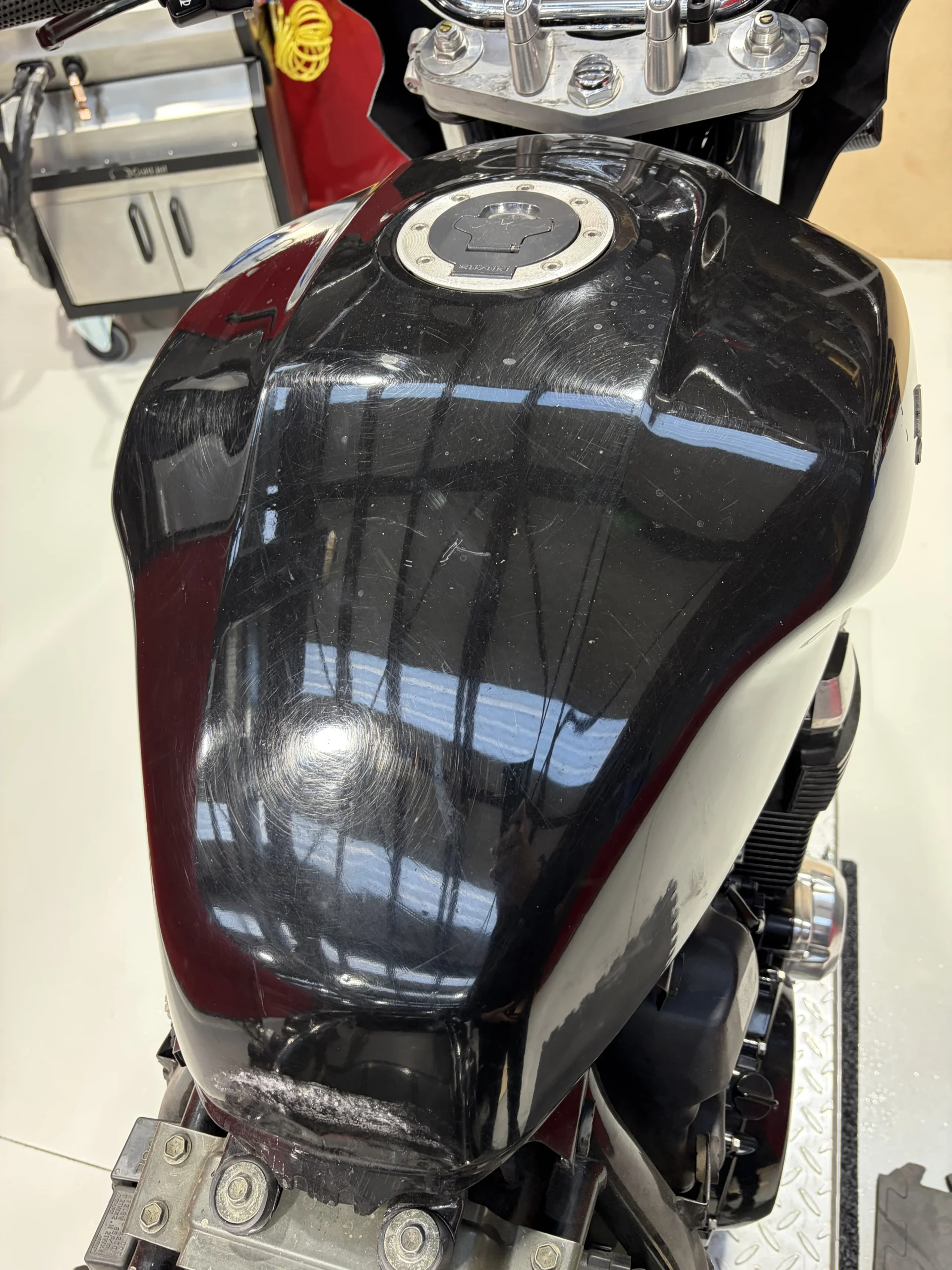
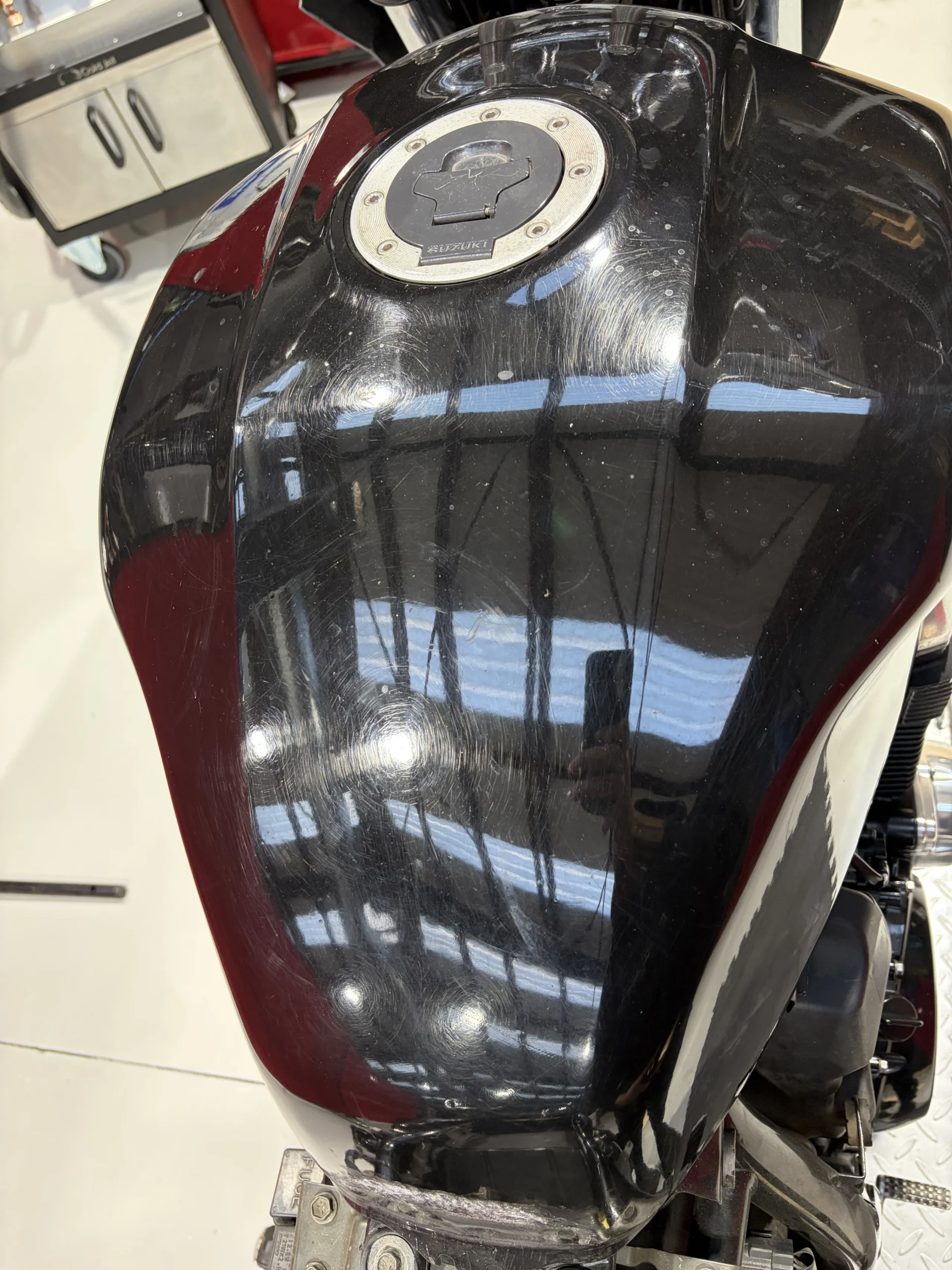
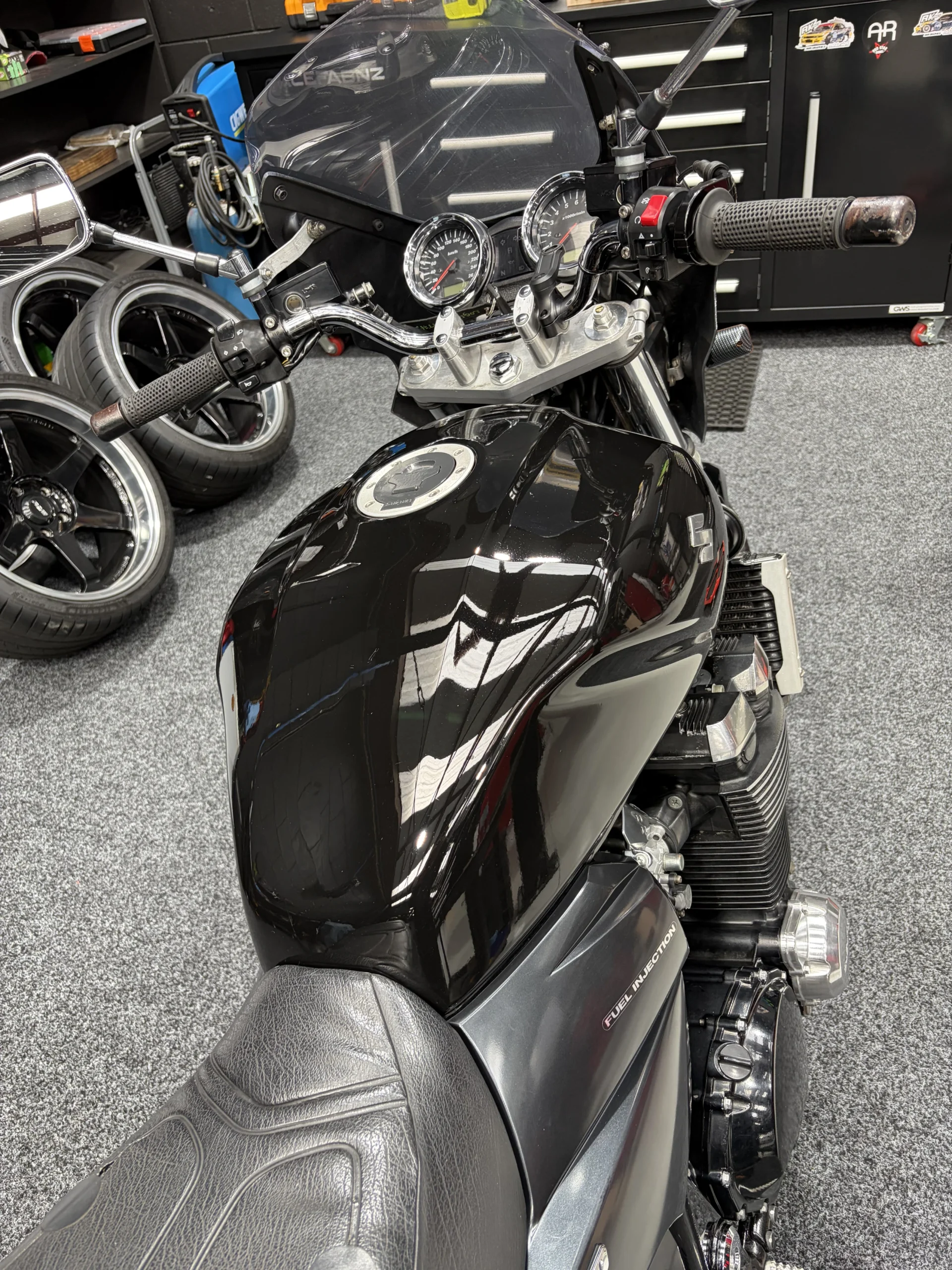
Original bodywork, unrestored
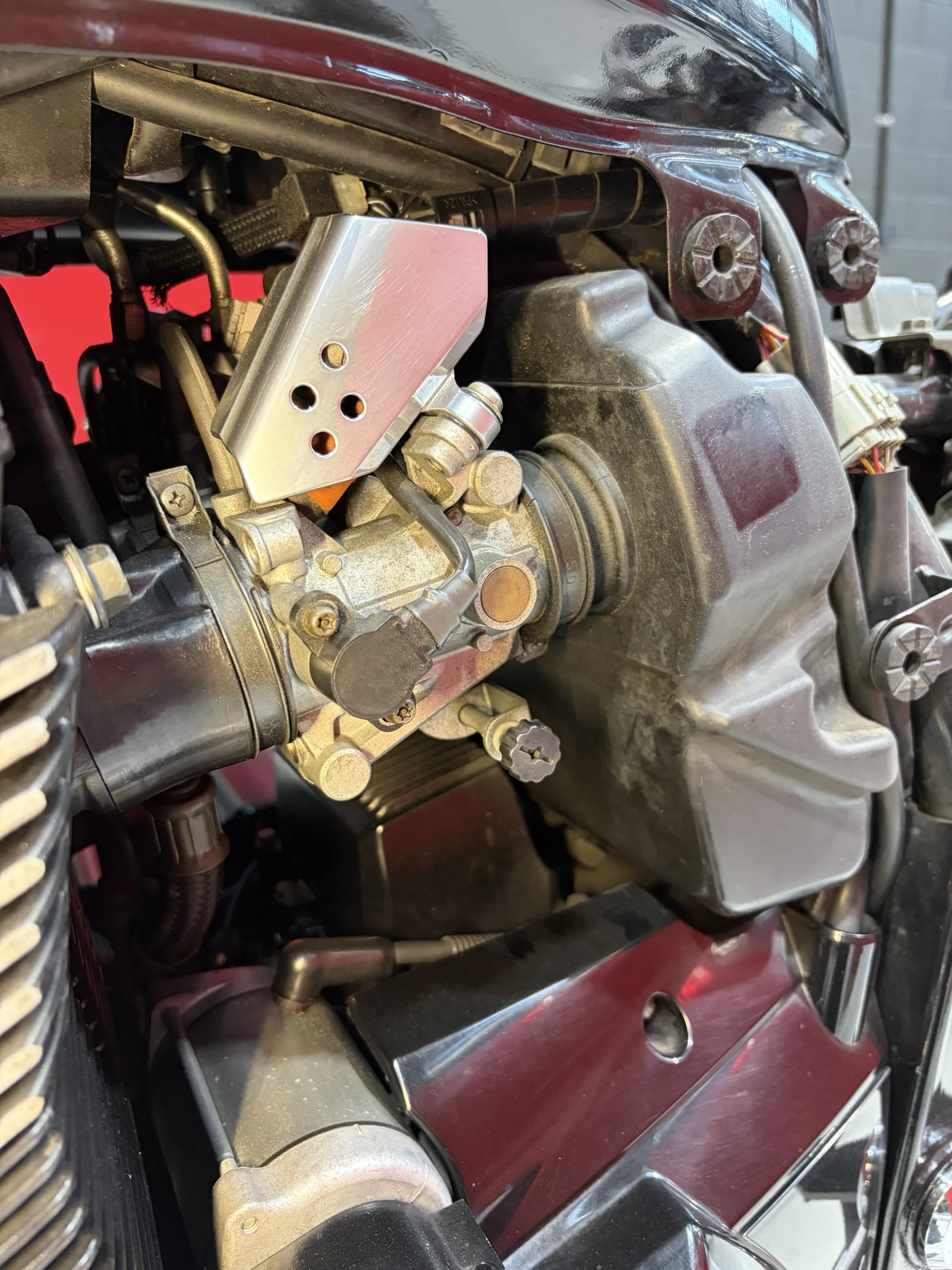
Engine cases and fin stack, induction, frame, swingarm, linkage, brakes and wheels
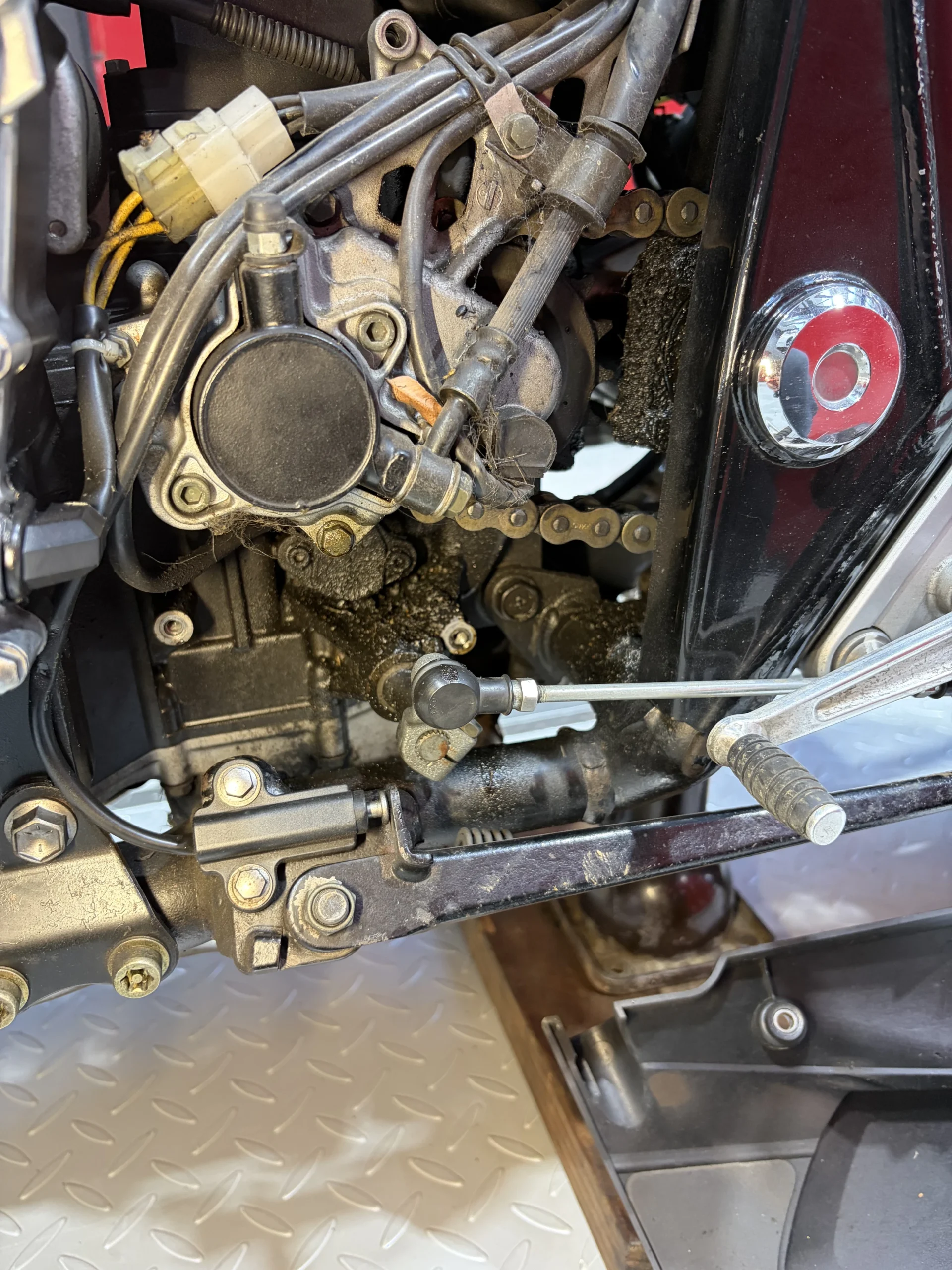
Road film and oil mist packed into the fin stack and around the linkage
Dry ice blasting · no water, no solvents, no media residue
Private owner, Auckland
Performance workshop
Jul 2026
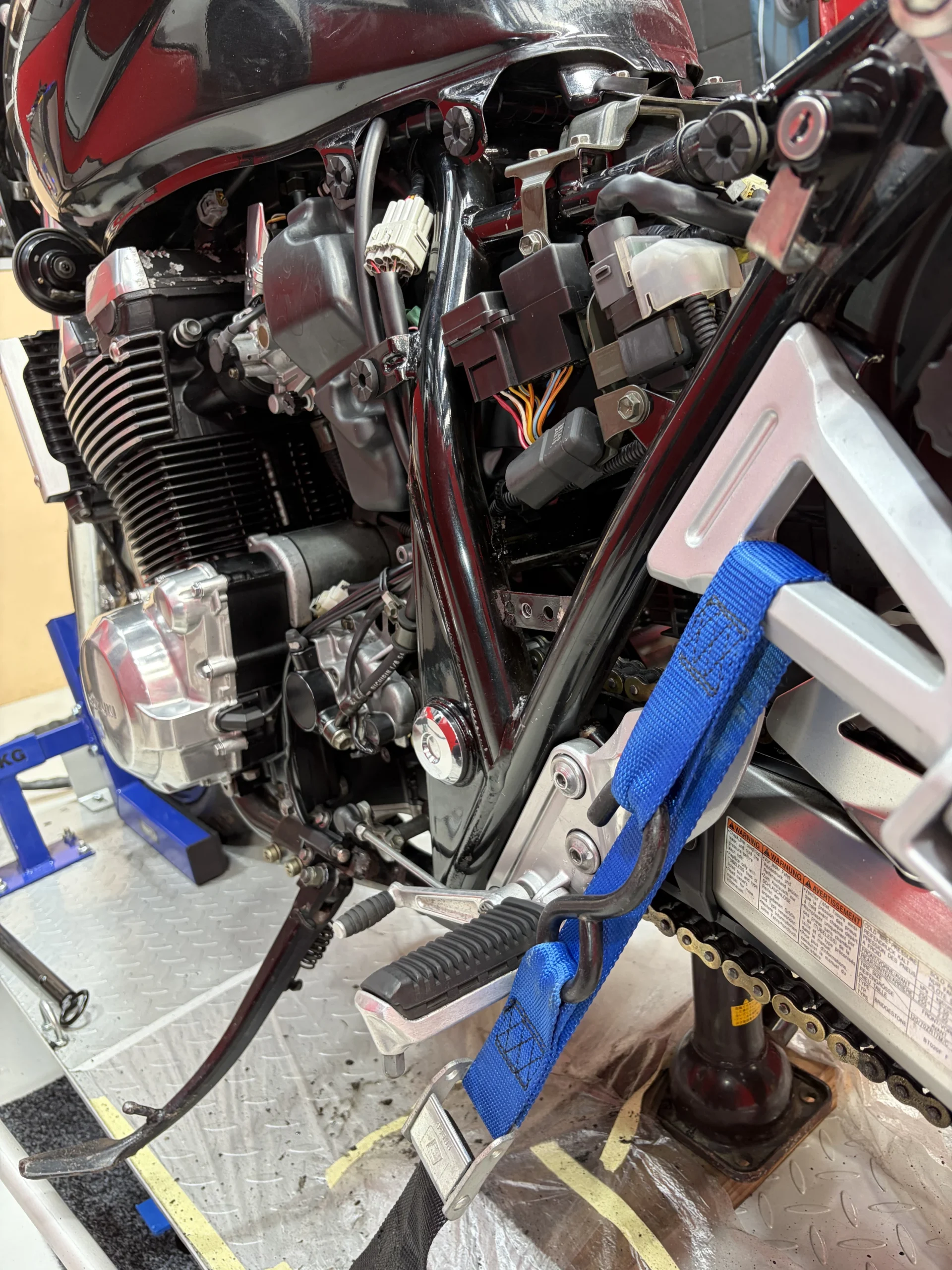
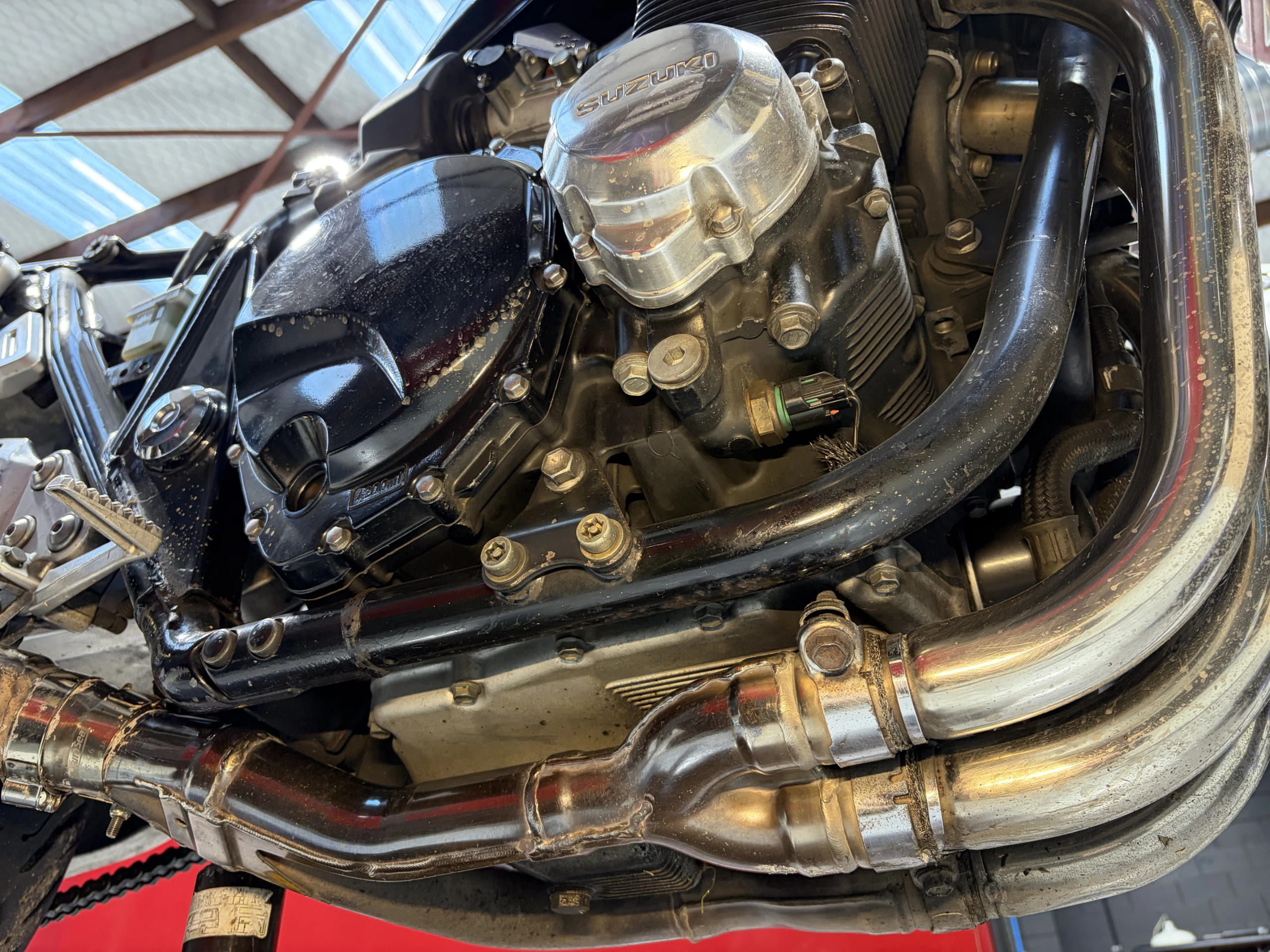
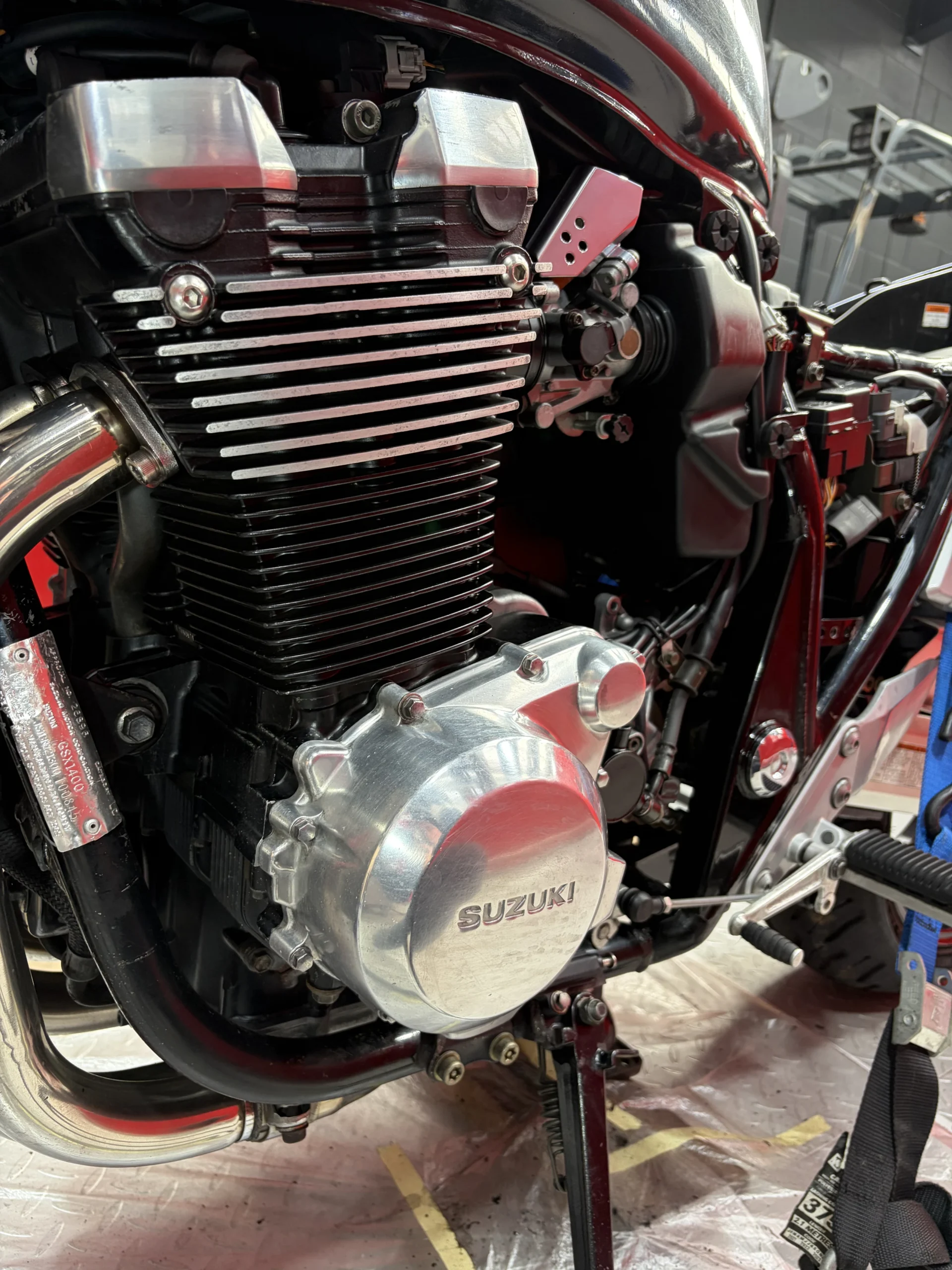
An air-cooled engine is the awkward one. A GSX1400 carries most of its surface area in the fin stack, and the gaps between those fins are exactly where two decades of road film, oil mist and brake dust end up. You cannot get a cloth in there, and a brush only packs it tighter.
The usual options make it worse. Solvent runs down the fins and carries the grime with it into the head and the induction below. Pressure washing forces water between the fins and past whatever seals it finds on the way. Media blasting anywhere near an air-cooled head means picking grit out of the cooling gaps for the rest of the bike’s life.
Dry ice sublimates. It hits the surface at −78 °C, shocks the contaminant layer loose, and turns straight back into gas — so nothing is left behind in the gap it has just cleaned. Connectors get masked, extraction sits under the bike, and the only thing on the floor at the end is what came off it.
Clear road film and oil mist from between every cooling fin without packing it deeper.
Bring the cases, swingarm and caliper bodies back without polishing or abrasives.
Keep water and solvent away from the seals, connectors and brake components.
Leave a bike that stands up to a close look, not just a showroom photograph.

Same part of the bike, shot on the stand before the first pass and again at handover. Nothing retouched, nothing colour-graded, nothing polished afterwards.
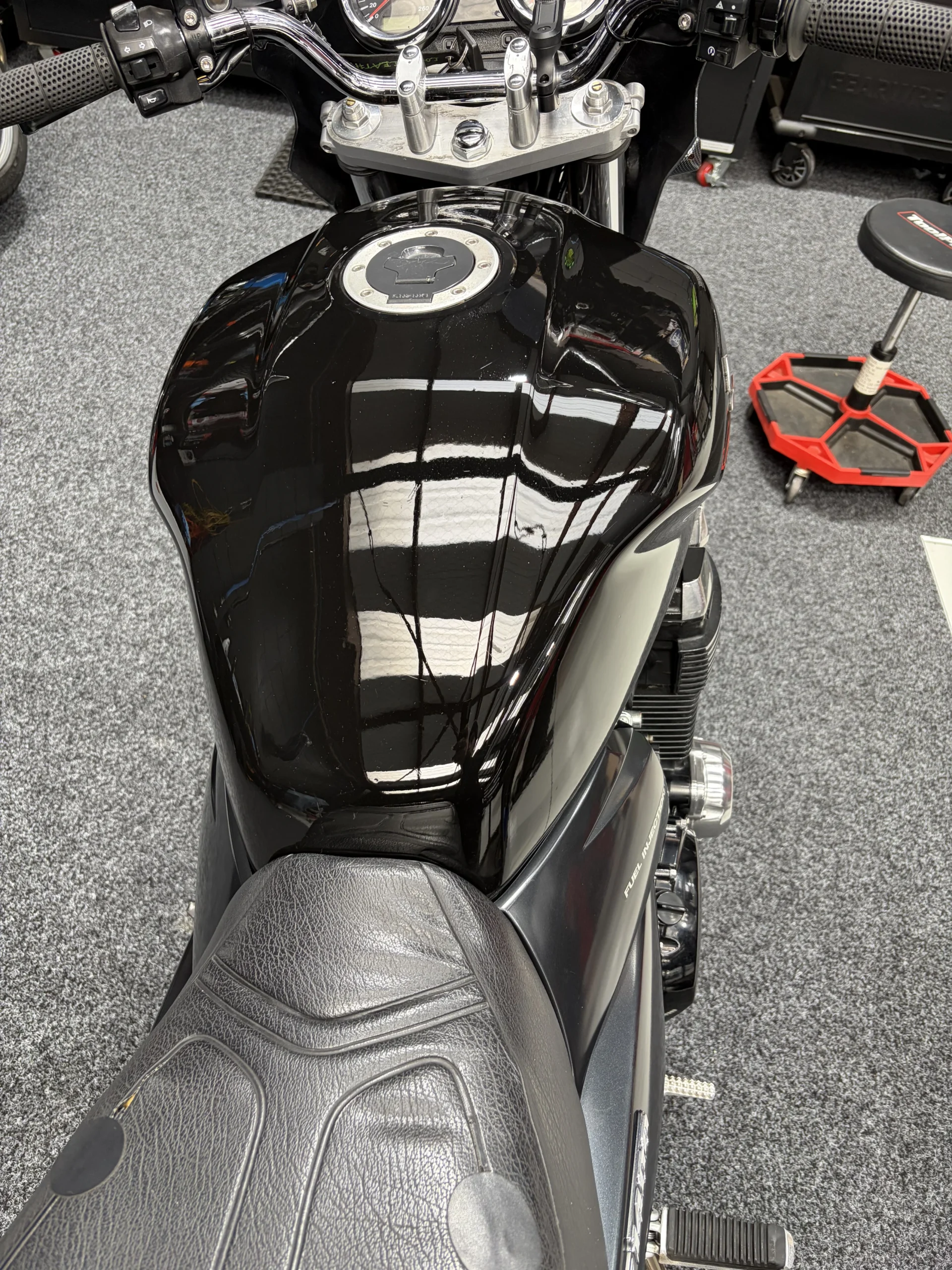
Nothing dismantled to reach it

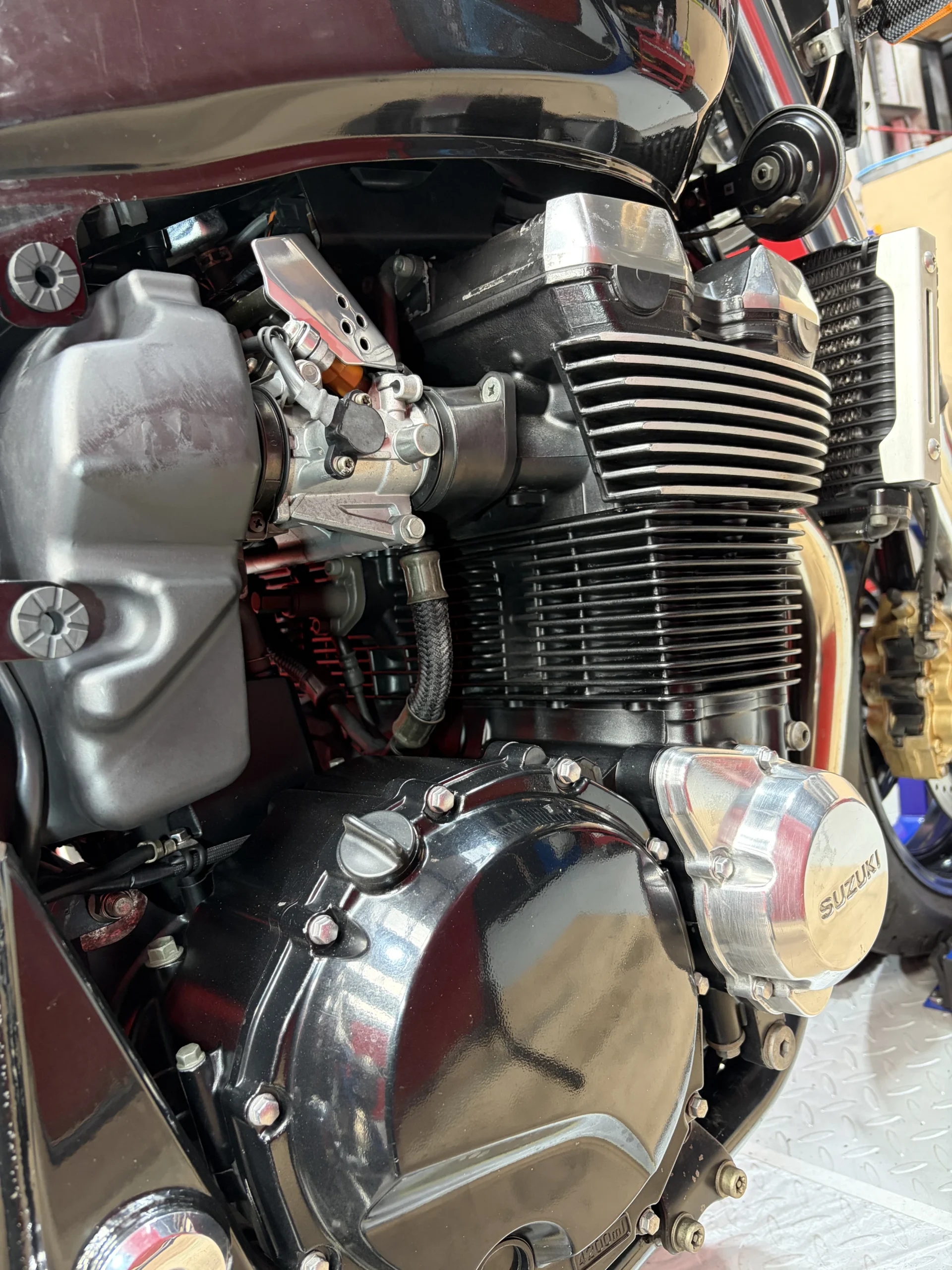
Film packed into every gap in the fin stack.

Fins separating out again, cover back to bare alloy.
Same frame, same angle

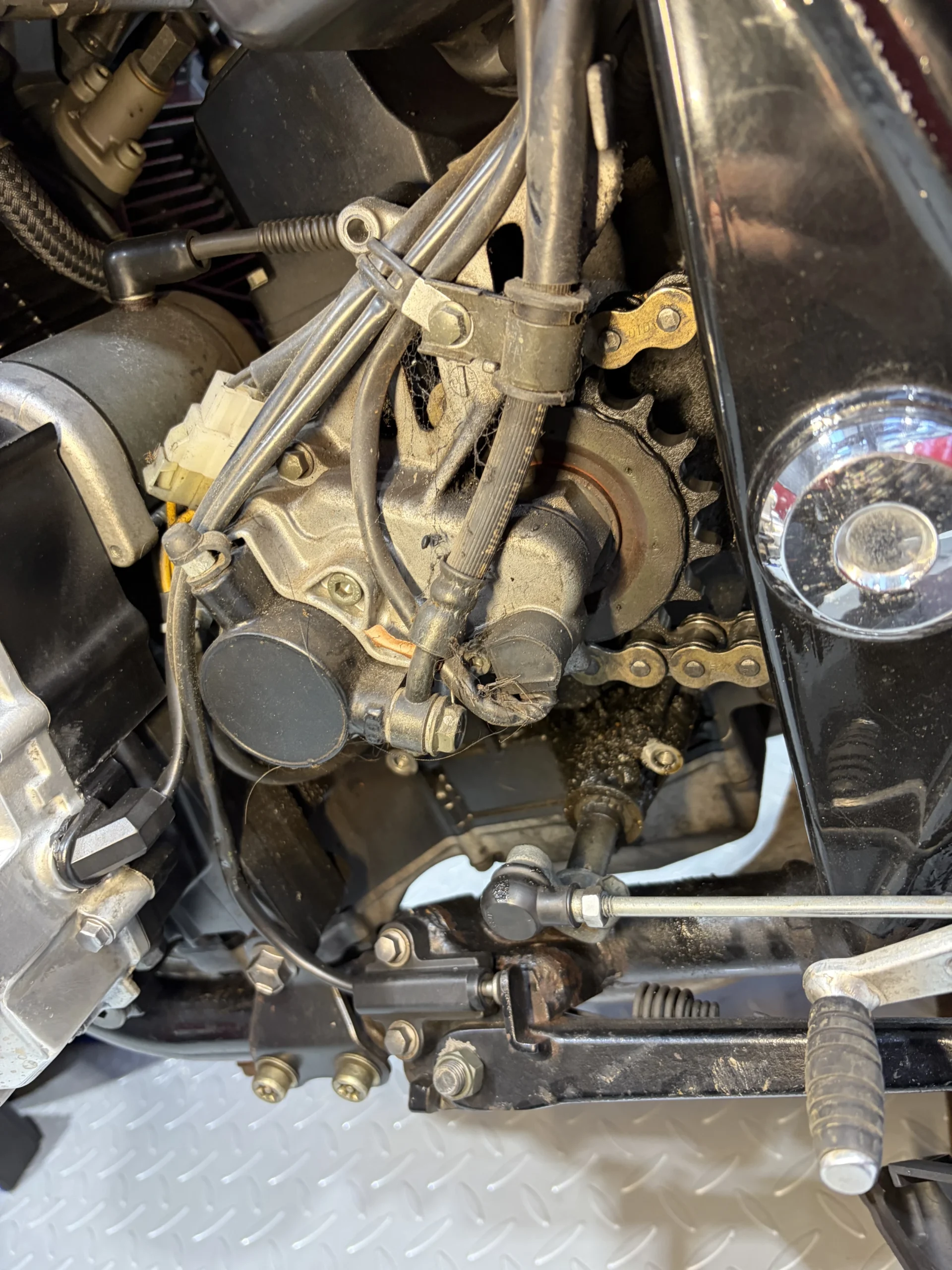
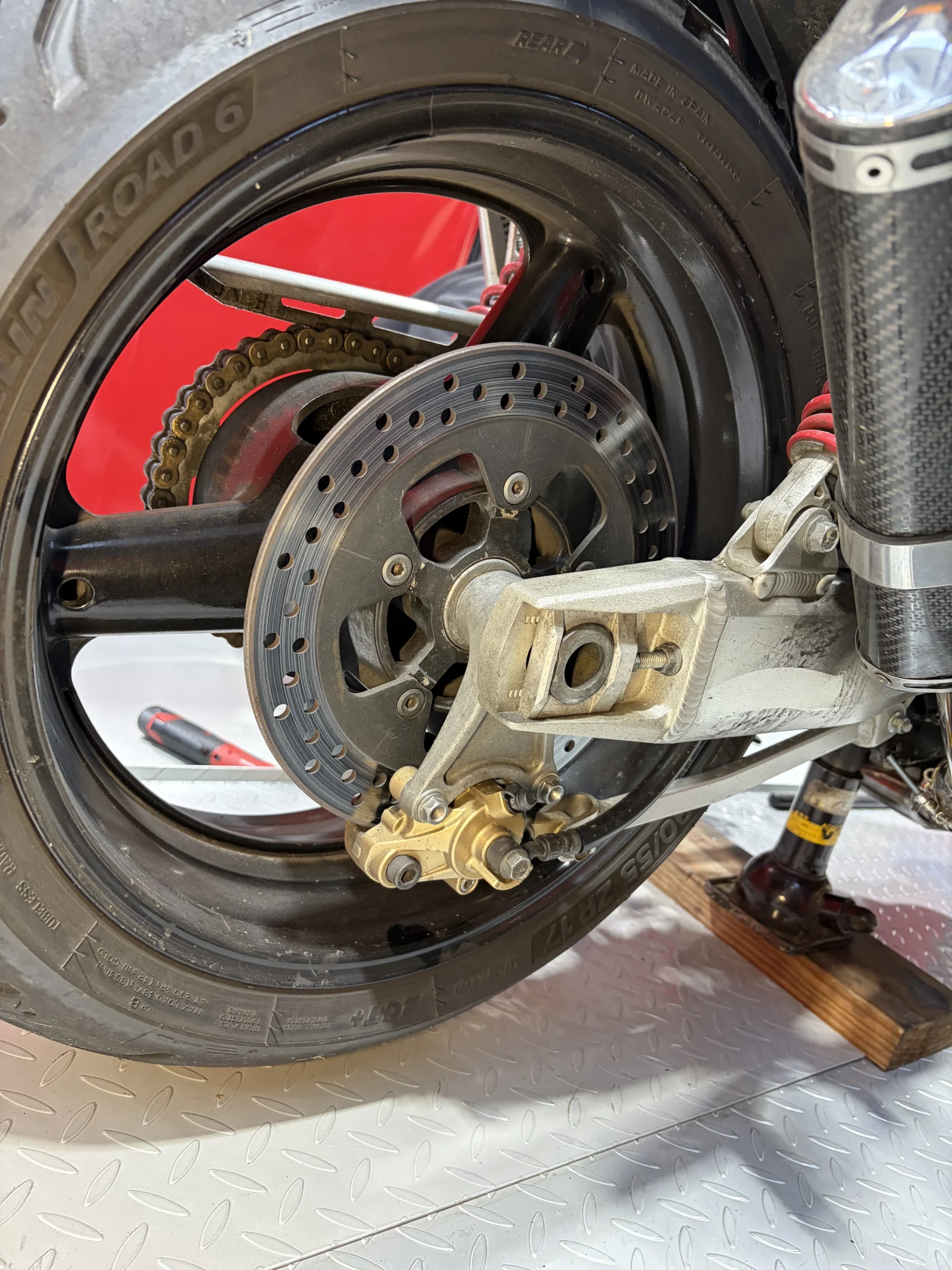
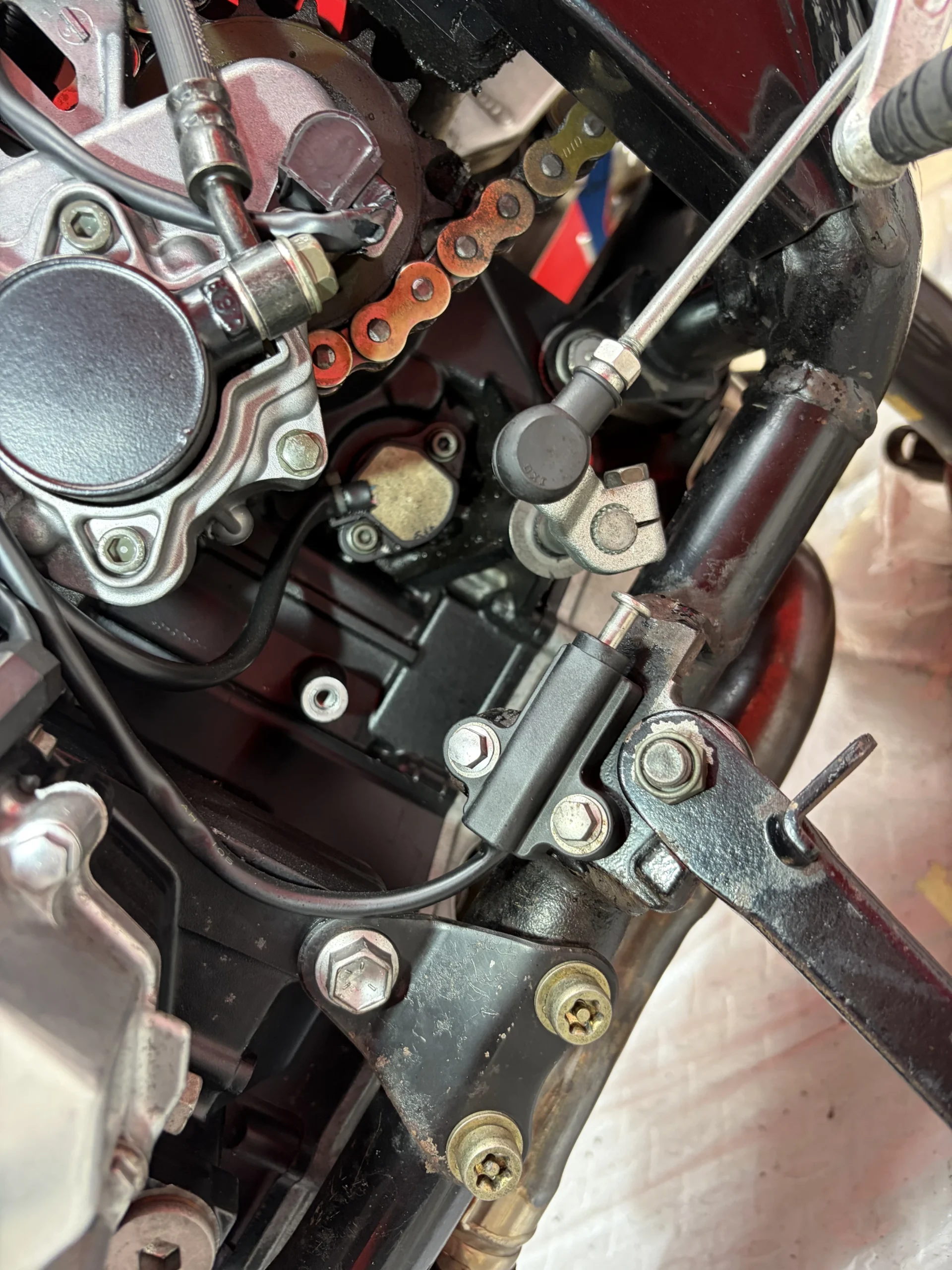
Swingarm, sprocket carrier and chain all one shade.

Polished arm, clean carrier, and the chain gold again.
Seals and pads left alone

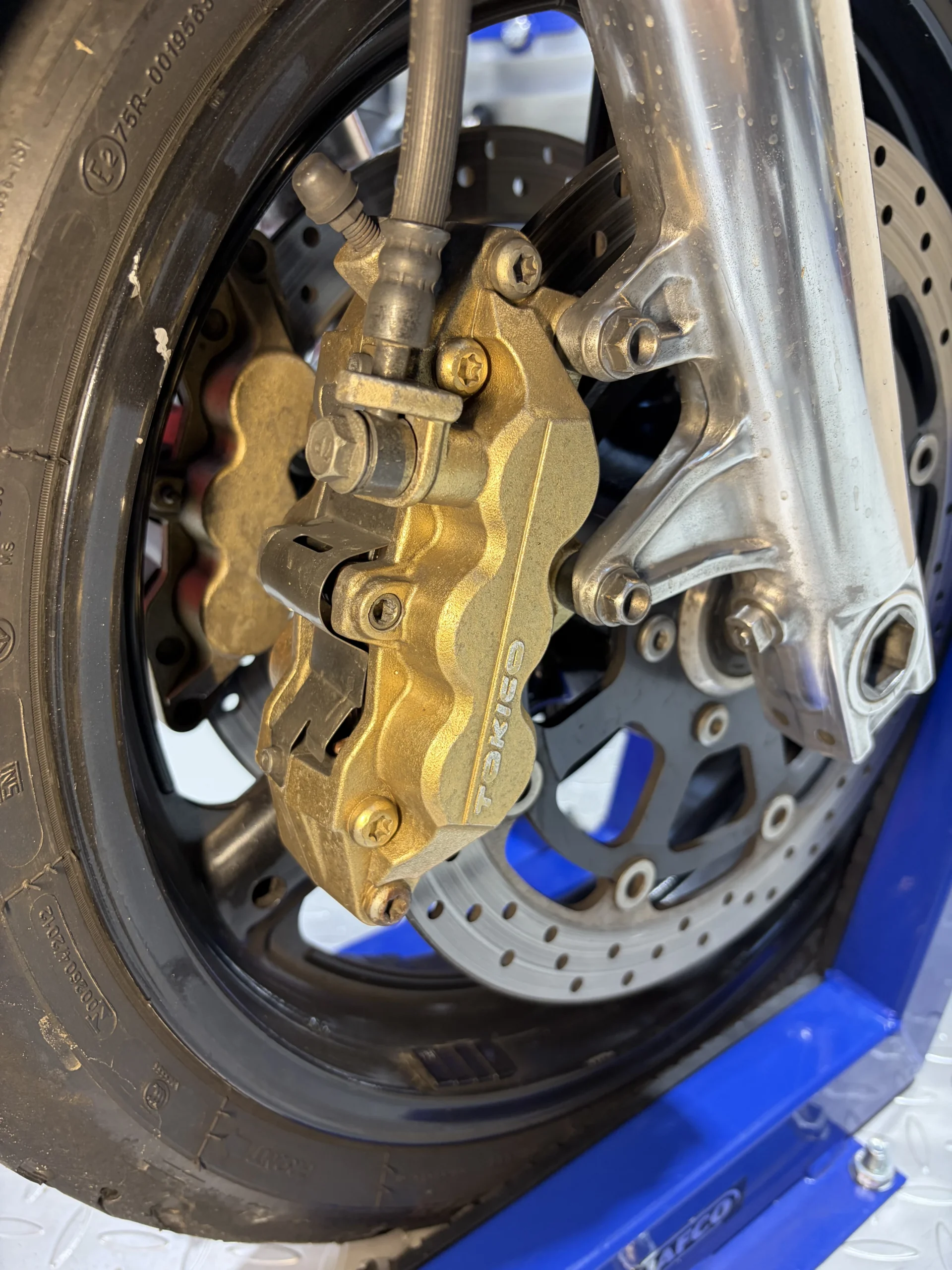
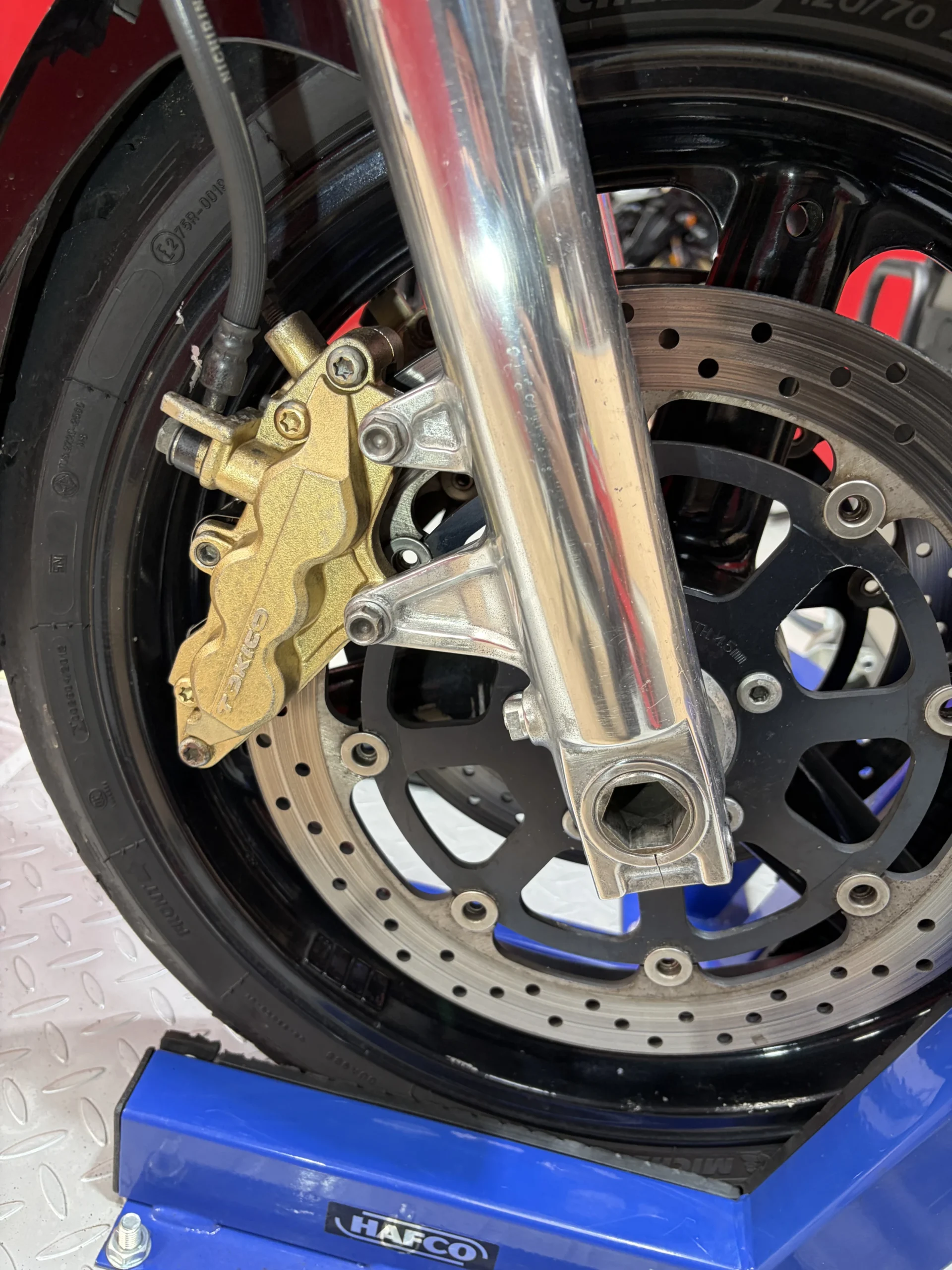
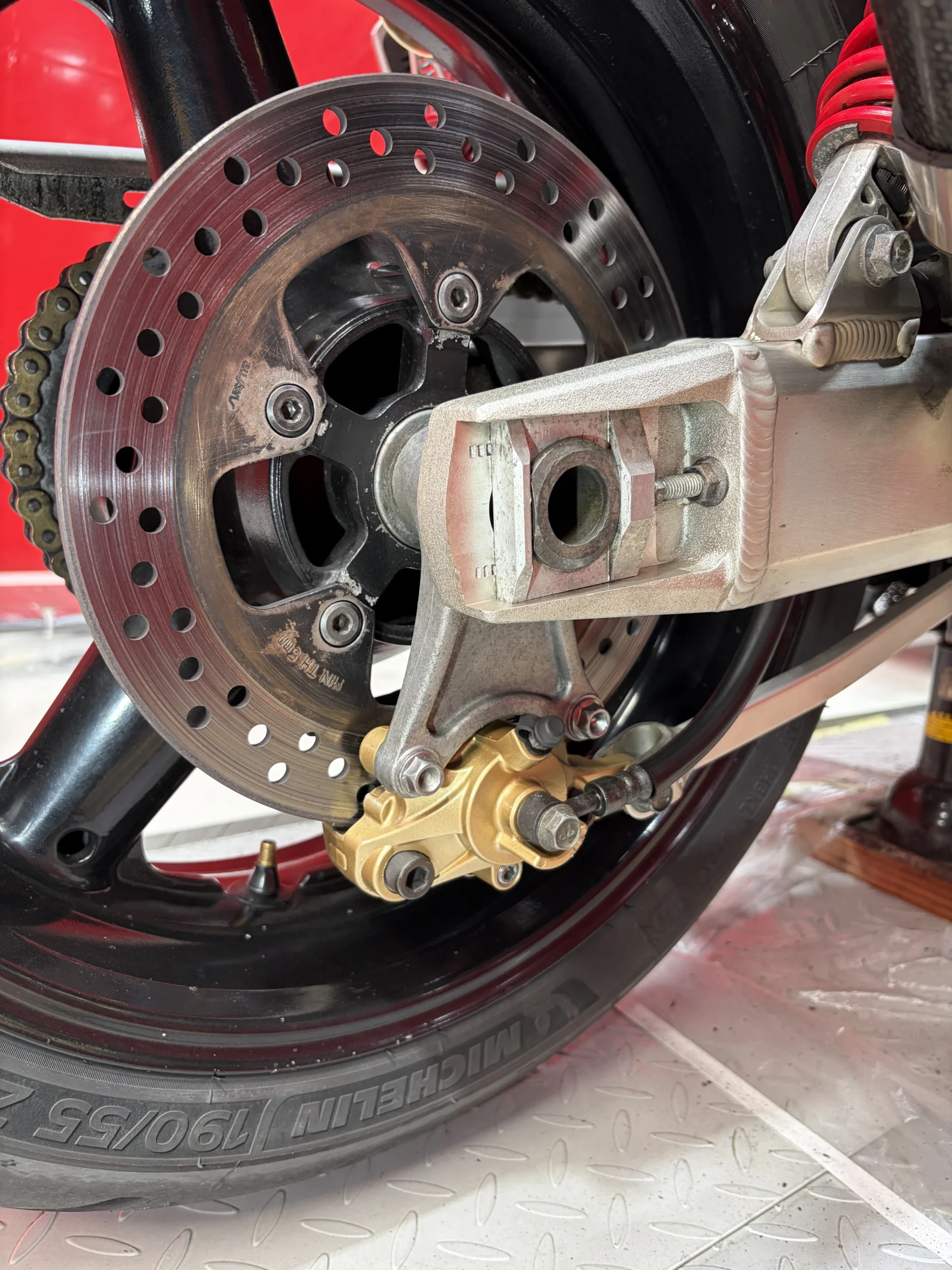
Brake dust bonded to the caliper and down the fork leg.

Caliper gold again and the fork leg back to a mirror.
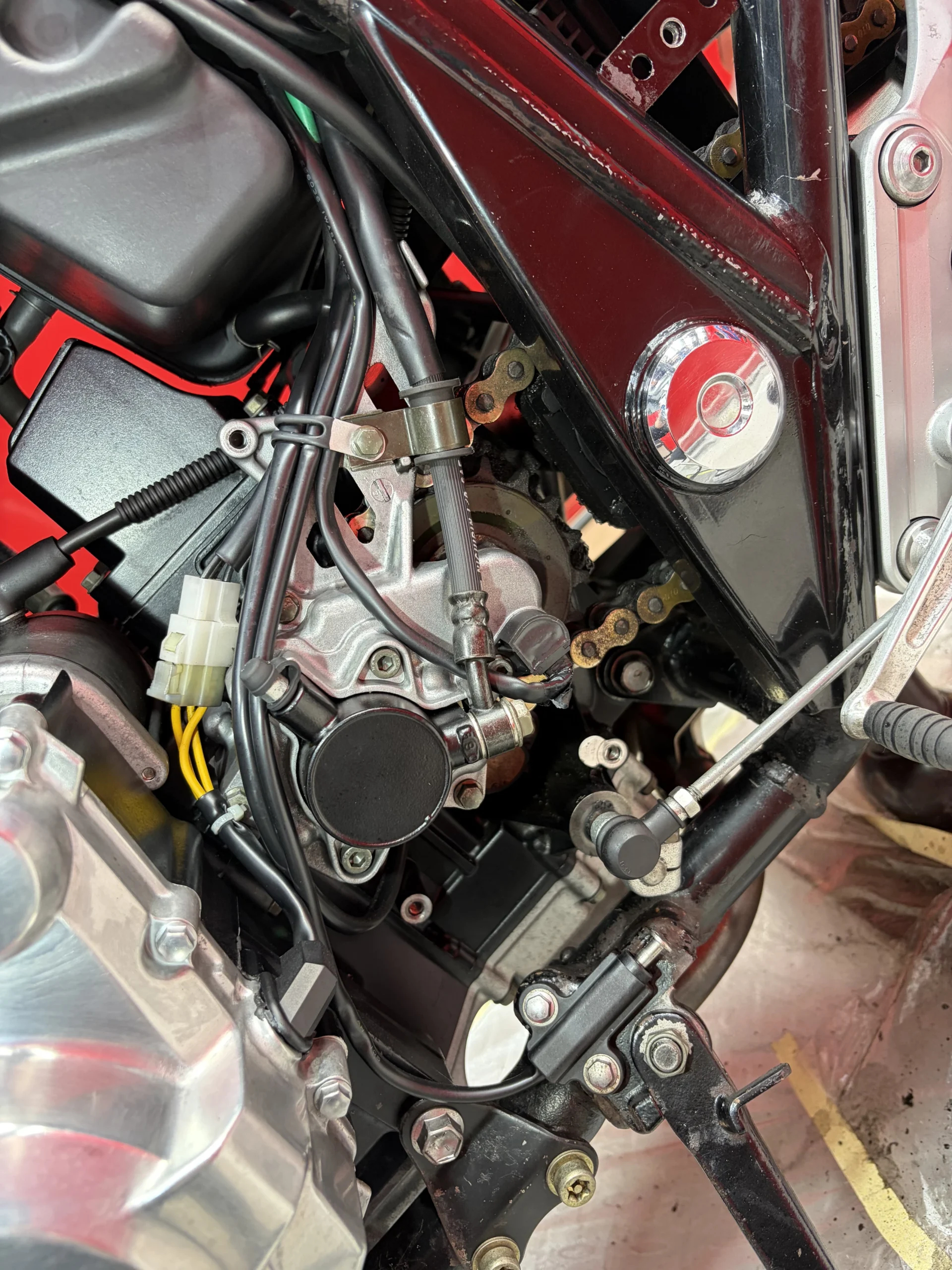
Calipers are the test. Brake dust bakes on hot and bonds hard, and there is no scrubbing a caliper body clean without taking it off the bike. This one was cleaned in place with the pads and seals untouched — the colour is the original finish coming back, not paint.
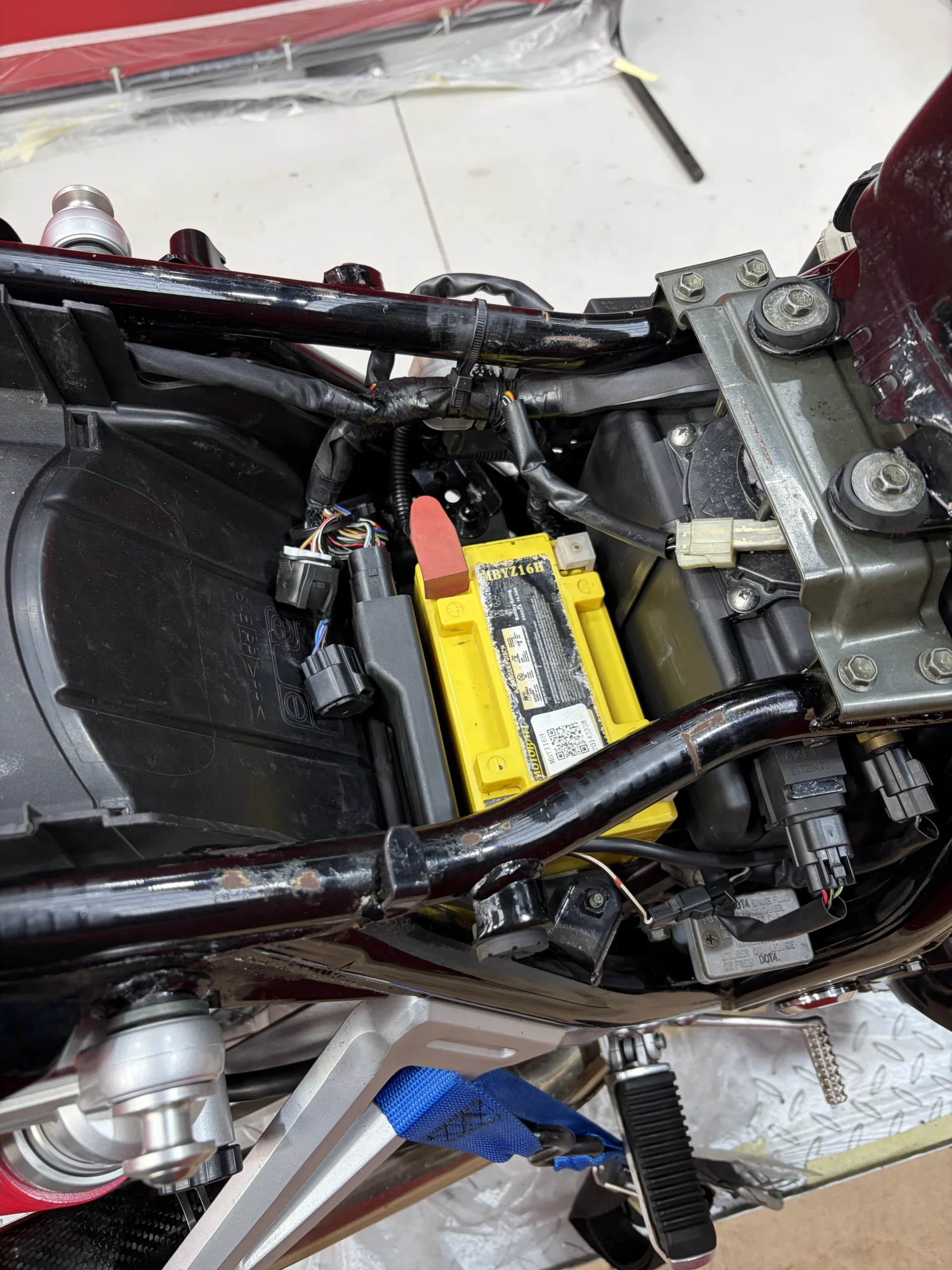
Loom and connectors masked

Linkage and cases under a uniform brown film.

Castings, linkage and hardware reading separately again.
Every frame from the job, from the first survey pass to the bike back on the showroom floor. Filter to walk it through one condition at a time.
The same walk around the bike, filmed on the stand before the first pass and again at handover. Same route, same light — the only variable is the dirt.
Day one — swingarm, shock and rear end, untouched.
Handover — same walk, same angles.
The swingarm and the chain. On day one the arm, the sprocket carrier and the chain all read as the same dull grey; by handover the arm is back to polished alloy and the chain is gold again.
Nothing in either clip is staged. Same stand, same lamp, same phone — the camera takes the same path both times.
Both clips shot on the stand, nearside rear.
Full photo and video baseline. Connectors, breathers and anything with an open seal get taped. Extraction positioned under the bike.
Wide nozzle, moderate pressure, working across the cases, frame and swingarm. Lifts the loose film without loading the alloy with energy it does not need.
Narrow nozzle down between the fins, around the linkage, into the caliper bodies and behind the rearsets. This is where most of the hours go.
Sweep the floor, walk the bike with the owner, shoot the after set from the same marks as the before set. The bike leaves dry and ready to ride.
The fin stack, the caliper bodies and the linkage - the three places a cloth never gets to - came back without a single fastener being undone. Seals, pads, connectors and every decal untouched.
Tell us what the car is and what’s under it. We’ll tell you straight whether dry ice is the right call, what it’ll take, and what it won’t fix.