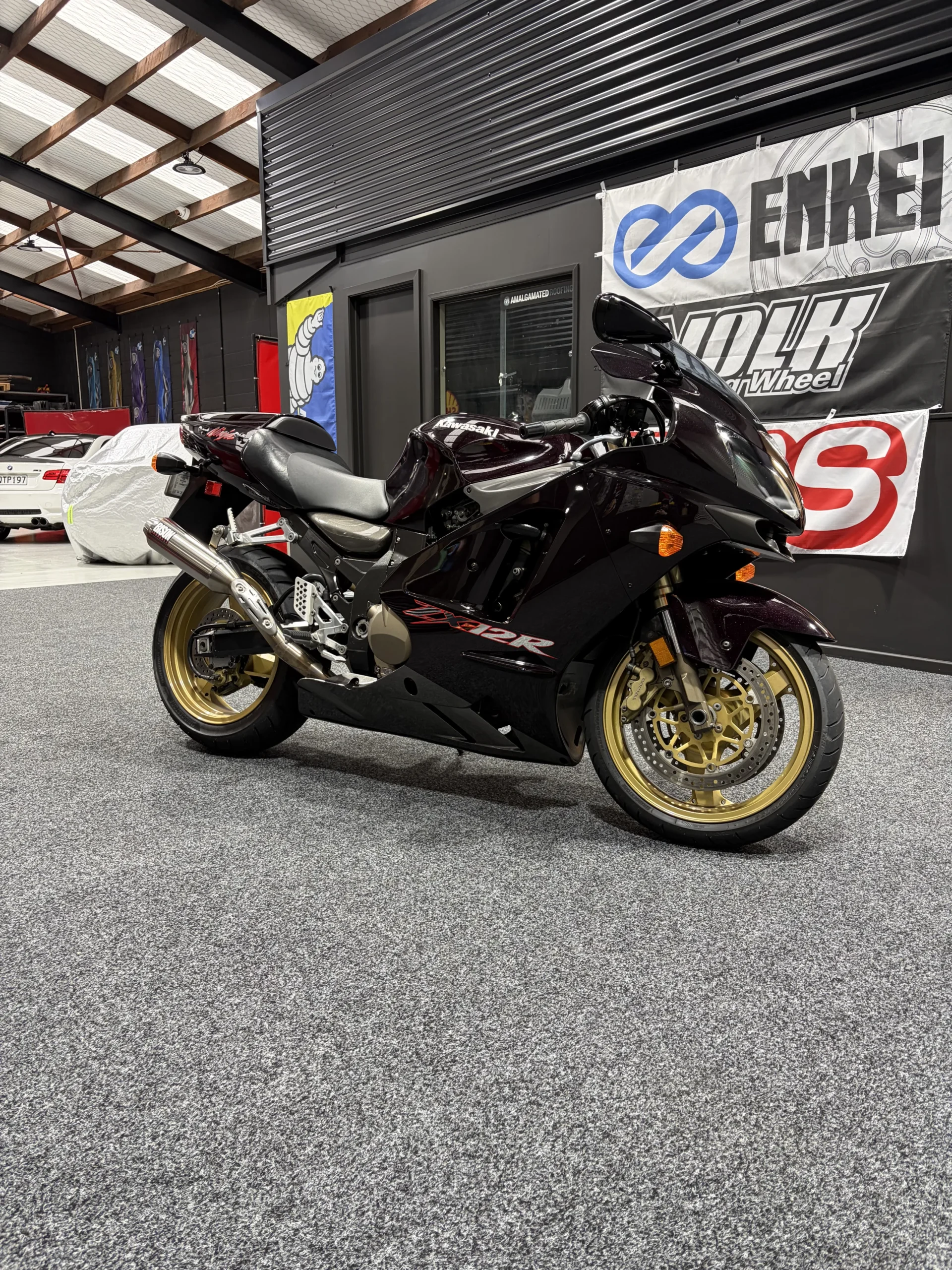
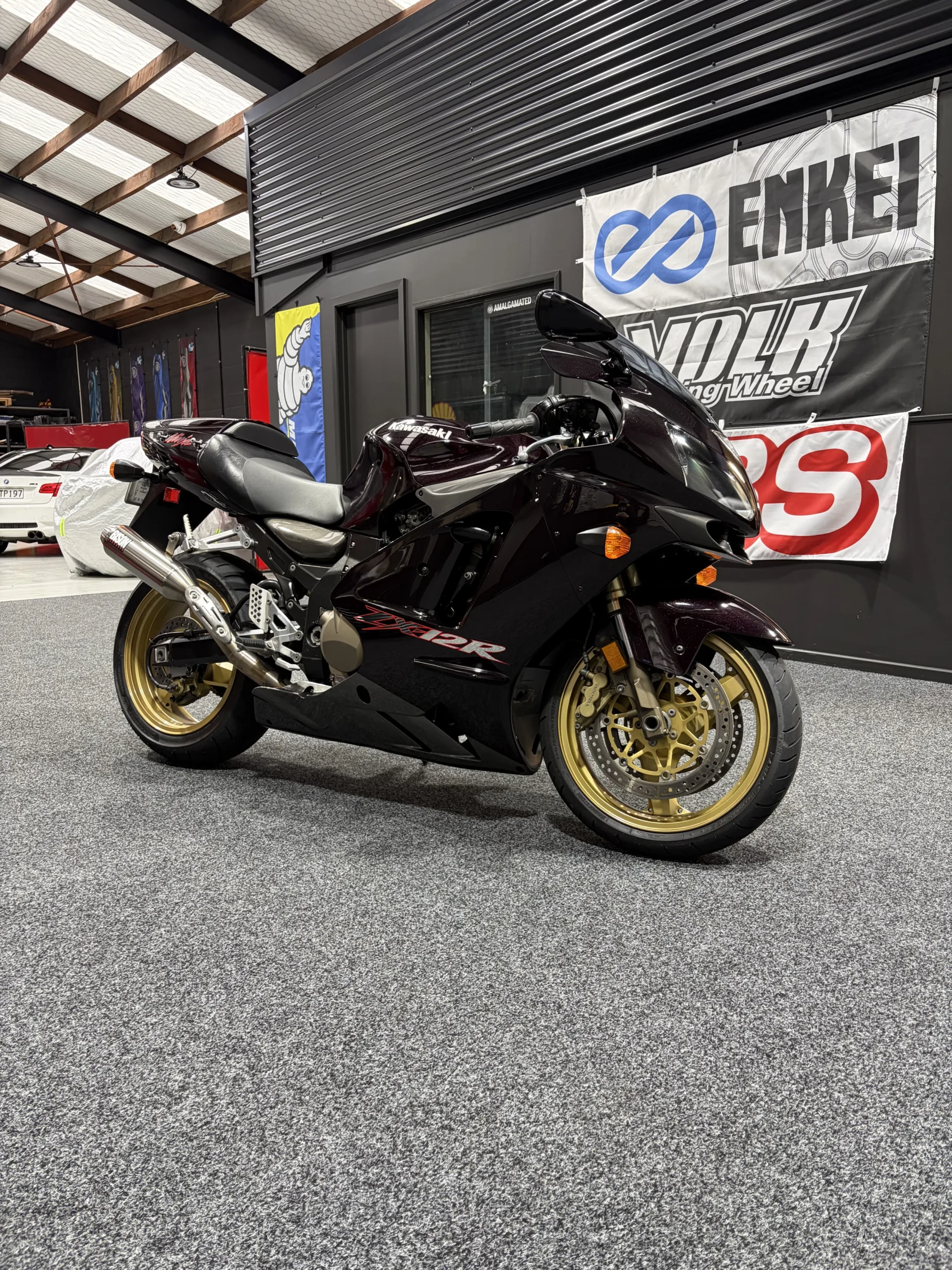
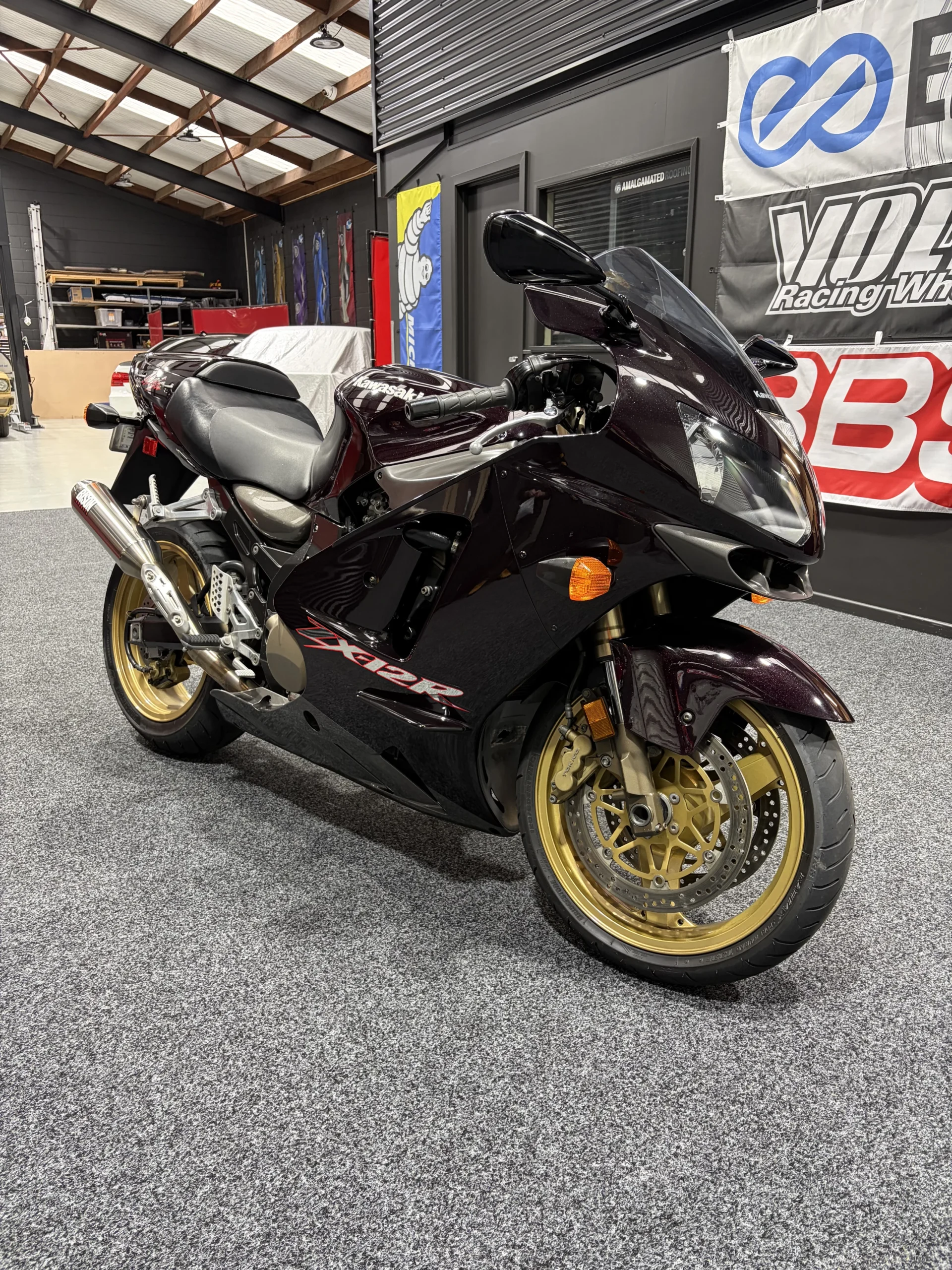
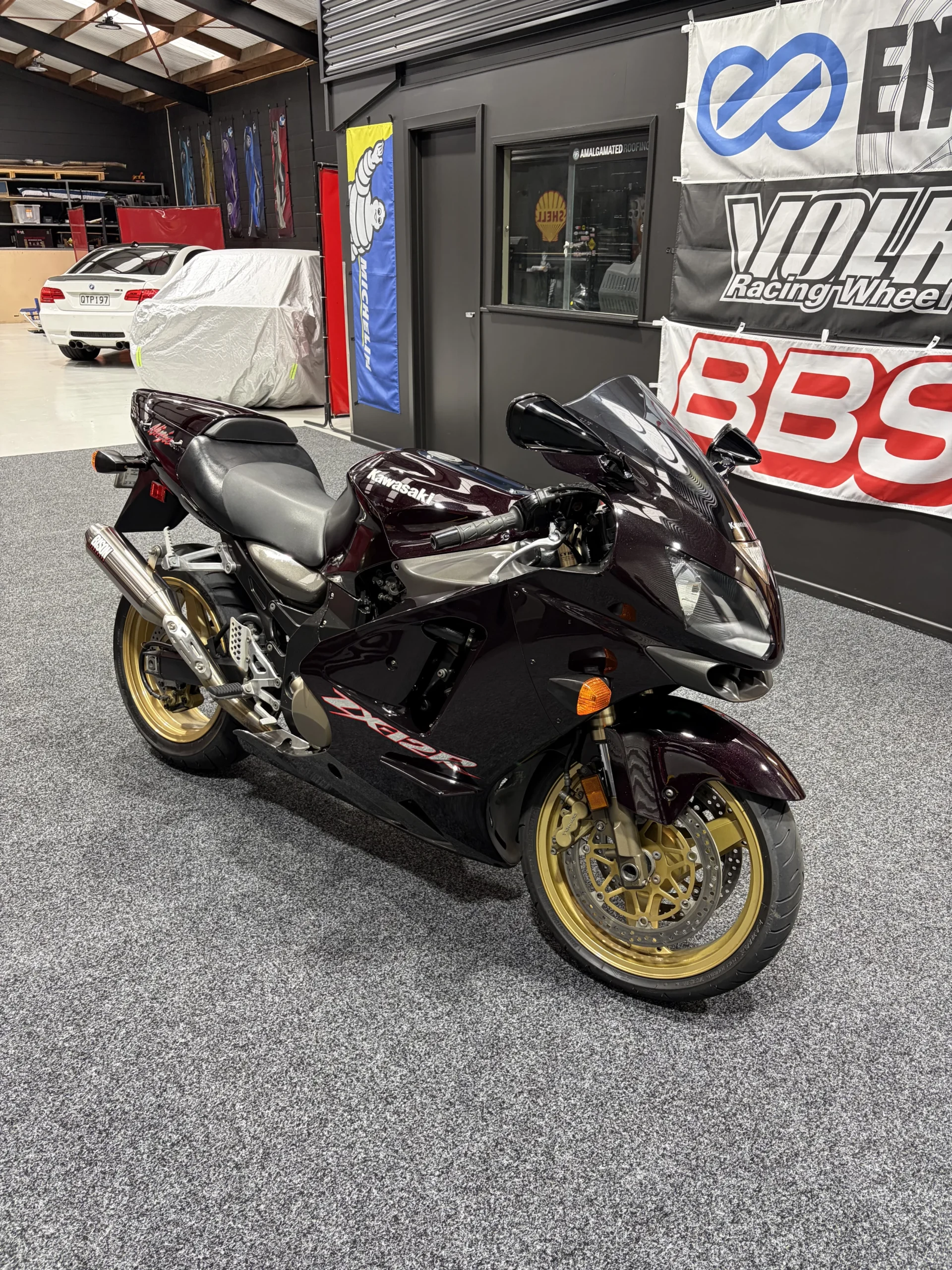
Twenty years of road film, chain fling and heat-baked residue — lifted off a hyperbike’s cases, linkage, brakes and wheels with the bike fully assembled. No water. No chemicals. Nothing dismantled.
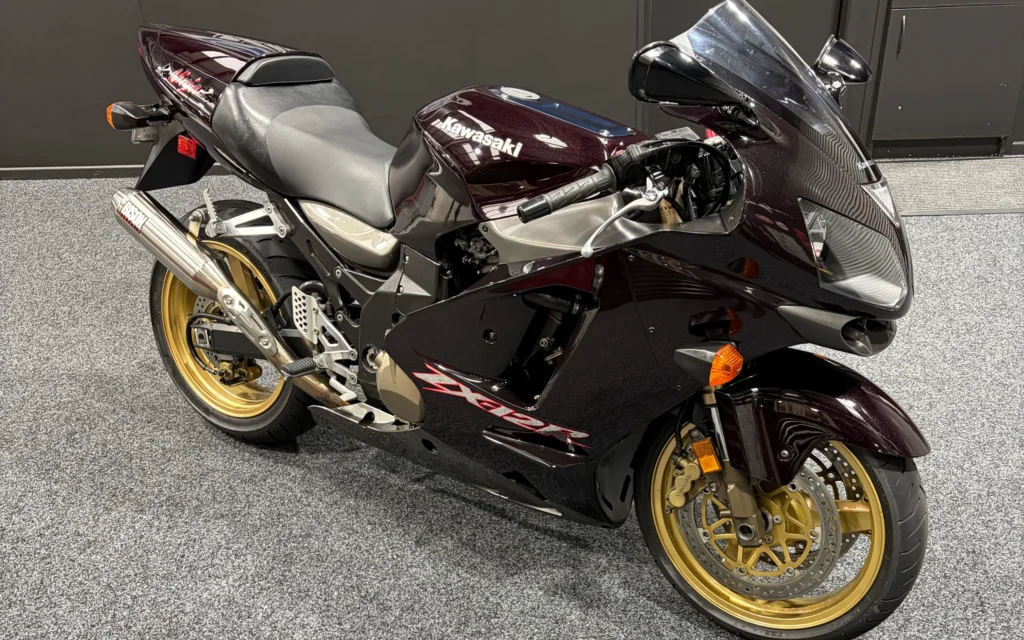
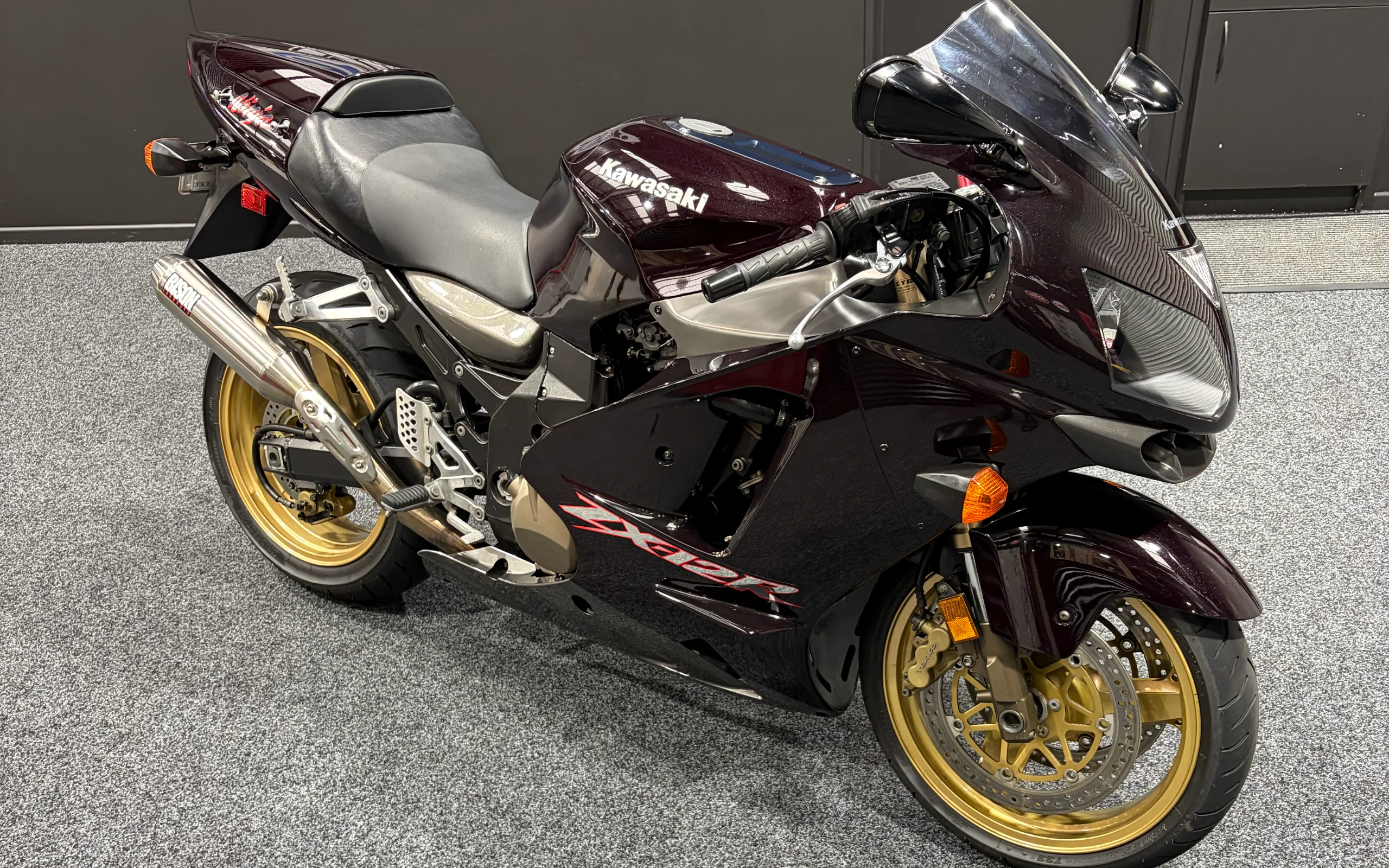
2004 Kawasaki ZX-12R
Original bodywork, unrestored
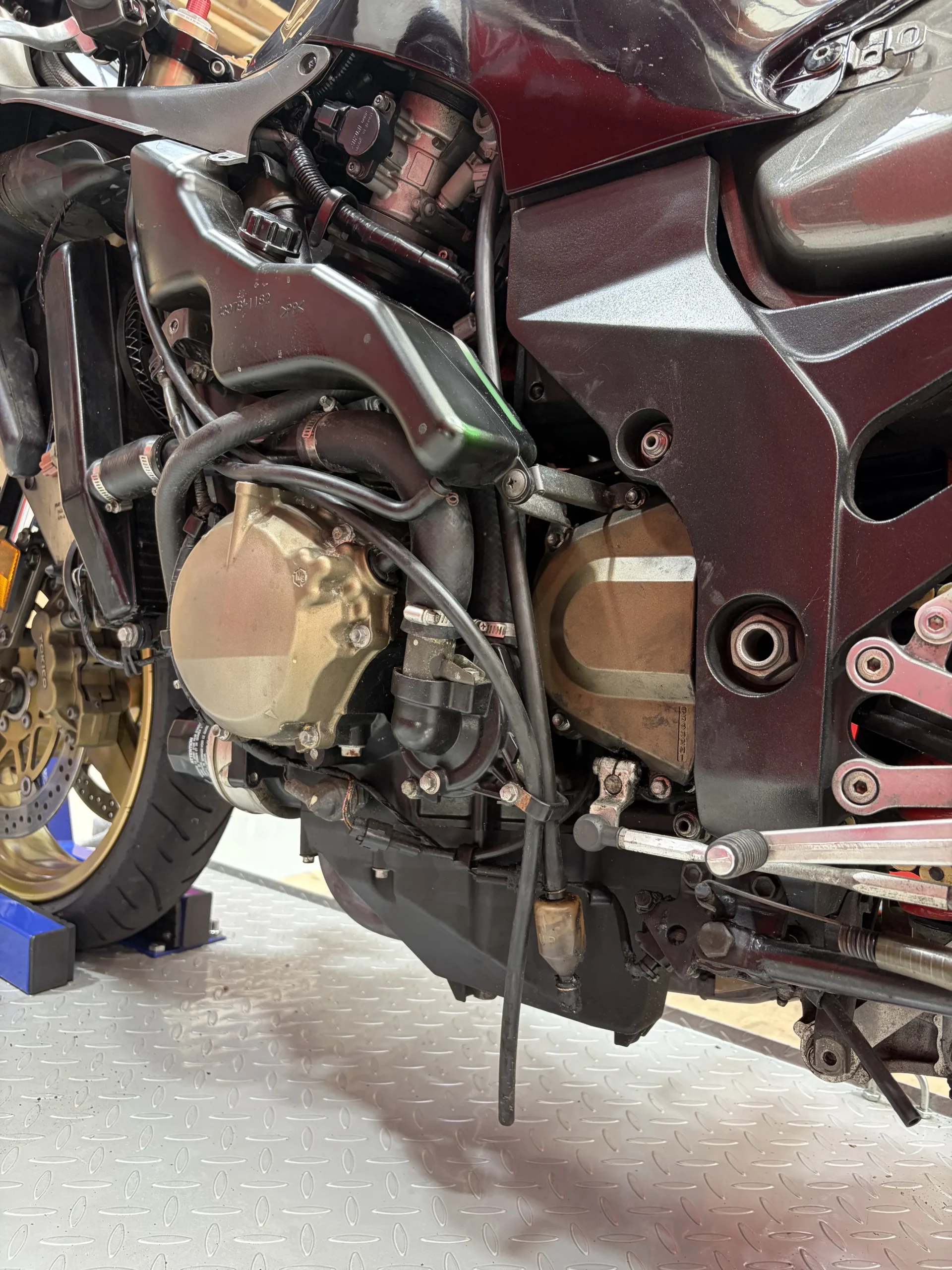
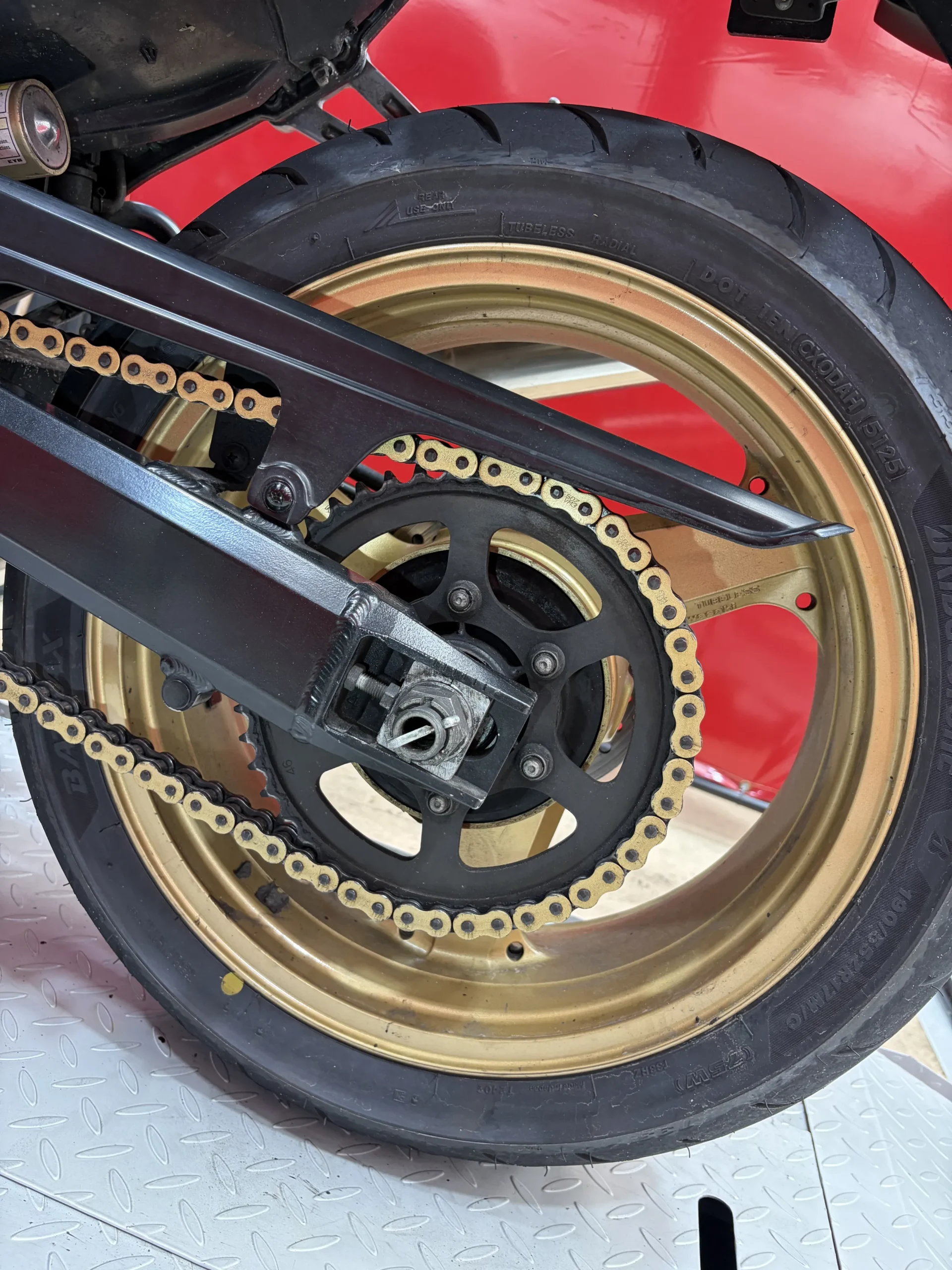
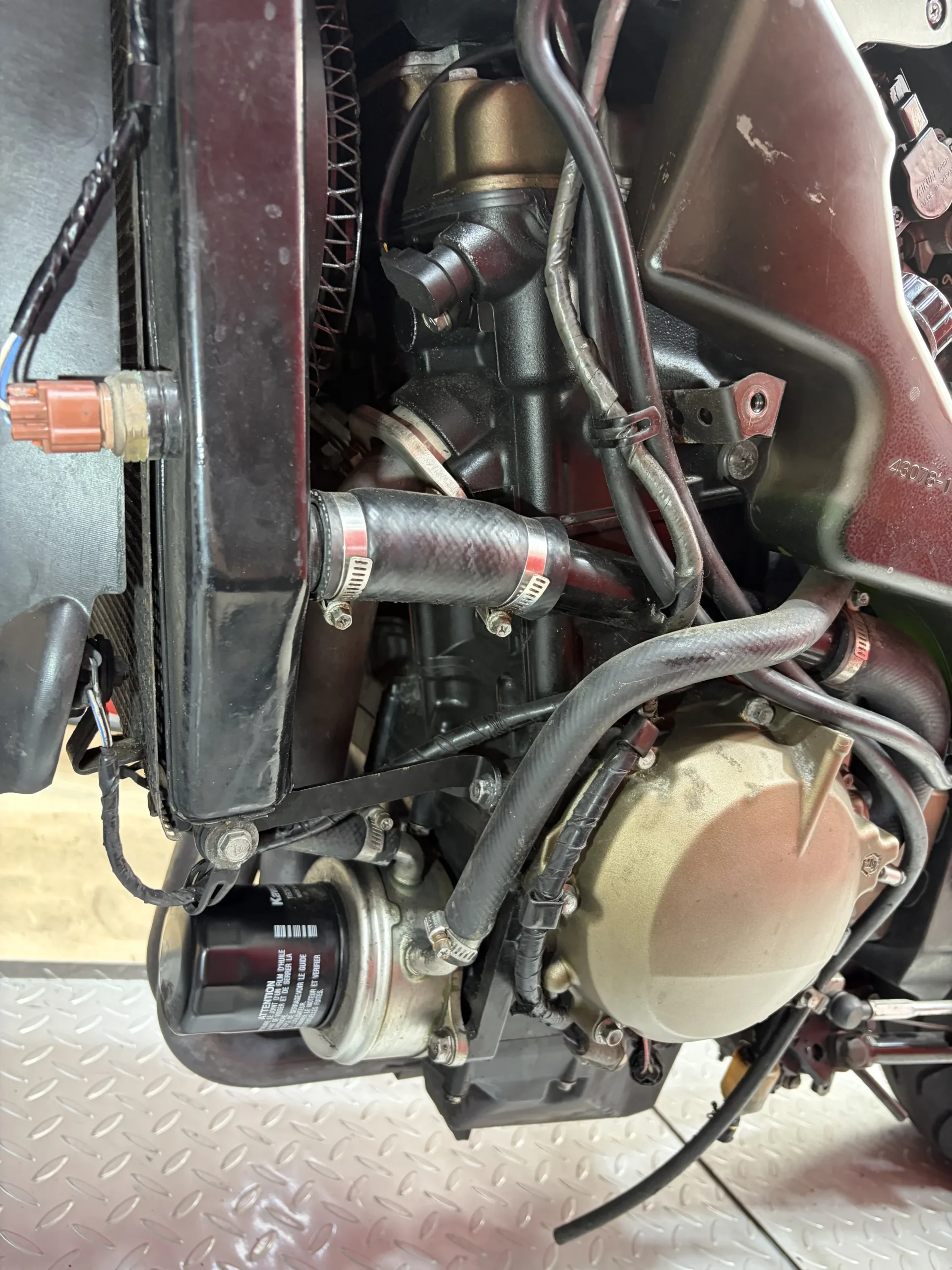
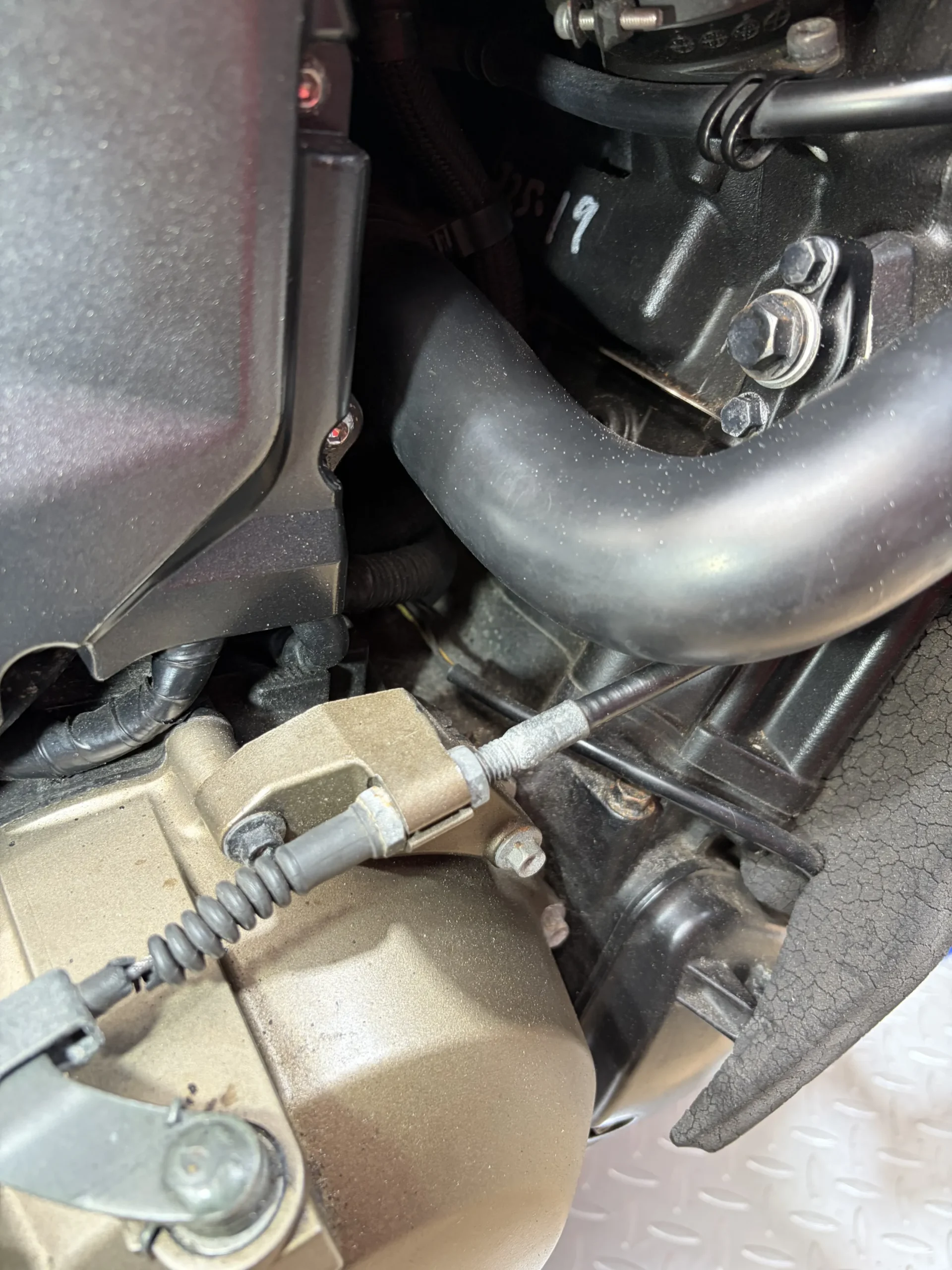
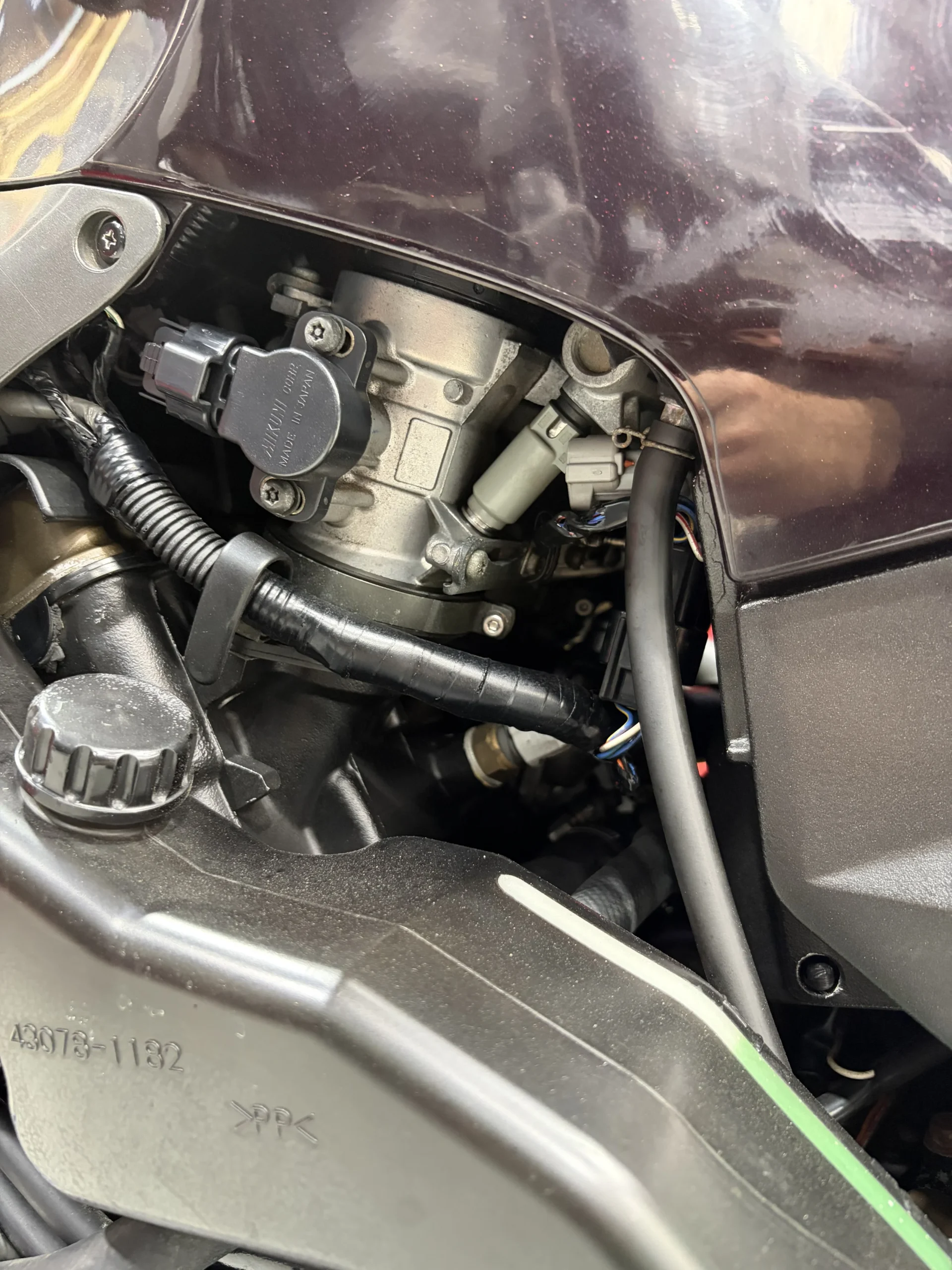
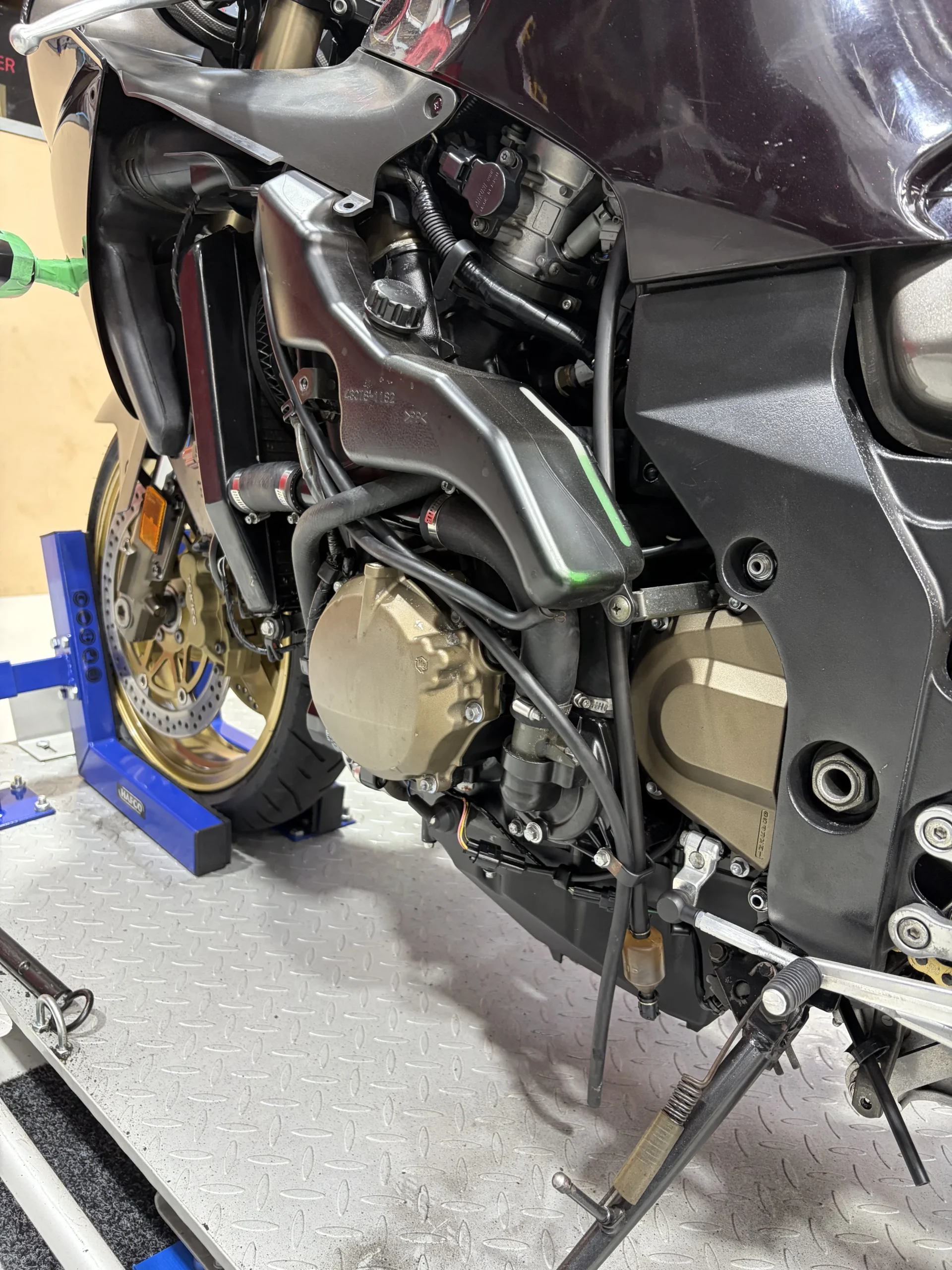
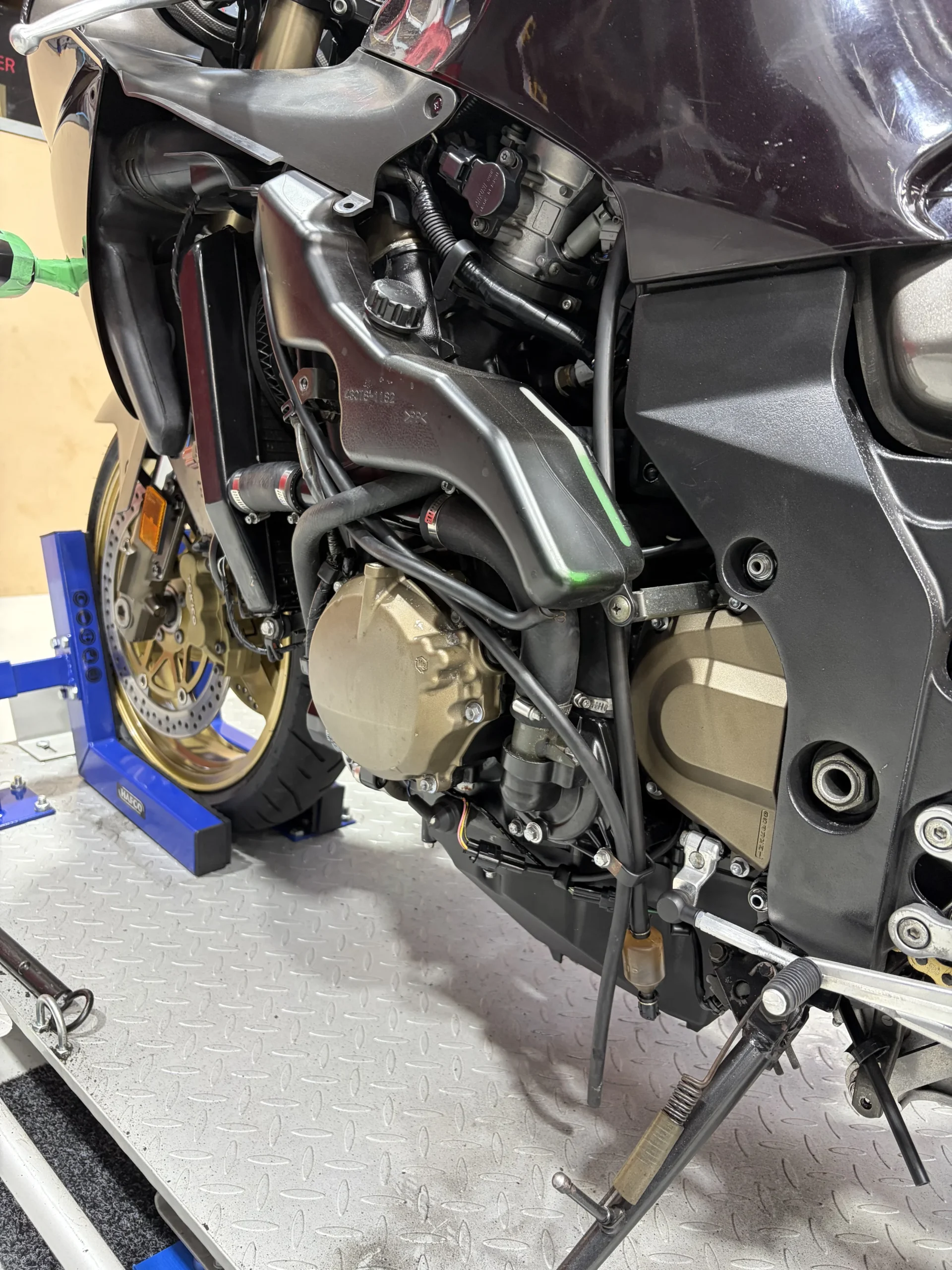
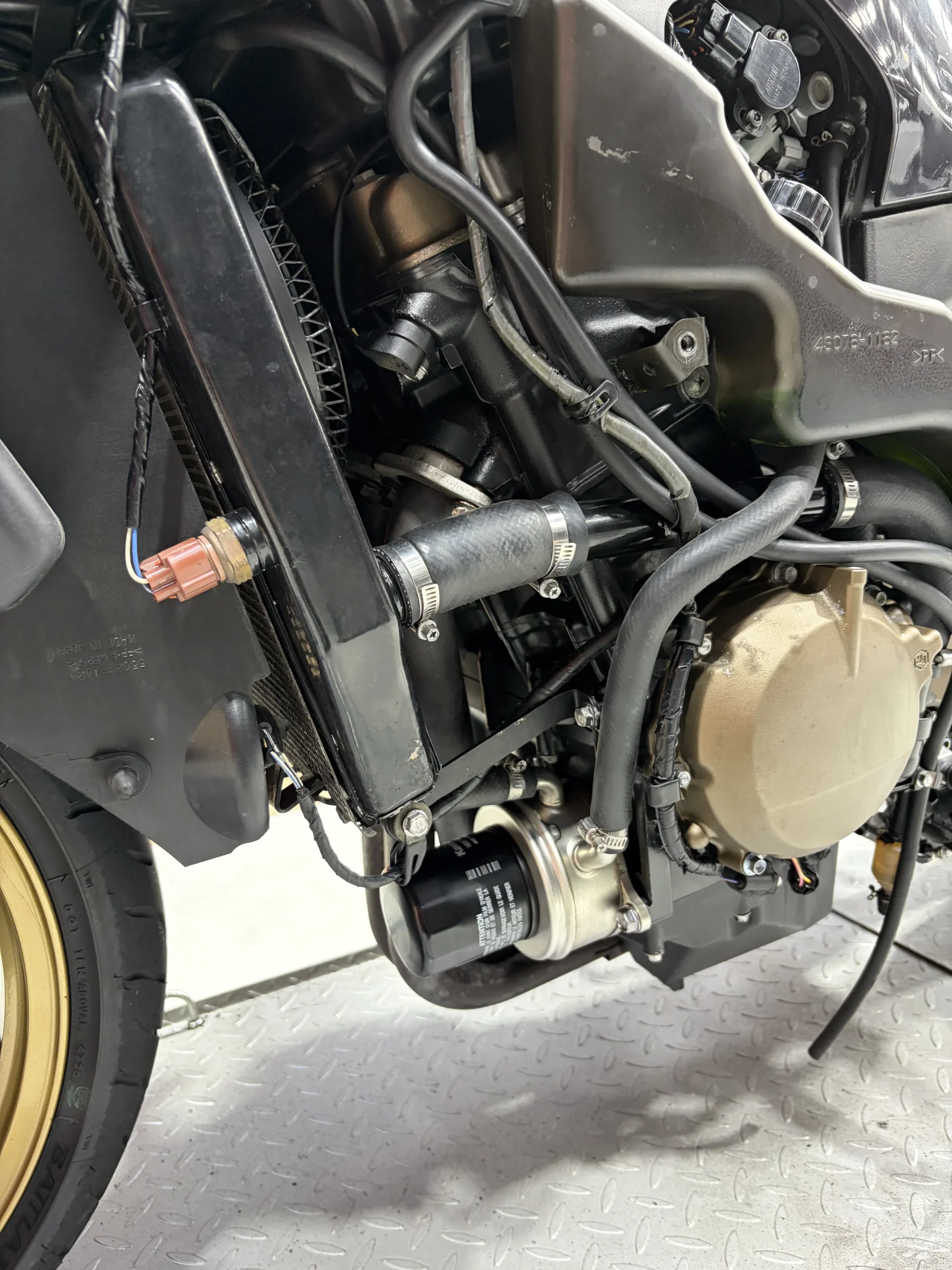
Engine cases, throttle bodies, headers, linkage, rearsets, brakes and wheels
Road film, chain fling and heat-baked residue across alloy castings and hardware
Dry ice blasting · no water, no solvents, no media residue
Private owner, Auckland
Performance workshop
Jul 2026
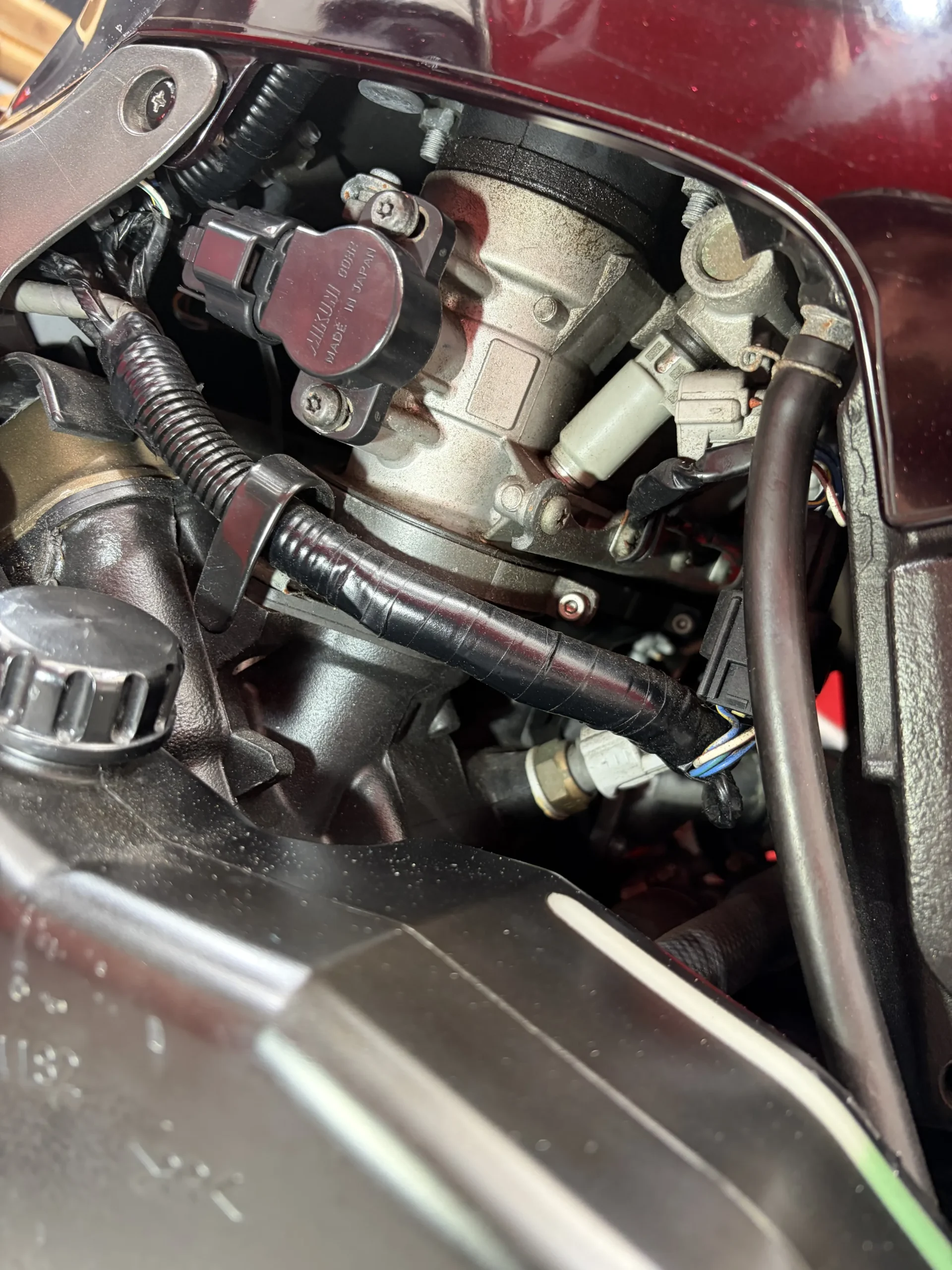
The bike came in complete and running — bodywork on, loom connected, brakes and wheels in place. Twenty years of road use had left chain fling down the swingarm, a film of oil mist across the cases, and the sort of heat-baked residue around the headers that no amount of brushing shifts.
Assembled is the hard case. Solvent and a rag get the flat surfaces and push everything else into the case seams, the linkage and the loom. Pressure washing goes straight past bearing seals, connectors and the instrument loom. Media blasting is not an option anywhere near throttle bodies, brake seals or a wheel bearing.
Dry ice sublimates. It hits the surface at −78 °C, shocks the contaminant layer loose, and turns straight back into gas. Connectors get masked, extraction sits under the bike, and the only thing left on the floor is what came off it.
Lift road film, chain fling and heat residue off the cases, linkage and headers with the bike assembled.
Protect the anodised hardware, the wheel finish and every factory decal and warning label.
Keep water and solvent away from bearing seals, brake components and connectors.
Leave a bike that photographs as well at arm’s length as it does across a showroom floor.
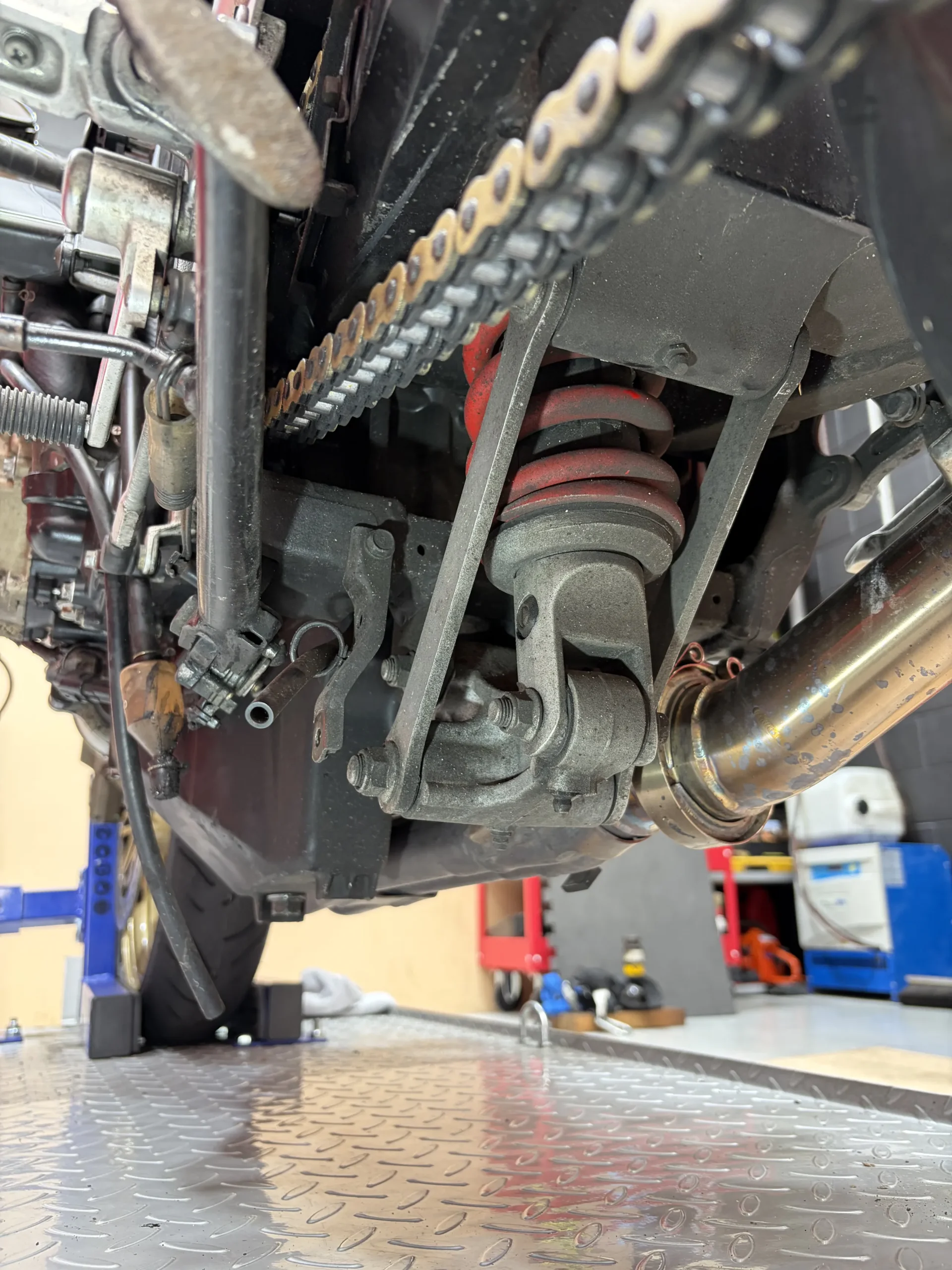
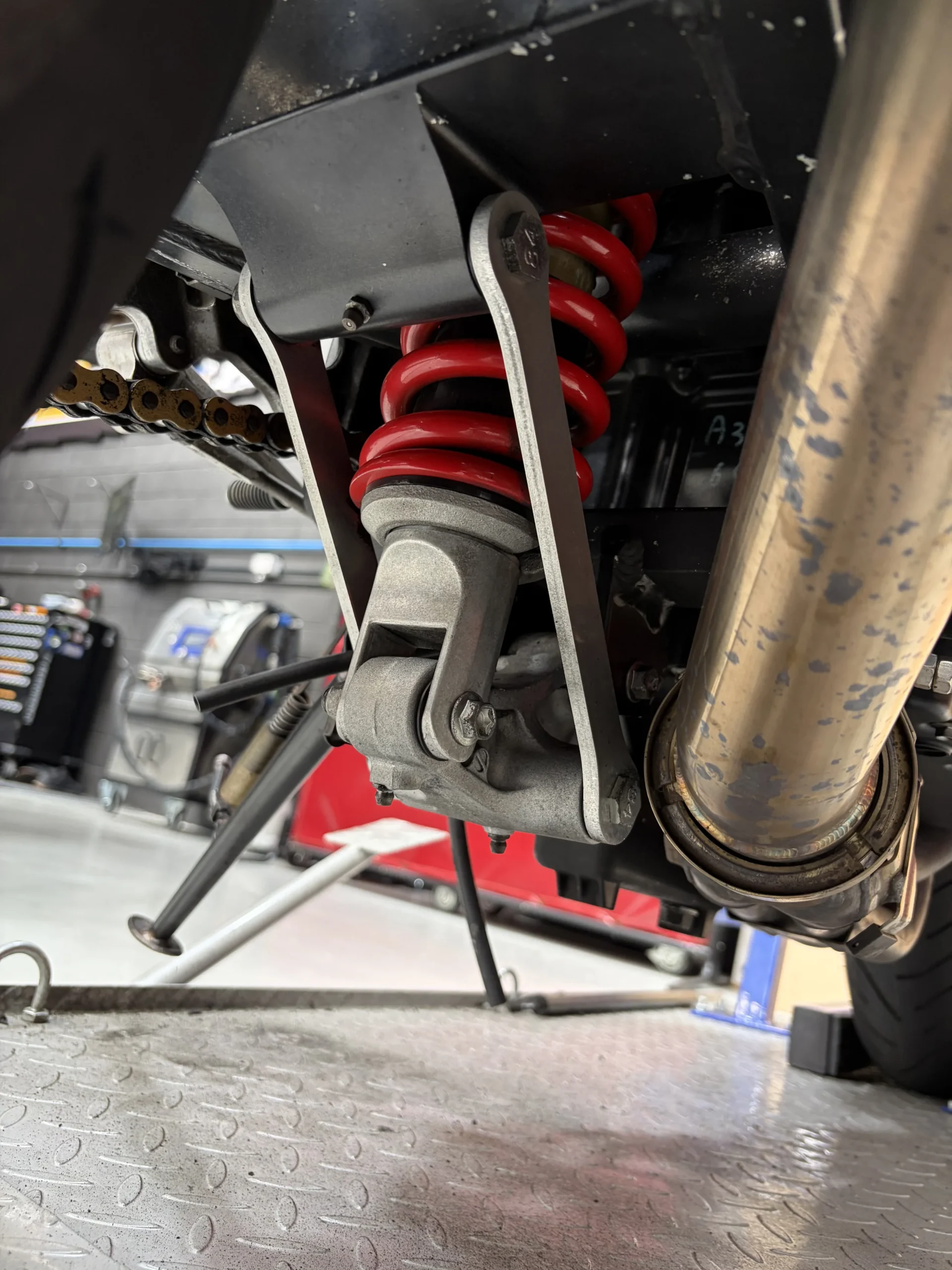
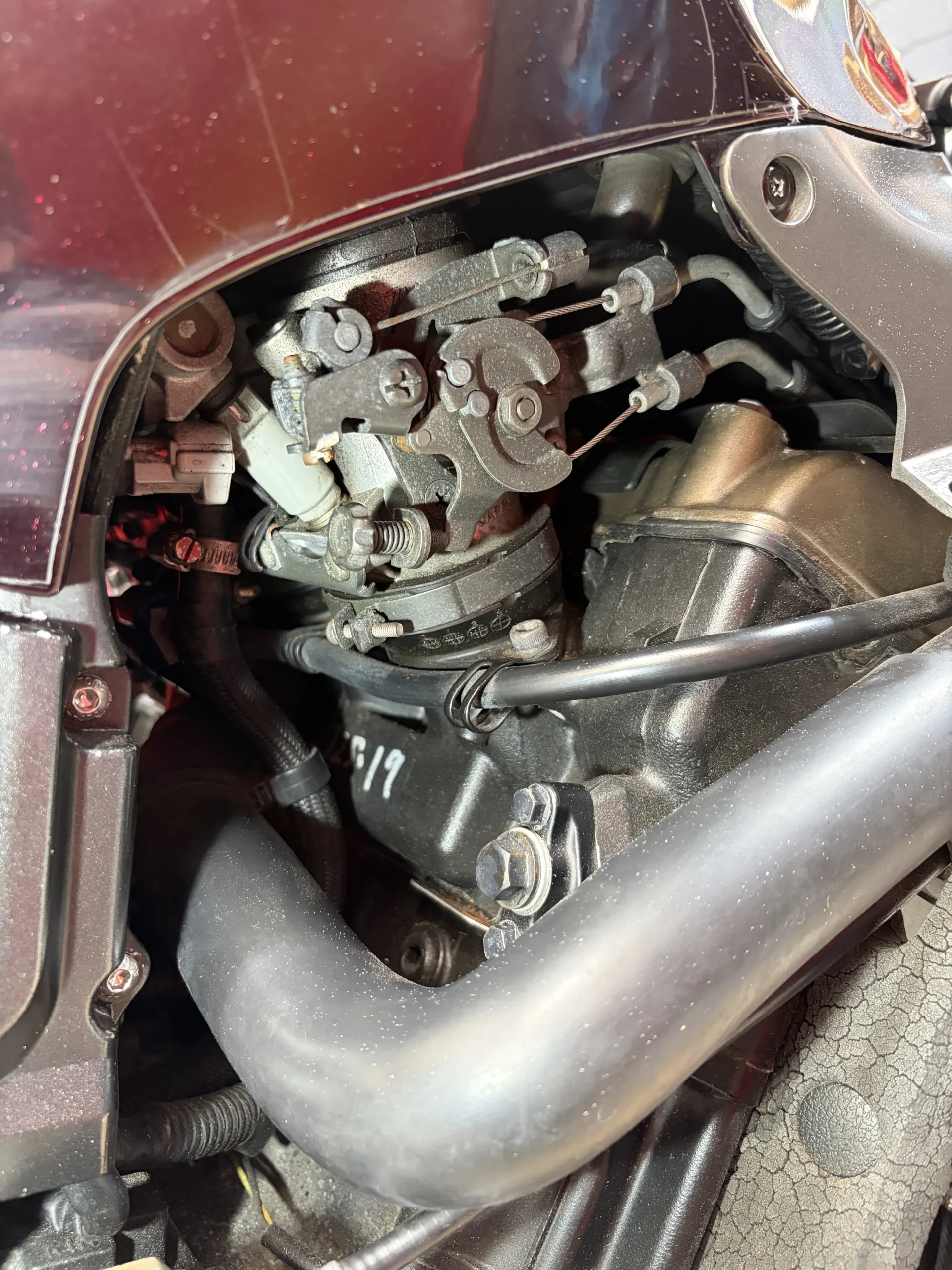
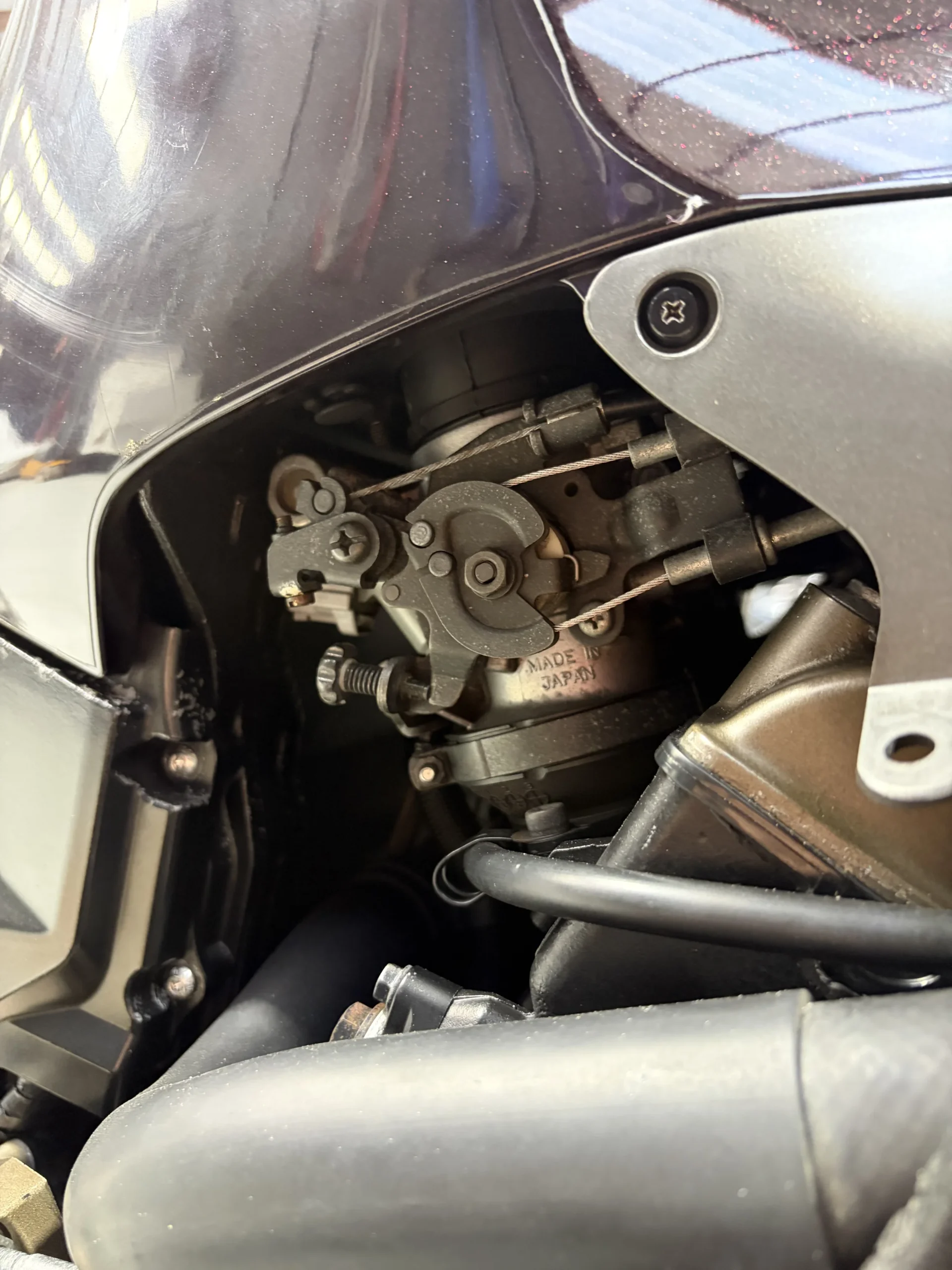
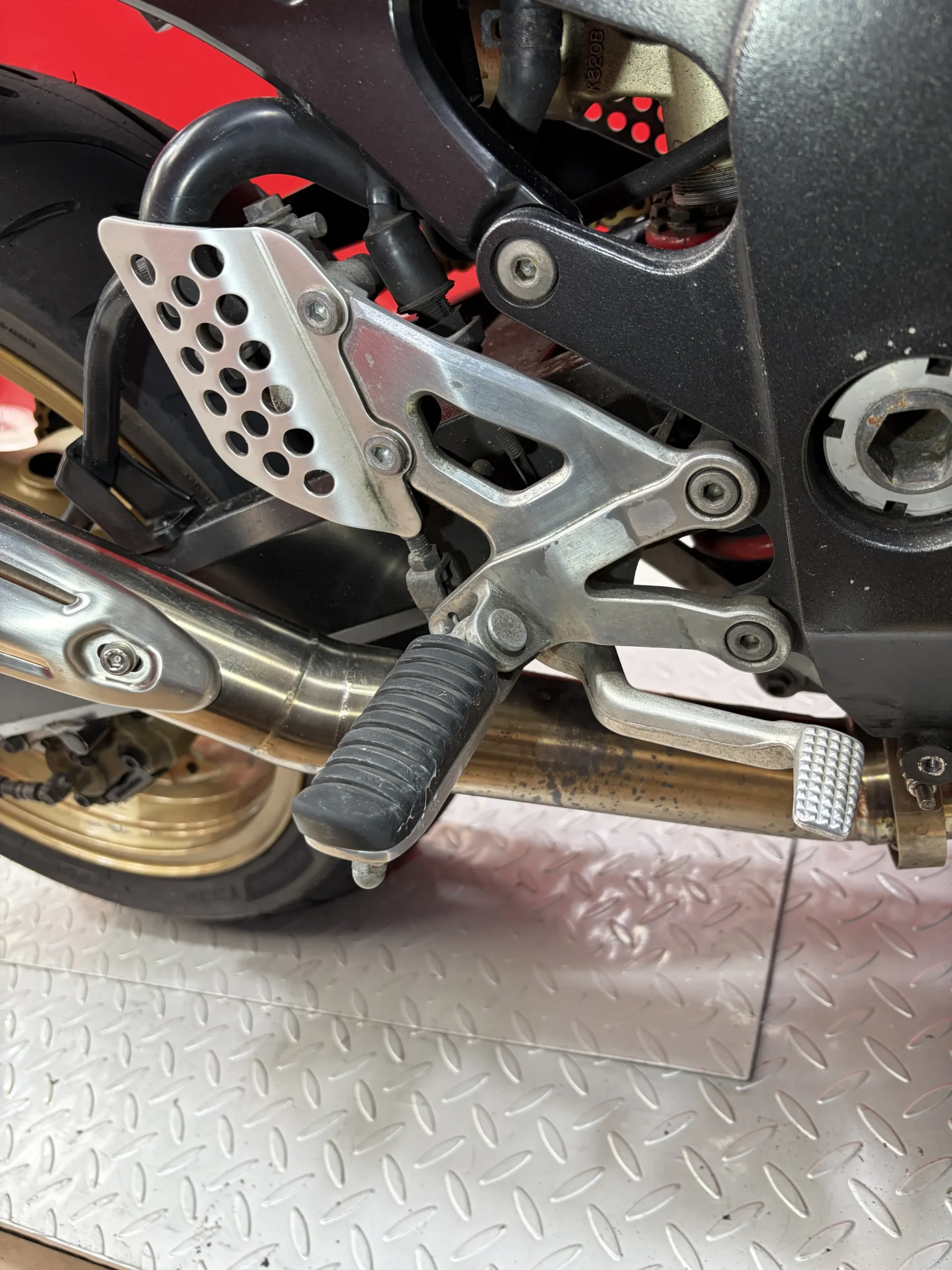
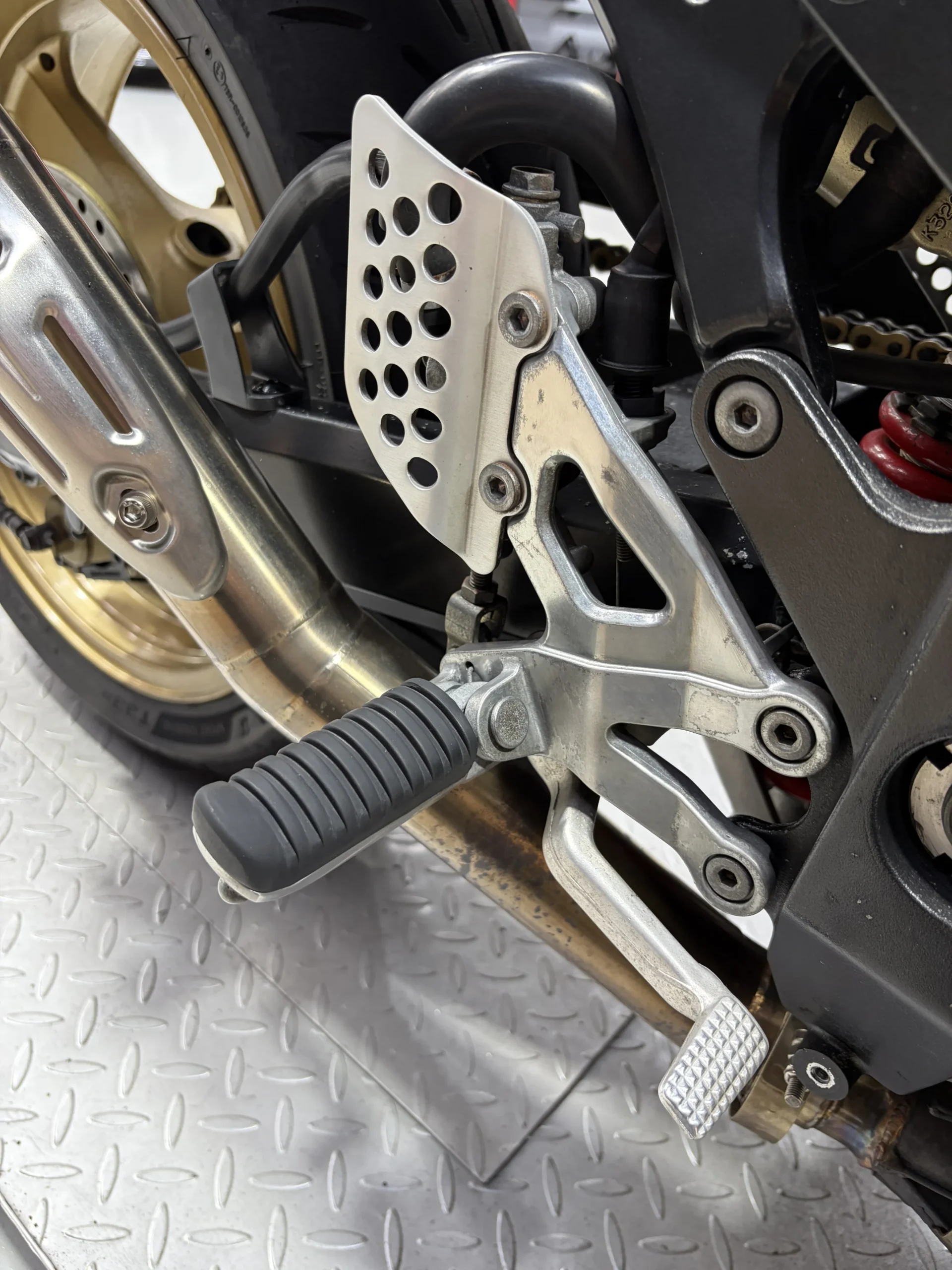
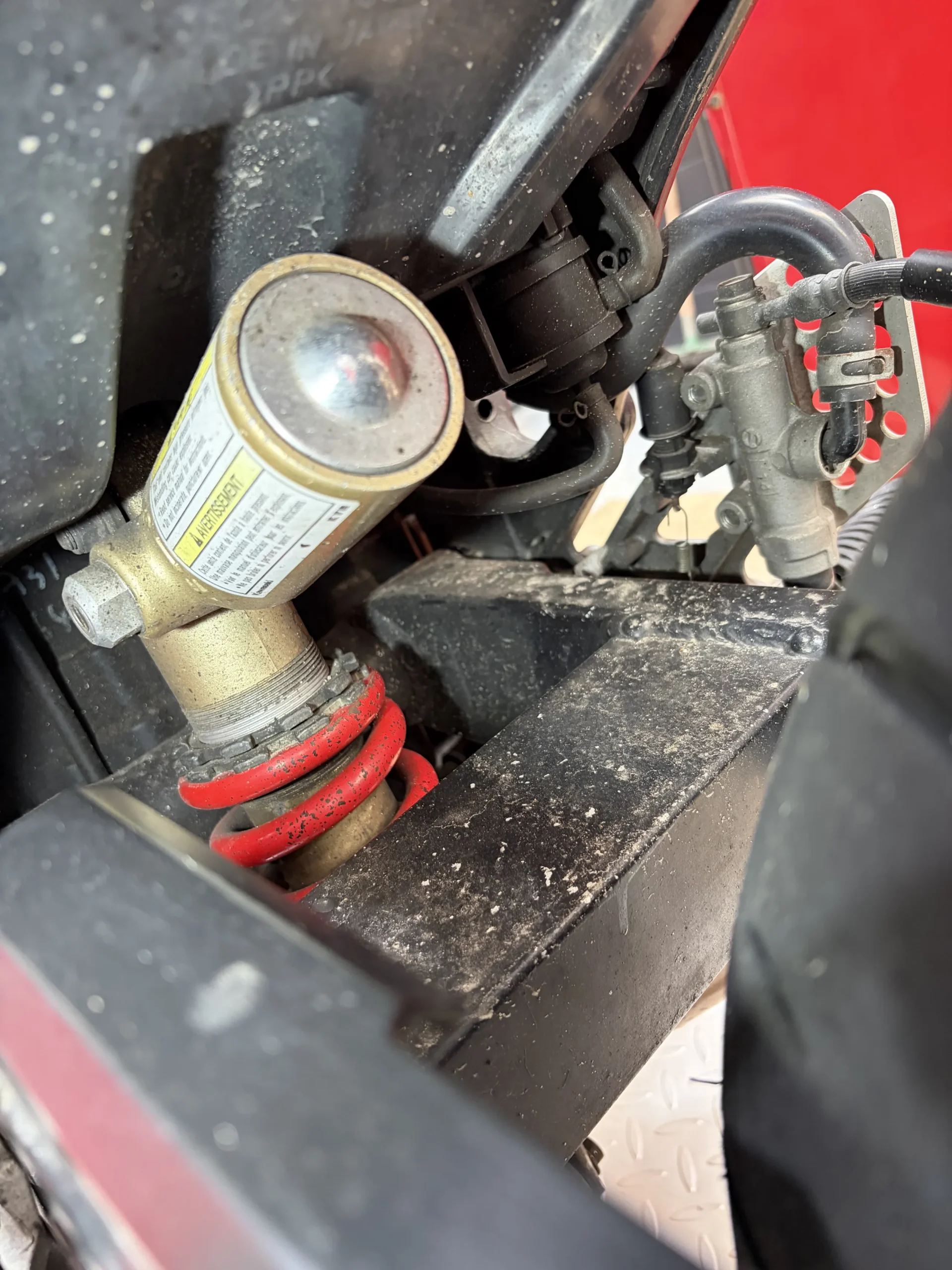
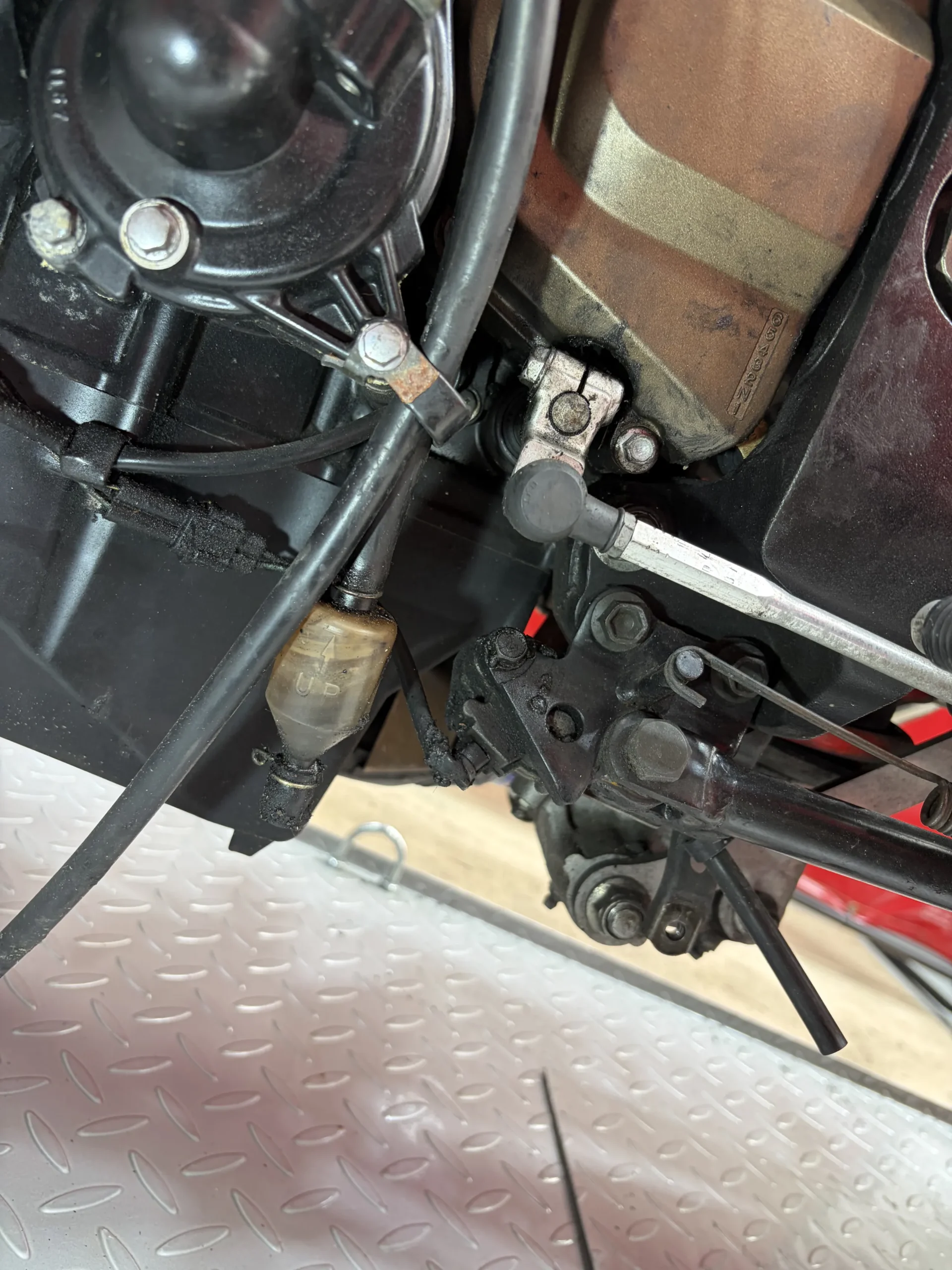
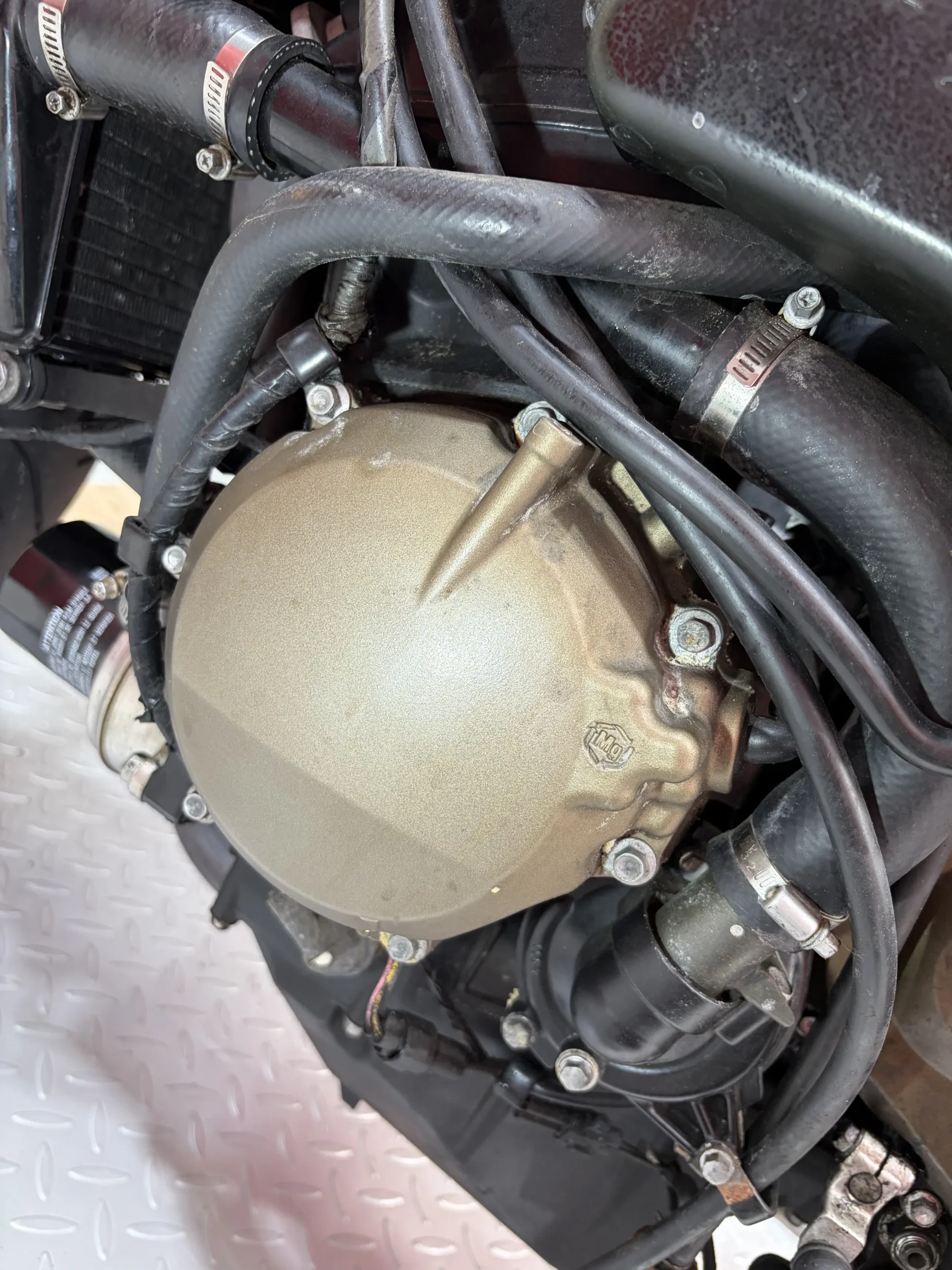
Same part of the bike, shot on the stand before the first pass and again at handover. Nothing retouched, nothing colour-graded, nothing polished afterwards.
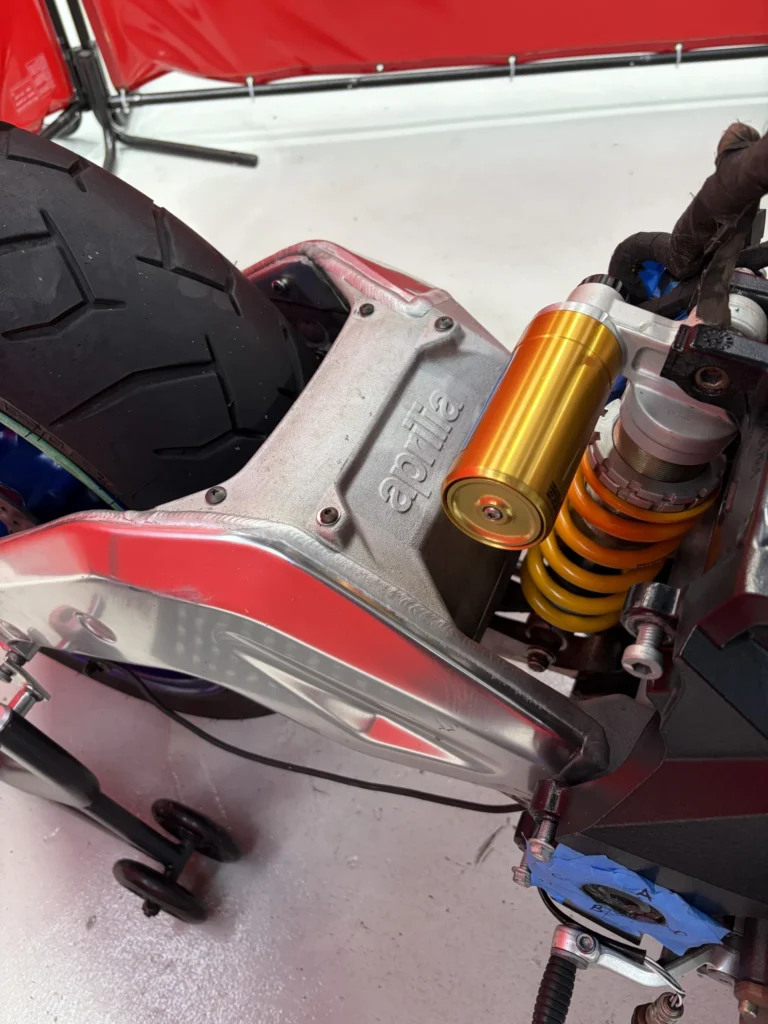
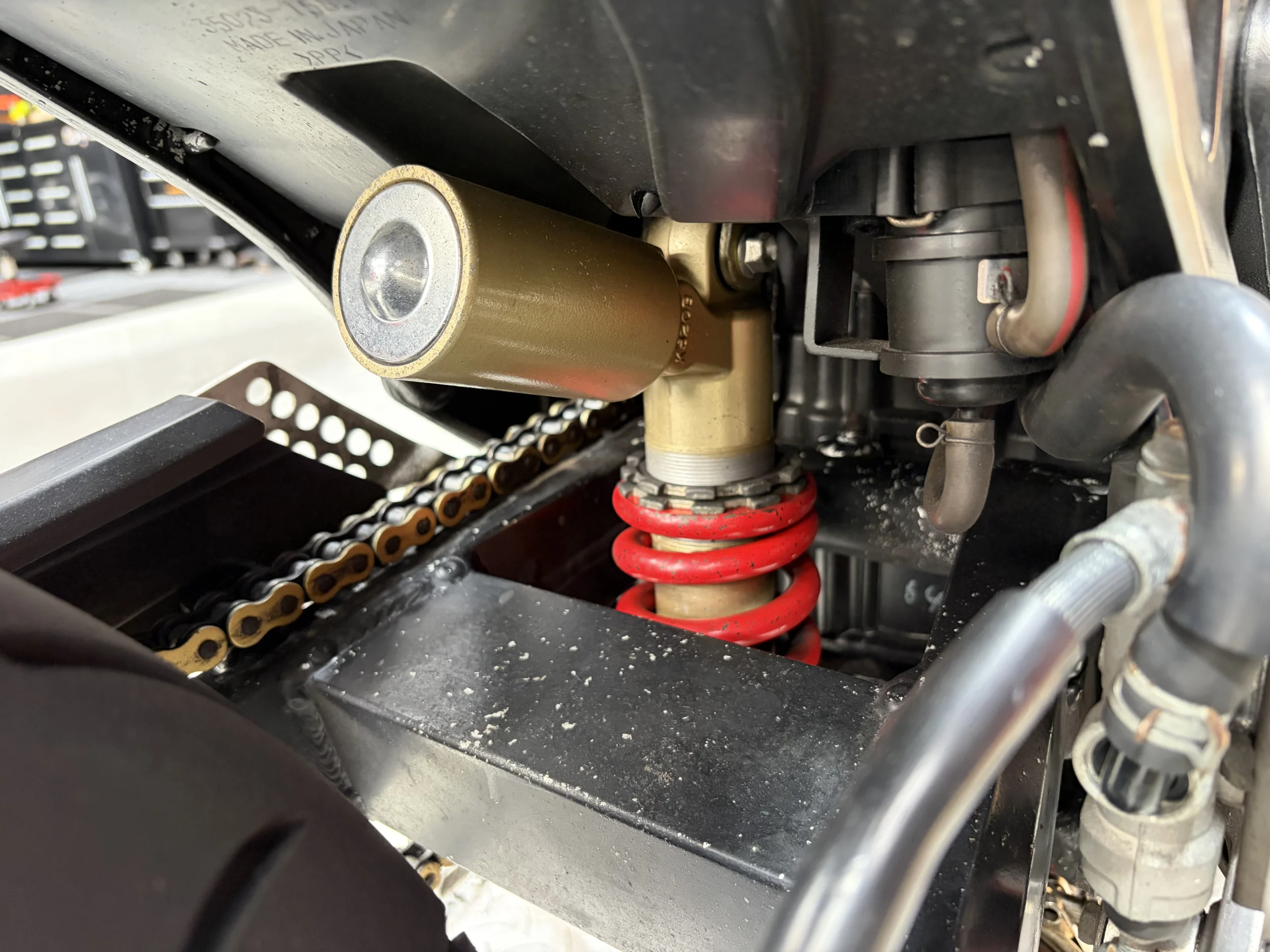
Linkage cleaned assembled

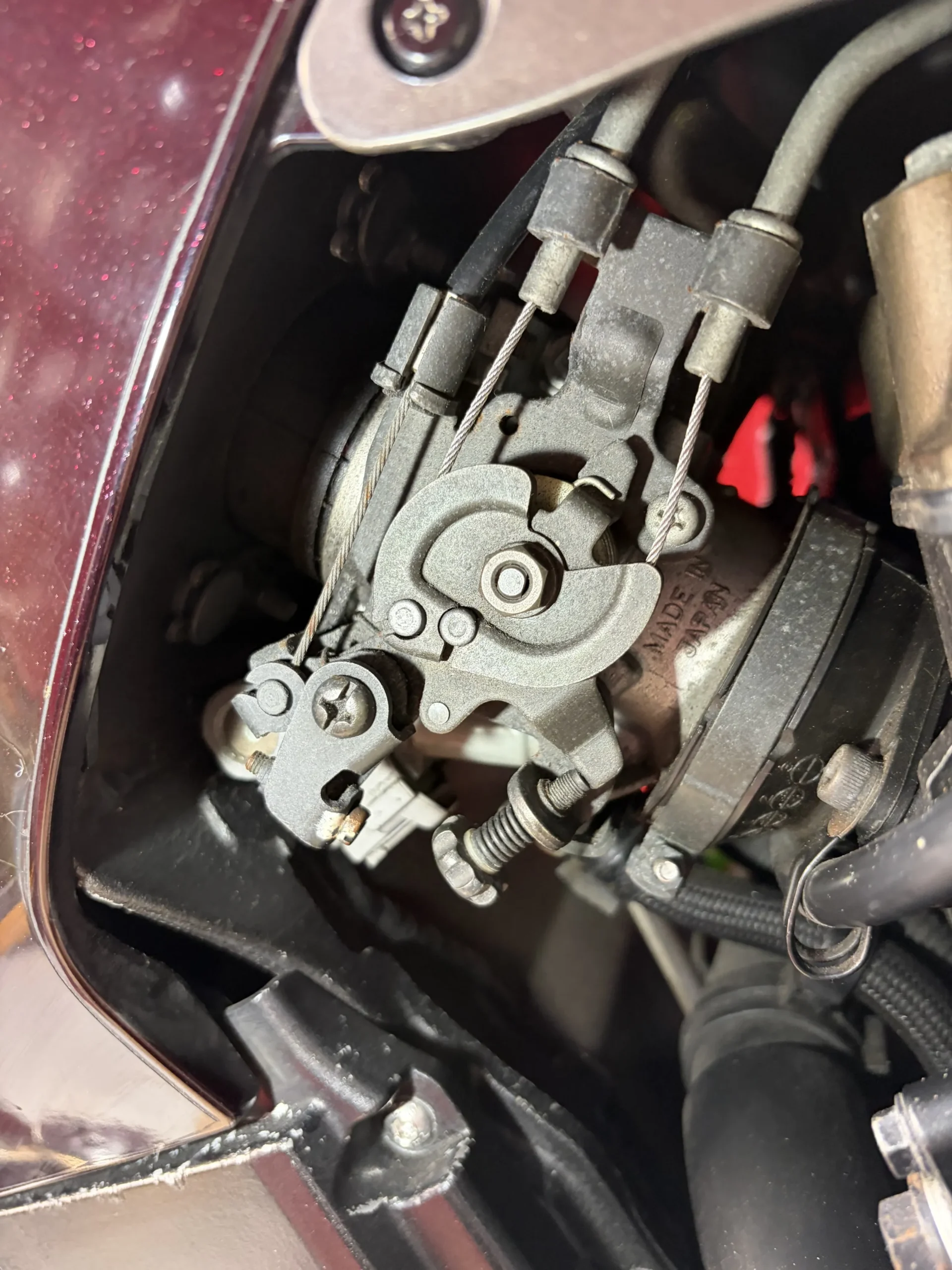
Dust over the spring, the linkage and the collector.

Spring back to red, linkage hardware readable again.
Nothing removed to reach it

Alloy and header pipe reading as one dull grey.

Casting marks and hose clamps sharp again.
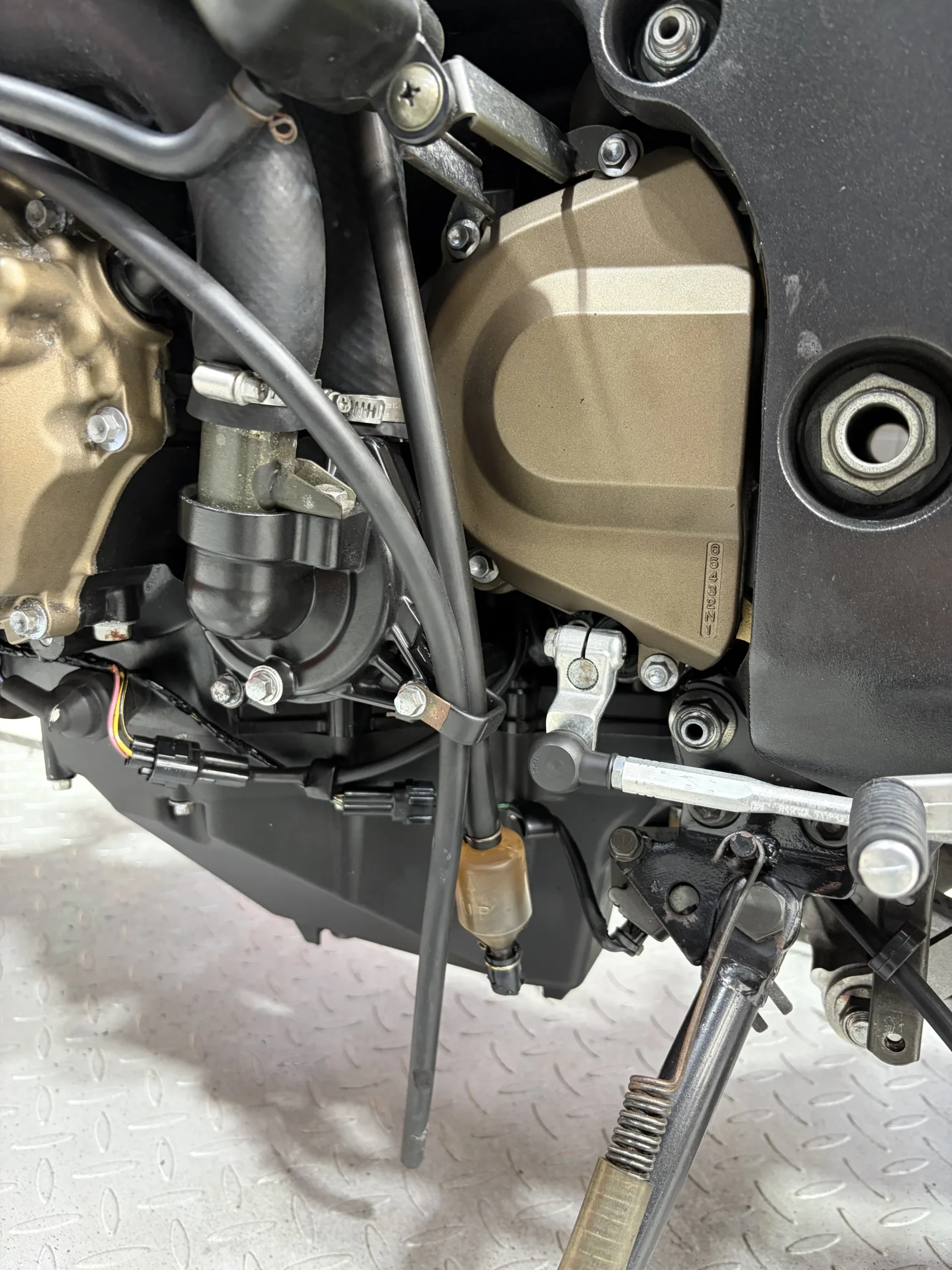
Anodising untouched

Road film across the peg, the guard and the pipe.

Machined faces back, and the gold wheel behind it.
The header area is the one that takes longest. Heat bakes oil mist onto the pipe and the castings around it until it behaves more like a coating than a deposit. It comes off — but at a narrow nozzle, close range, one pass at a time.
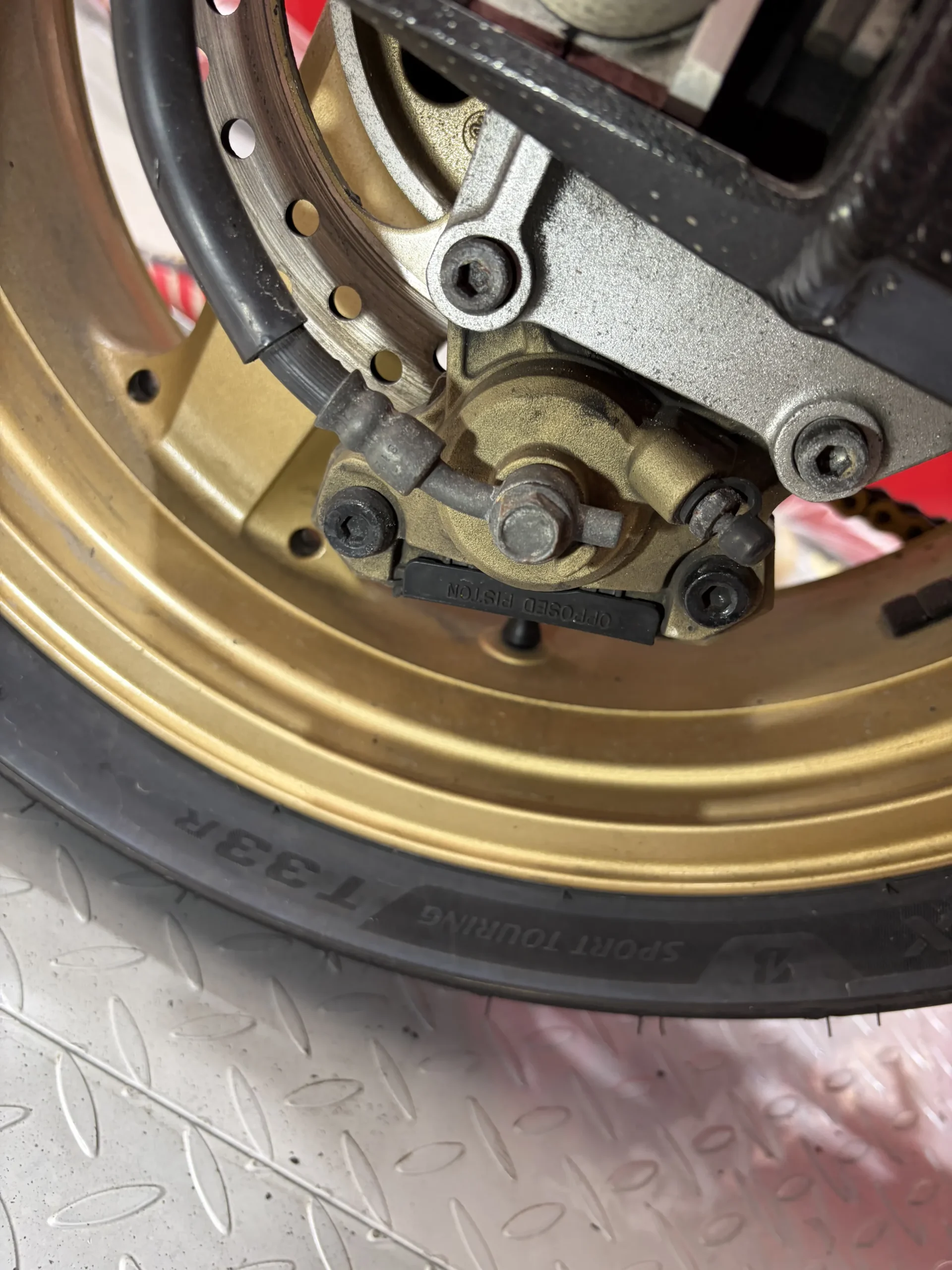
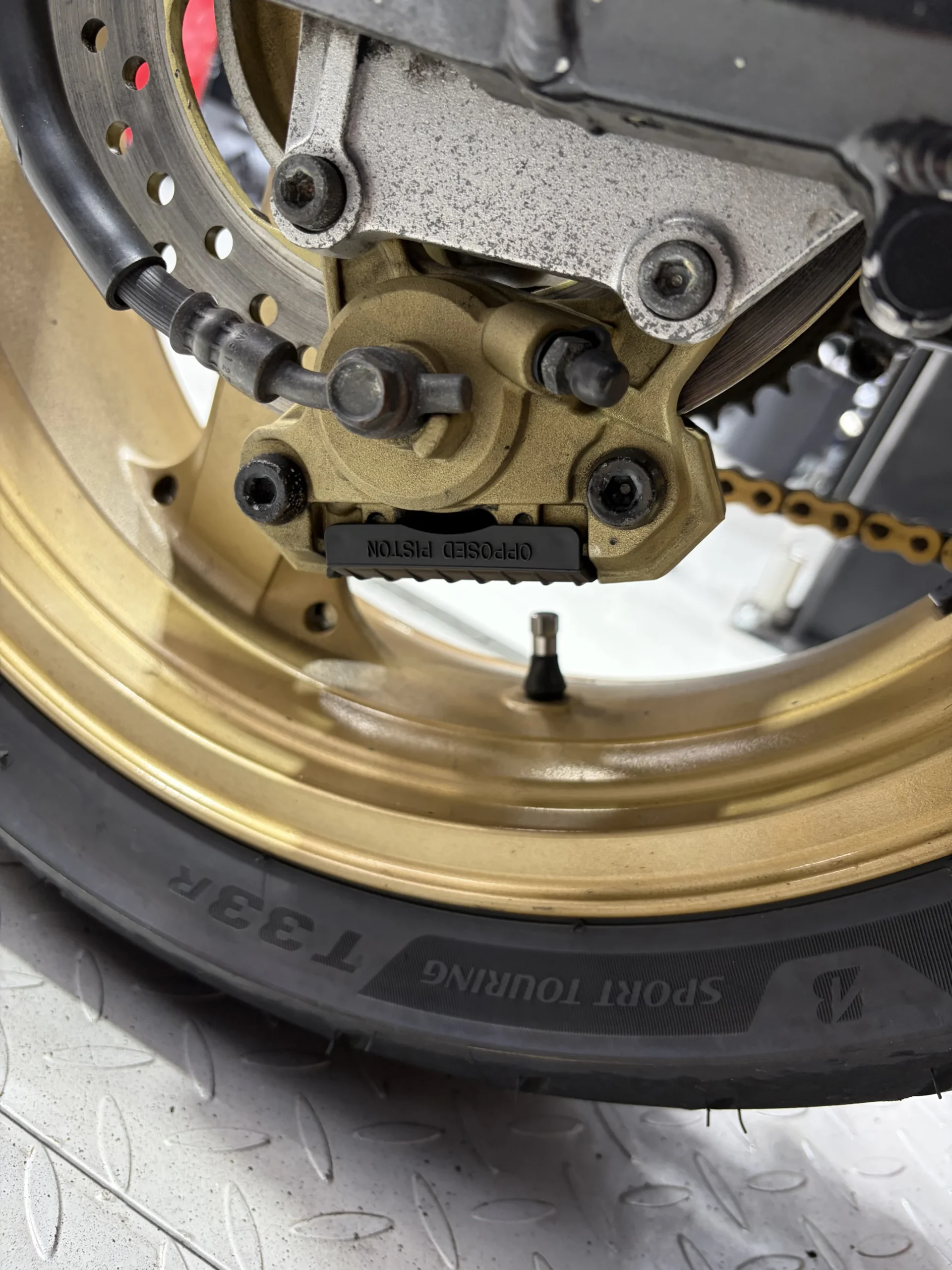
Seals and pads left alone

Brake dust bonded to the caliper and the wheel face.

You can read OPPOSED PISTON off the caliper again.
Every frame from the job, from the first survey pass to the bike back on the showroom floor. Filter to walk it through one condition at a time.
One survey pass filmed on the stand before we started, and two more with the lance running. Nothing sped up, nothing cut.
Day one — frame, rearsets and cases, untouched.
The lance on the rear linkage, film lifting as it goes.
The nozzle never touches the part. Dry ice does not scrub — it shocks the contaminant layer loose and it falls away. What you are watching is that boundary moving across the casting, and the CO2 coming off it as vapour.
No water, no slurry, no runoff. The extractor takes the dust and the CO2 goes back to being air.
Filmed on the stand — rear linkage and brake side.
Detail pass — rear master cylinder and hanger.
The open faces of the cases clear quickly. The hours go into everything a wide nozzle cannot reach square-on — behind the linkage, around the master cylinder, into the header collars and the back of the rearsets. That is the pass in this clip.
Full photo and video baseline. Connectors, the instrument loom and anything with an open seal get taped. Extraction positioned under the bike.
Wide nozzle, moderate pressure, working front to back across the cases and bodywork edges. Lifts the loose film and chain fling without loading the alloy with energy it does not need.
Narrow nozzle into case seams, around the linkage, the brake hardware and the header collars. This is where most of the hours go.
Sweep the floor, walk the bike with the owner, shoot the after set from the same marks as the before set. The bike leaves dry and ready to ride.
The bike photographs as well at arm’s length as it does on the showroom floor - cases, linkage, brakes and wheels back to their own finishes, with the loom, the seals and every decal untouched.
Tell us what the car is and what’s under it. We’ll tell you straight whether dry ice is the right call, what it’ll take, and what it won’t fix.