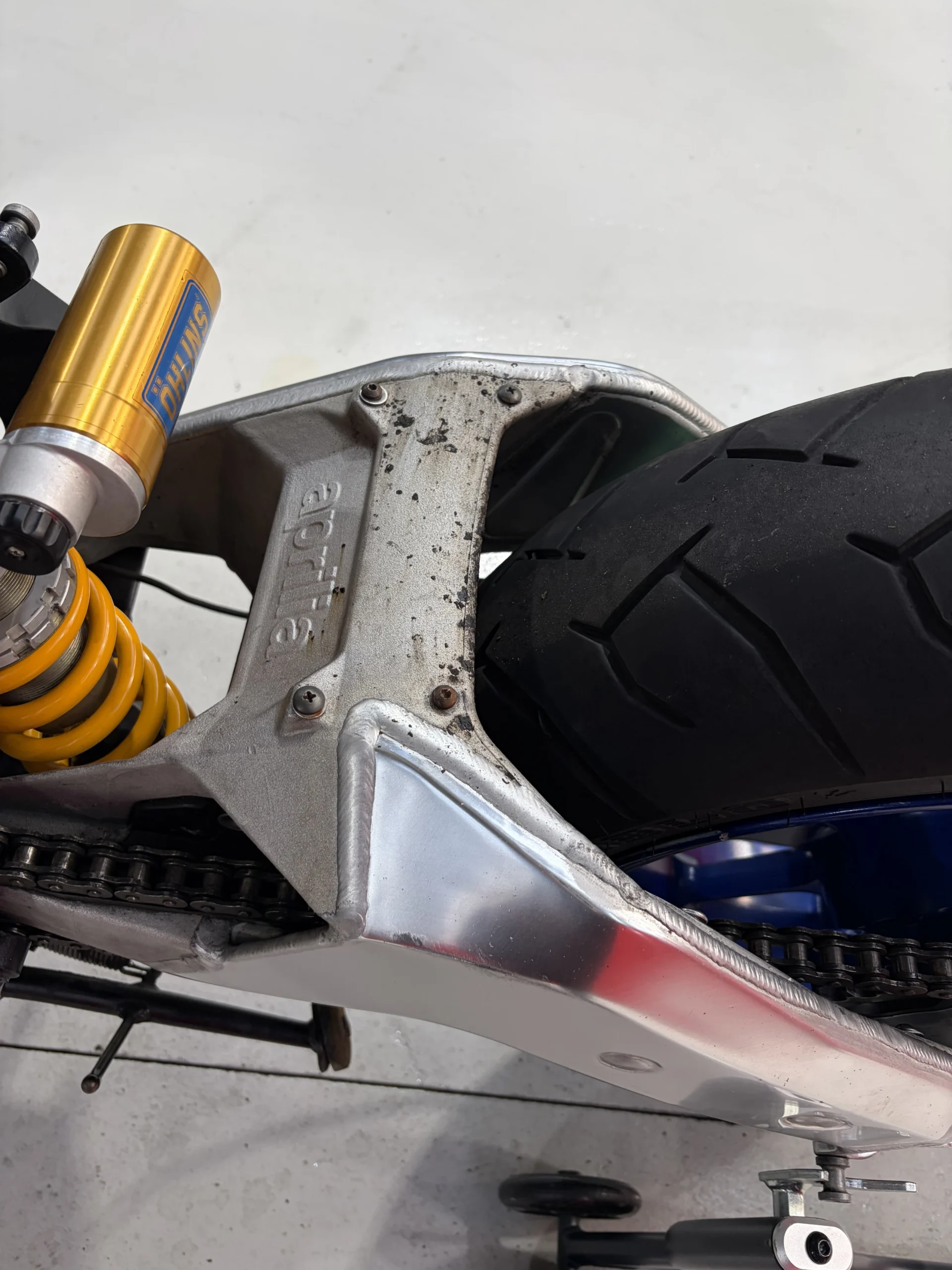
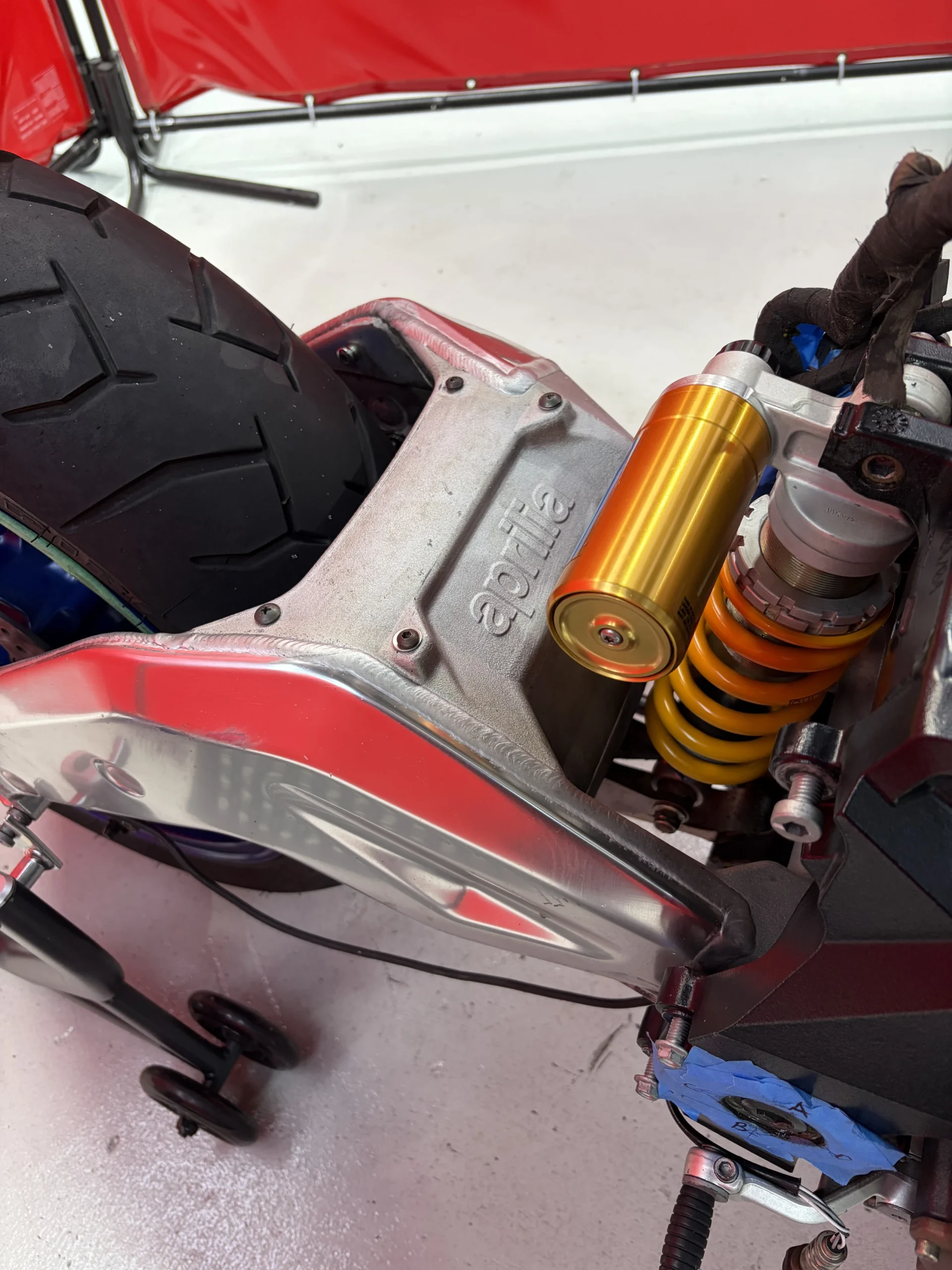
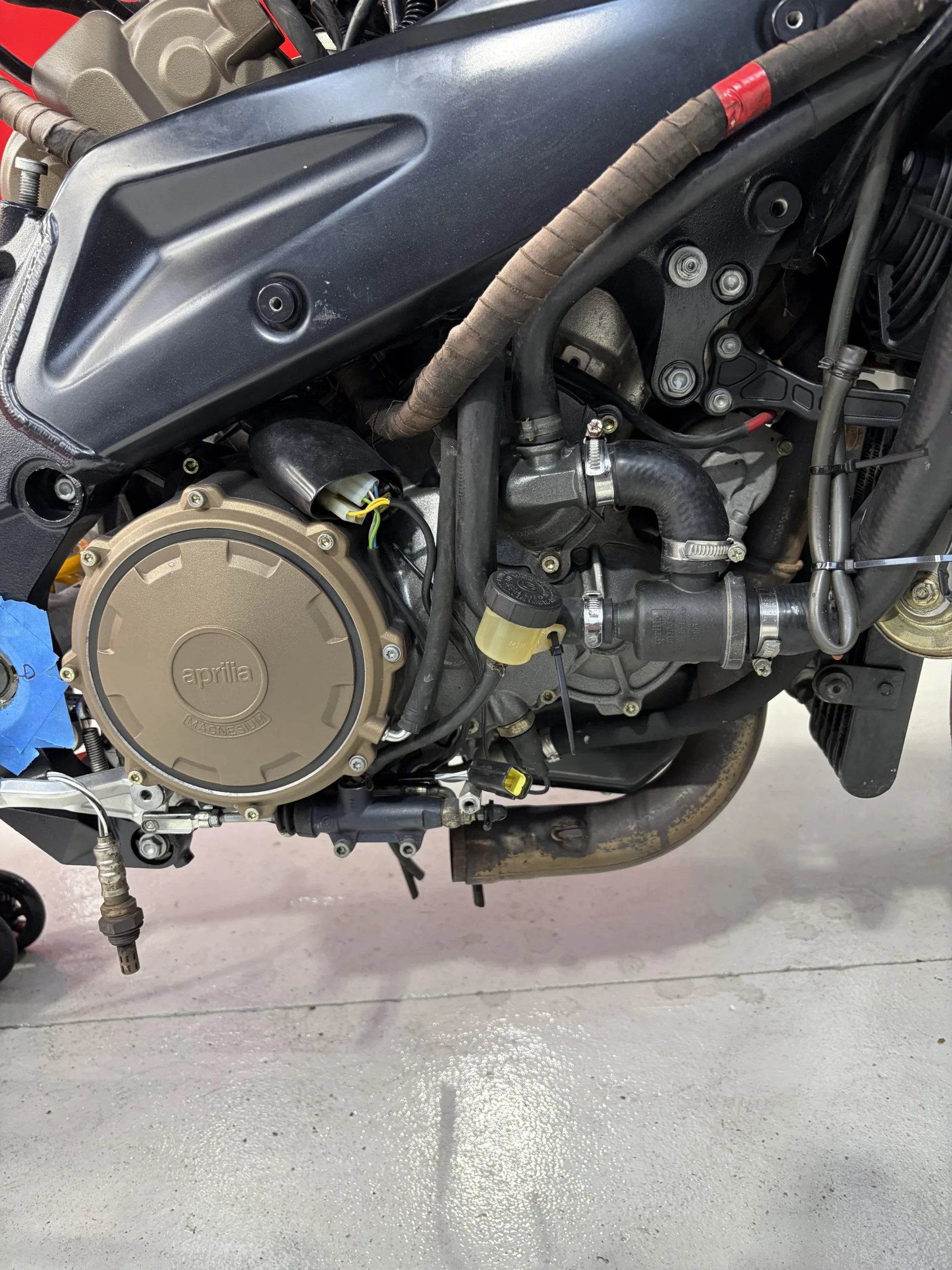
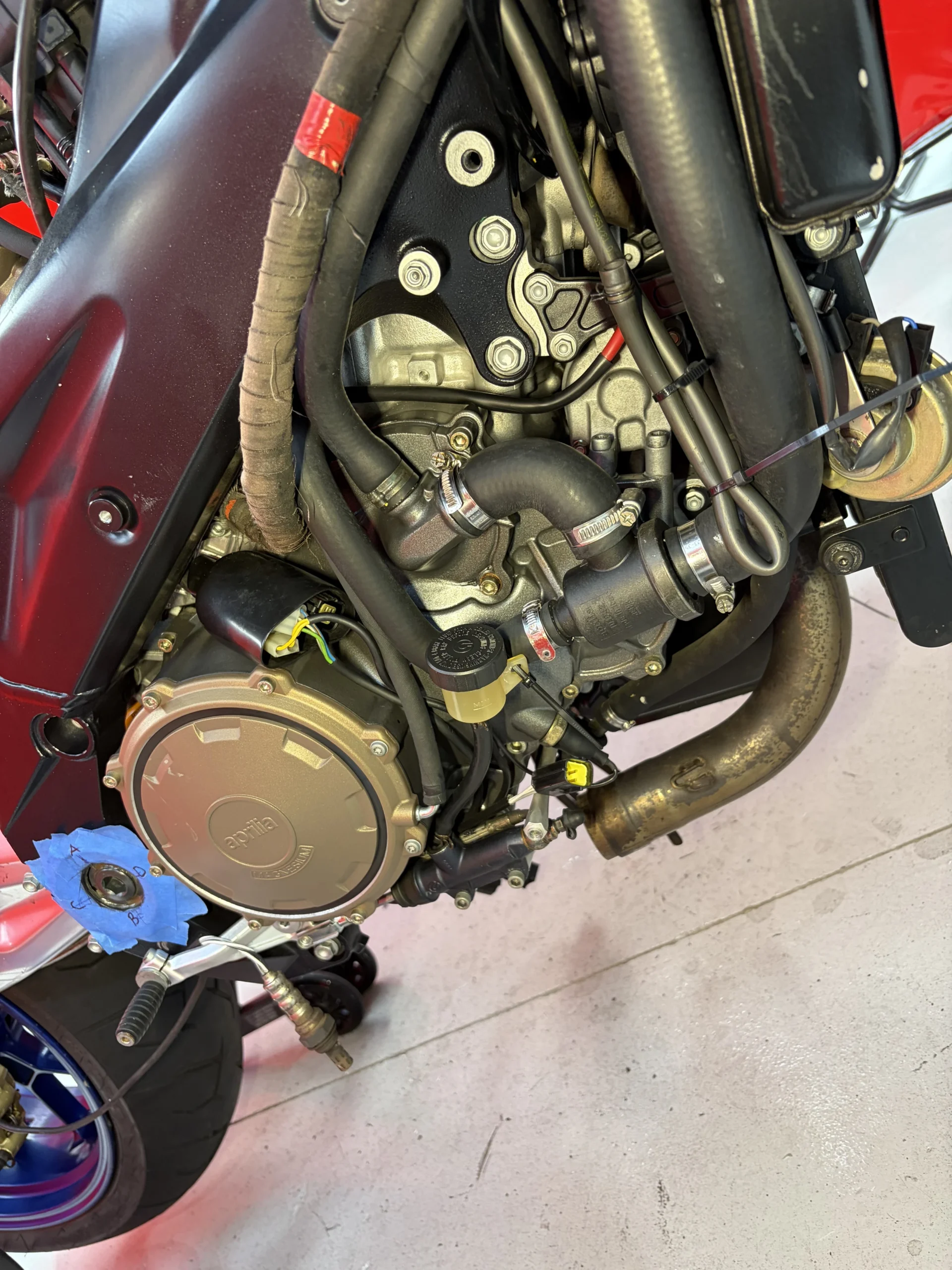
Twenty years of chain fling, road film and baked-on oil mist — lifted off a V-twin’s cases, frame and swingarm with the engine still in the bike. No water. No chemicals. Nothing dismantled.
2005 Aprilia RSV1000R
Standard bodywork, unrestored
Engine cases, frame rails, swingarm, headers and rear linkage
Chain fling, baked oil mist and road film over alloy and magnesium
Dry ice blasting · no water, no solvents, no media residue
Private owner, Auckland
Motorcycle workshop
Jun 2026
The bike came in on a stand, fully assembled, with the owner unwilling to pull the engine for what was essentially a cosmetic job. Twenty years of chain fling had built up across the swingarm and the back of the cases, and the usual oil mist had baked onto the headers and the front of the crankcase.
With the motor still in the frame the options narrow fast. Solvent and a brush move the surface grime and push the rest deeper into the case seams and the loom. Pressure washing drives water past bearing seals, connectors and into the airbox. Media blasting is out entirely — anything that does not sublimate ends up in the sump.
Dry ice sublimates. It hits the surface at −78 °C, shocks the contaminant layer loose, and turns straight back into gas. Connectors, the sprocket cover and the open cam cover get masked, extraction sits under the bike, and the only thing left on the floor is what came off it.
Lift chain fling, oil mist and road film off the cases, frame rails and swingarm with the engine in the bike.
Protect the anodising, the cast alloy finish and every factory decal and paint mark.
Keep water and solvent away from bearing seals, connectors and the loom.
Leave a finish the owner can inspect and photograph without a strip-down.

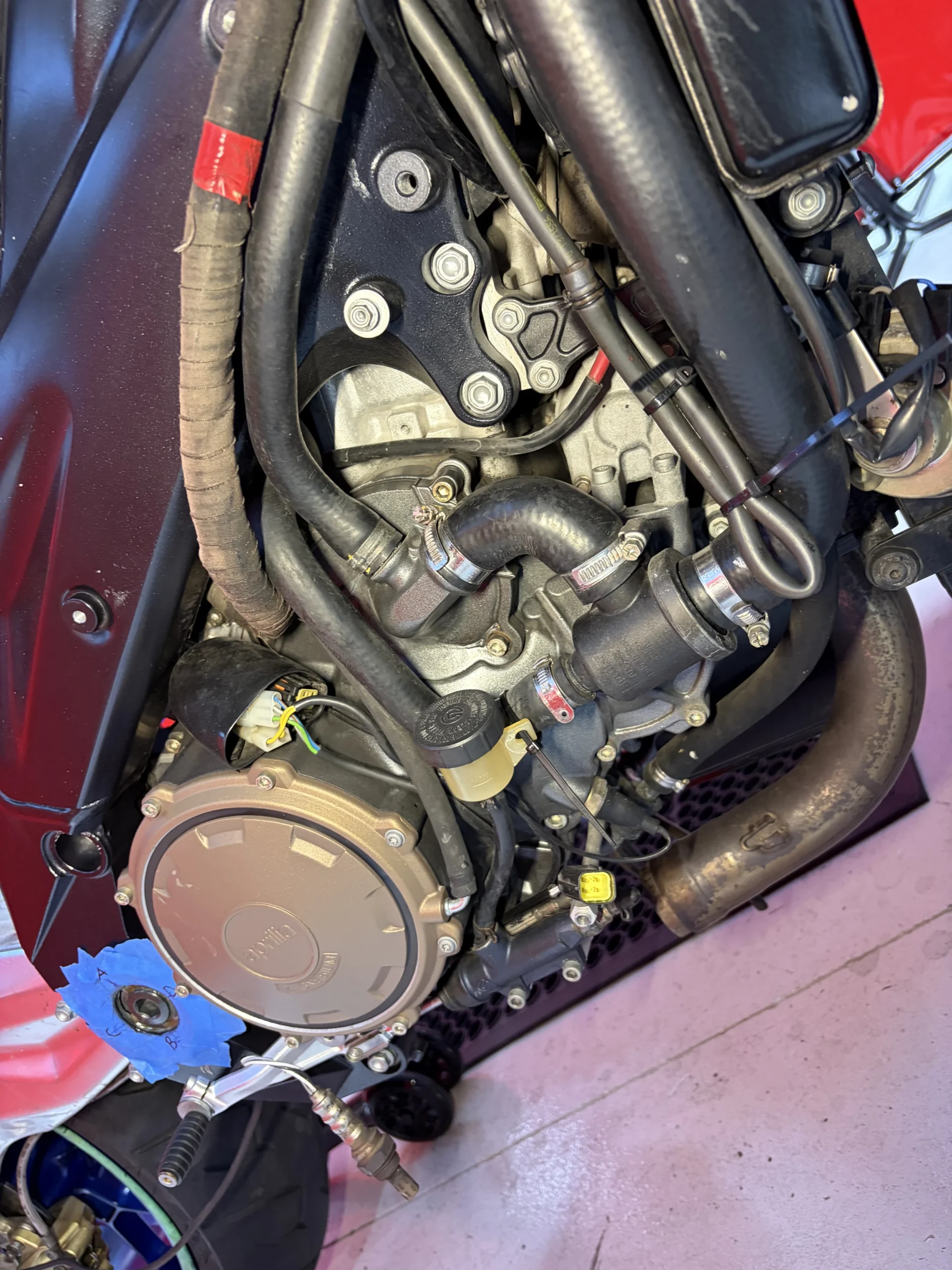
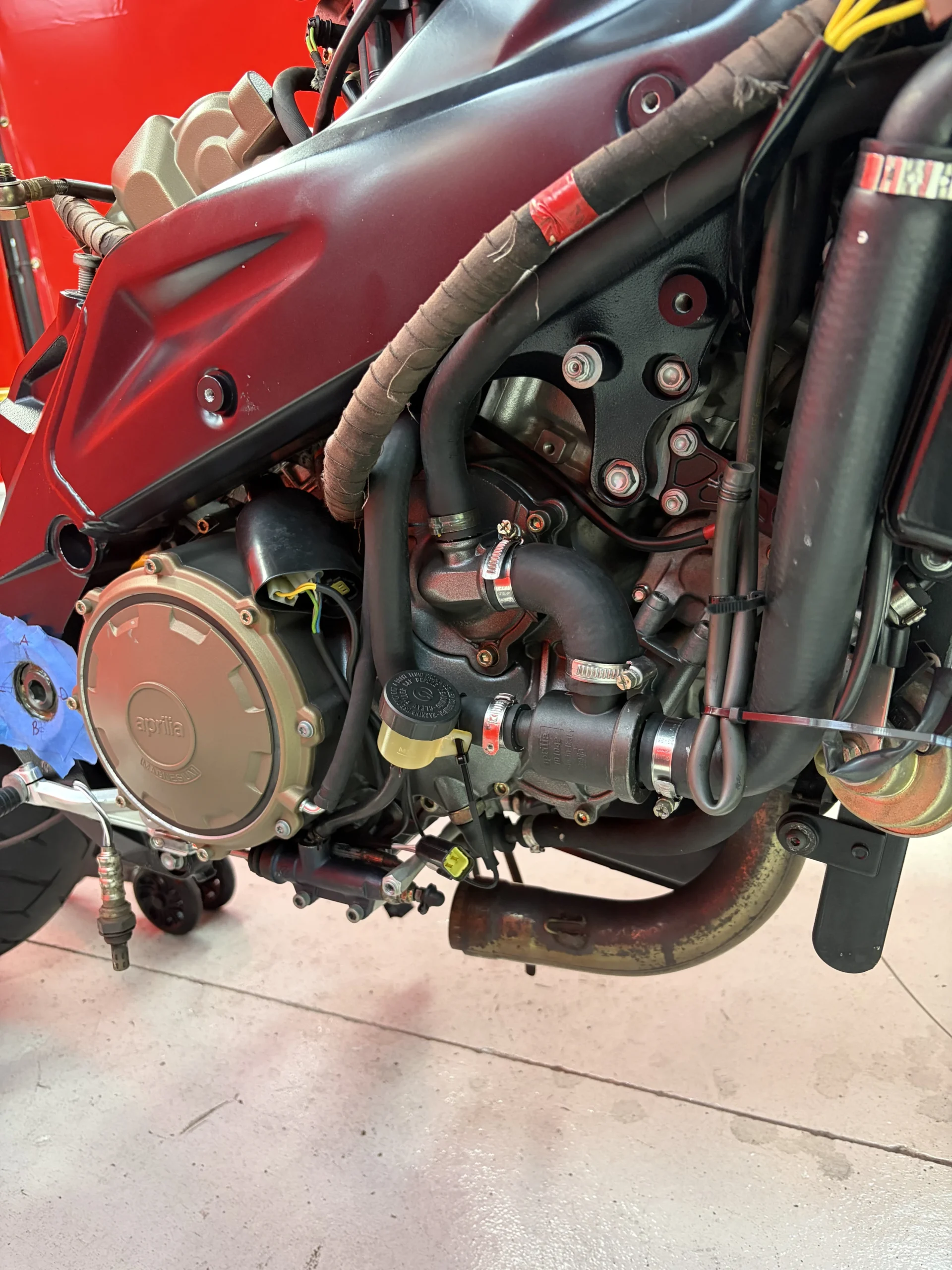
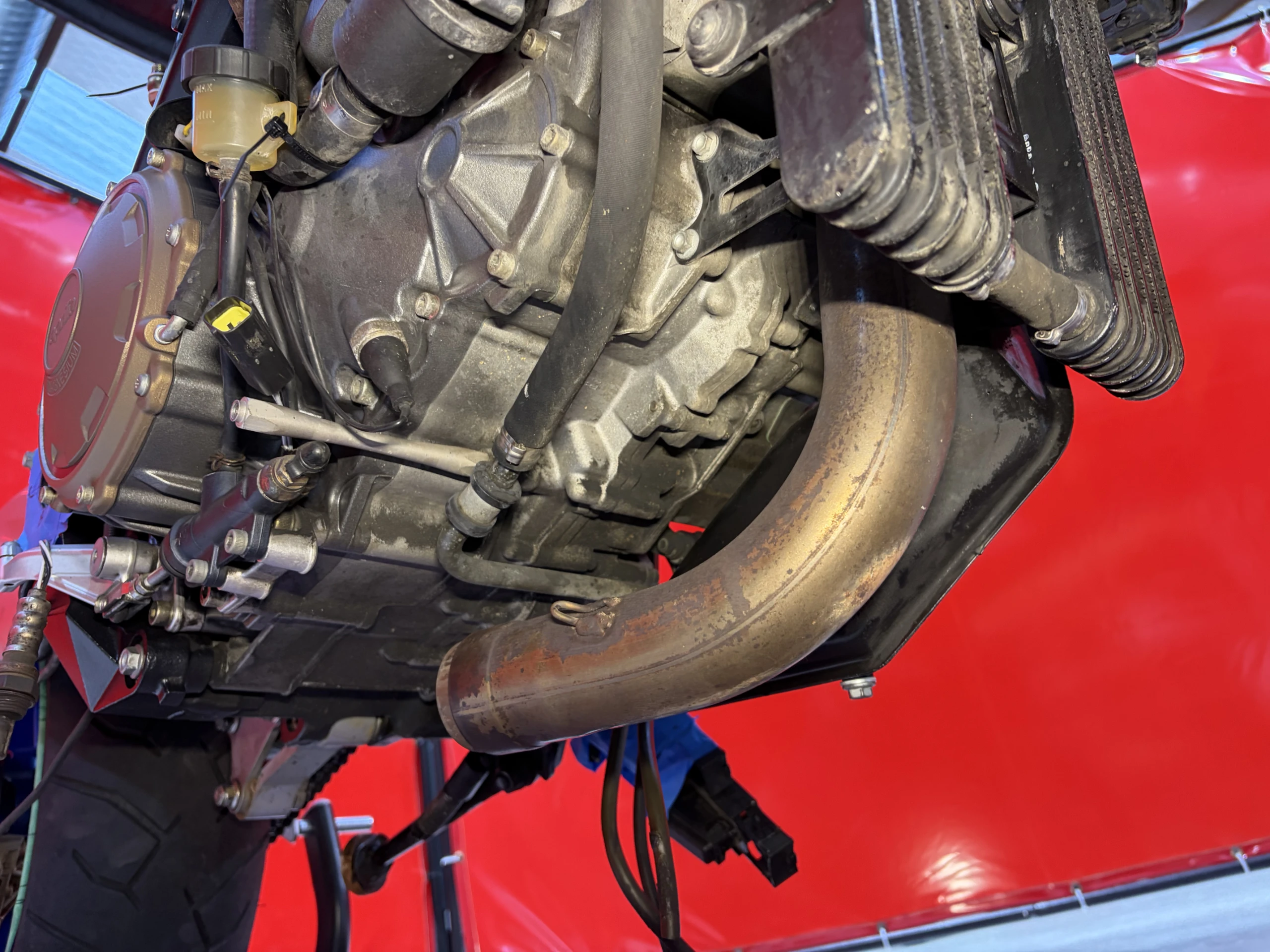
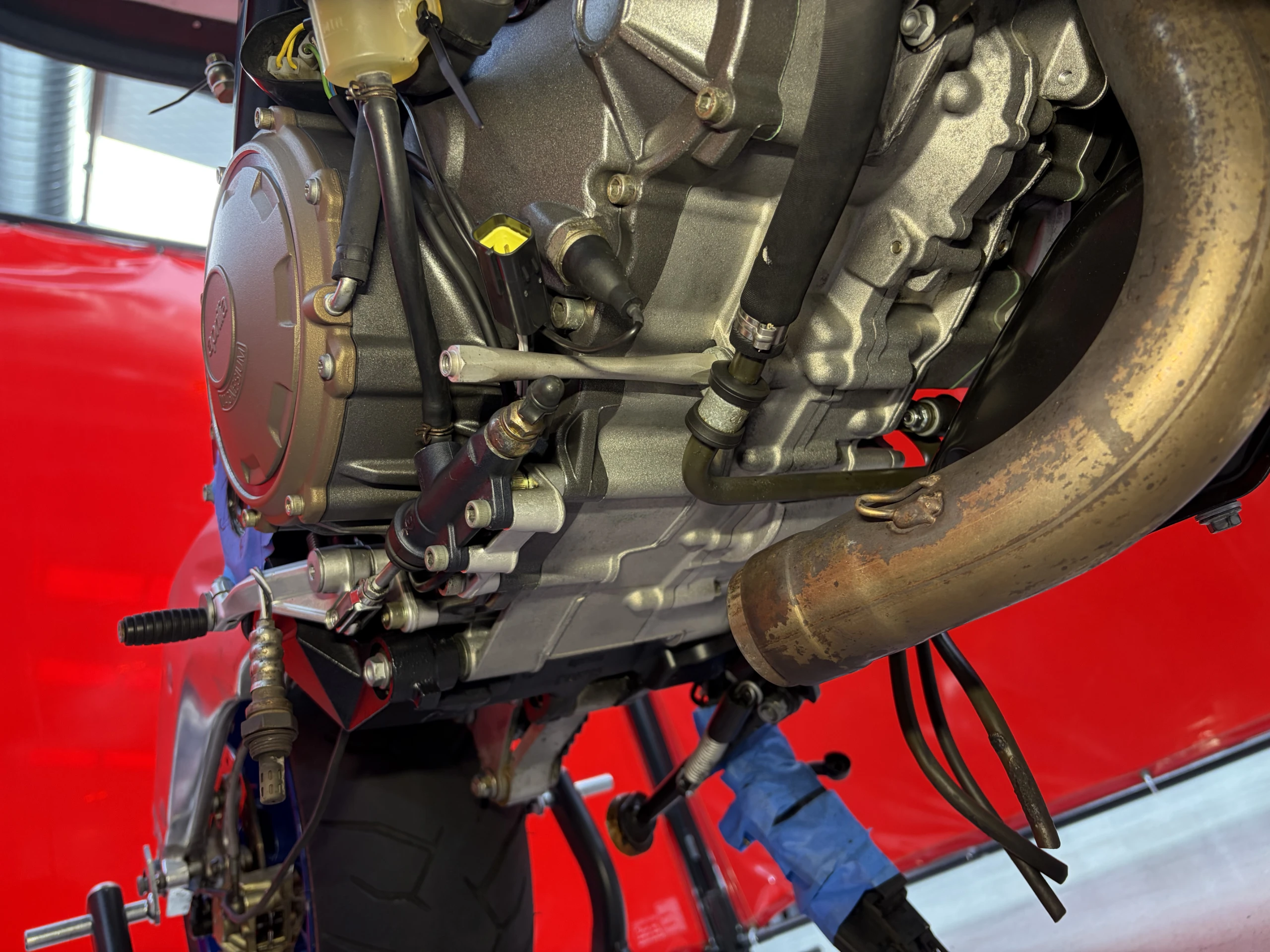
Same part of the bike, shot on the stand before the first pass and again at handover. Nothing retouched, nothing colour-graded, nothing polished afterwards.
Cleaned assembled · linkage untouched

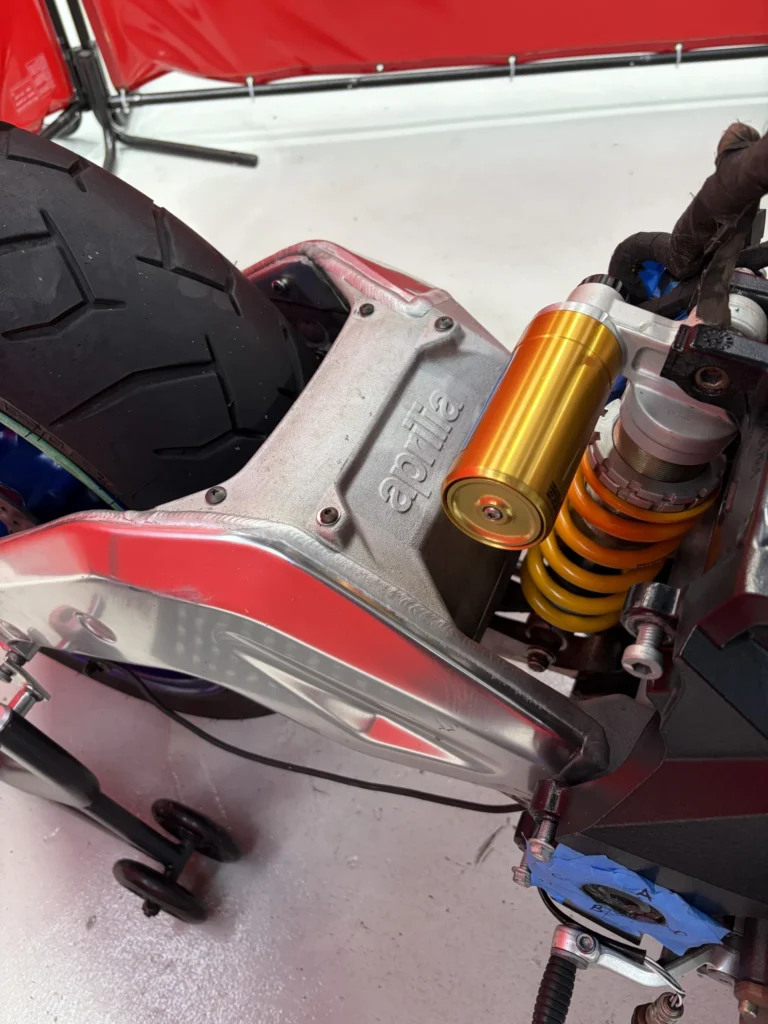
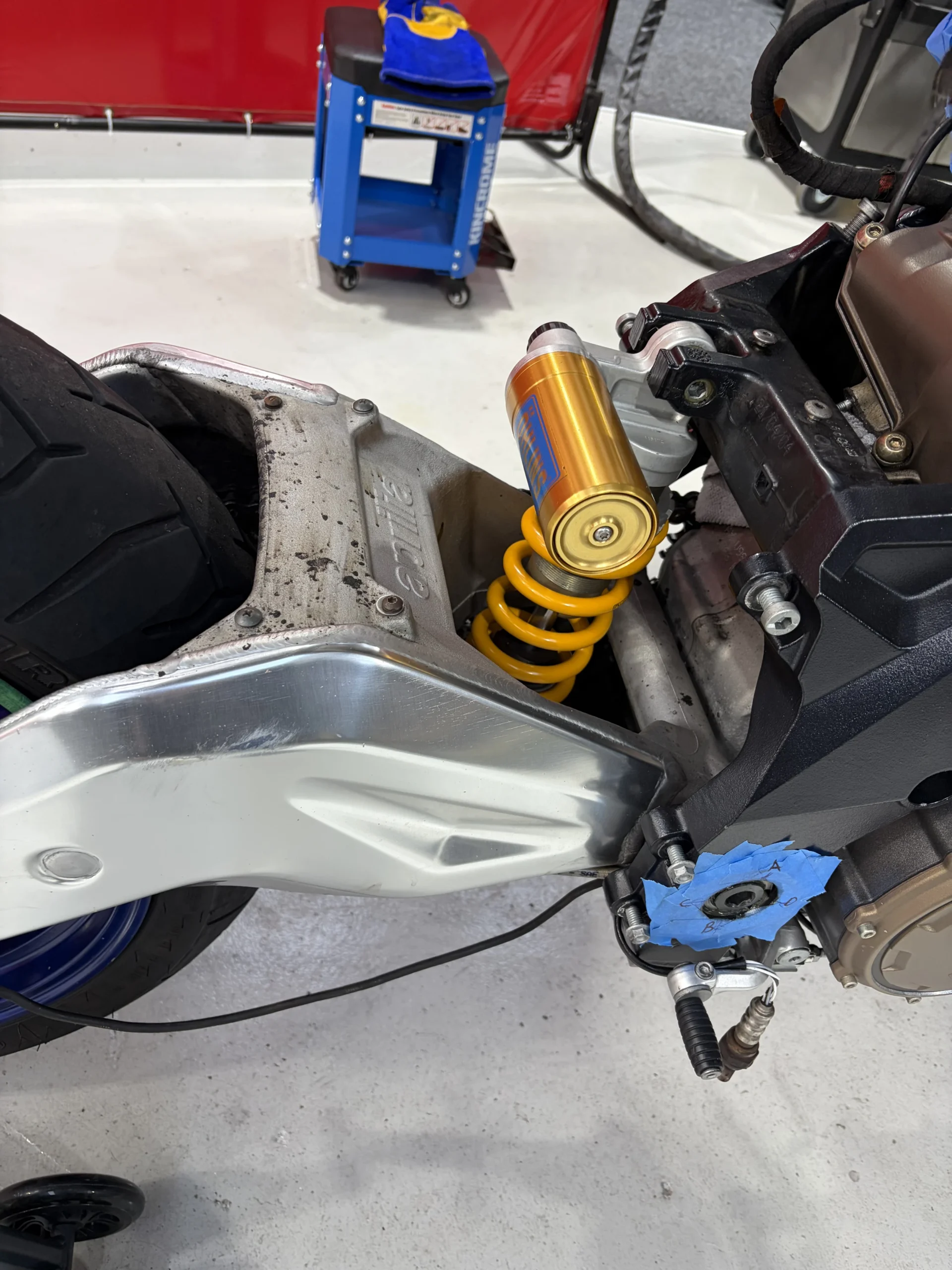
Chain fling across the arm and a shock body you could not read.

Cast finish and the aprilia lettering back, shock body bright.
Loom connected throughout

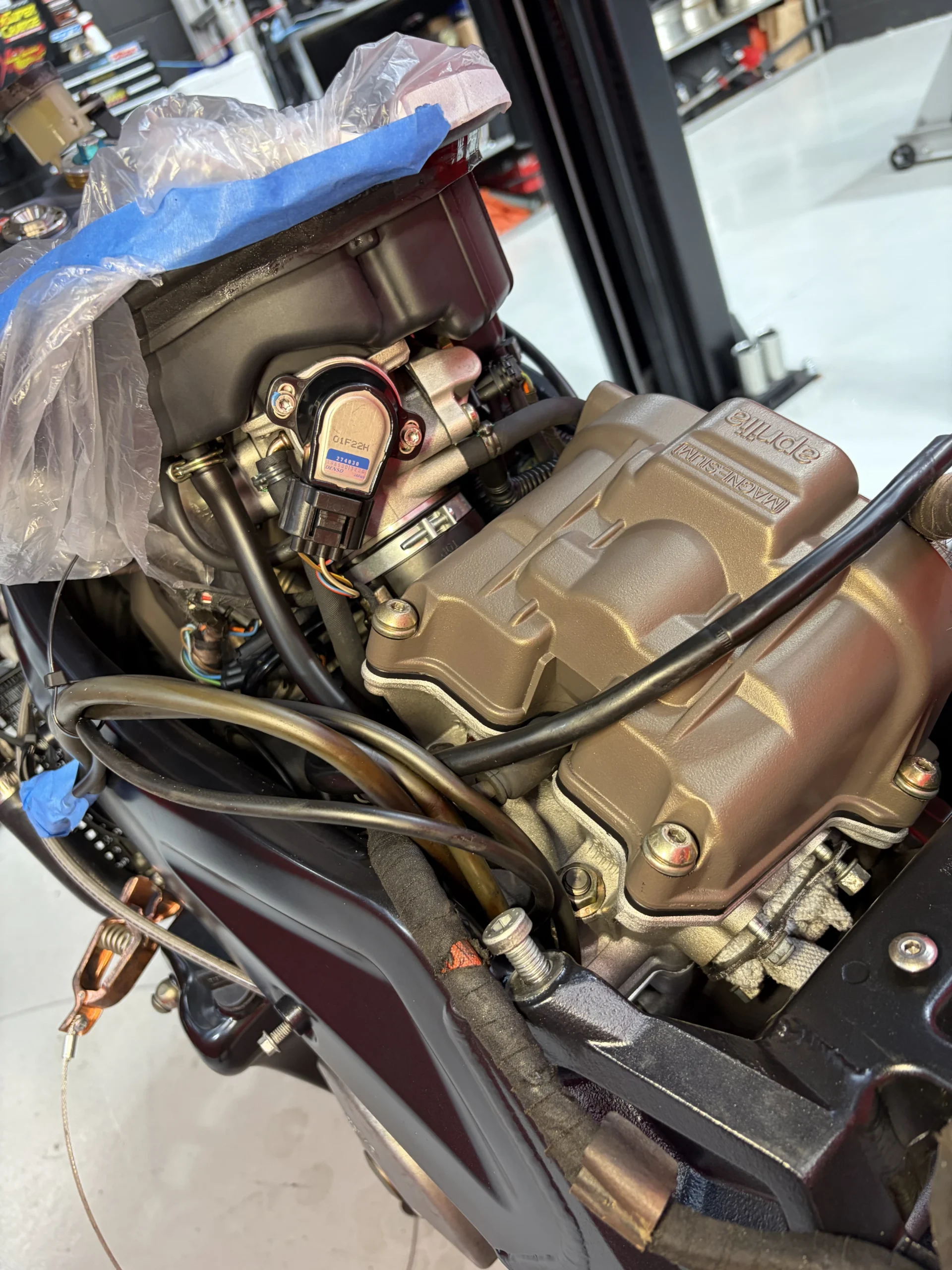
Oil mist over the cover, the hoses and the throttle bodies.

Cover casting sharp again, hardware and hose clamps readable.
Nothing removed to reach it

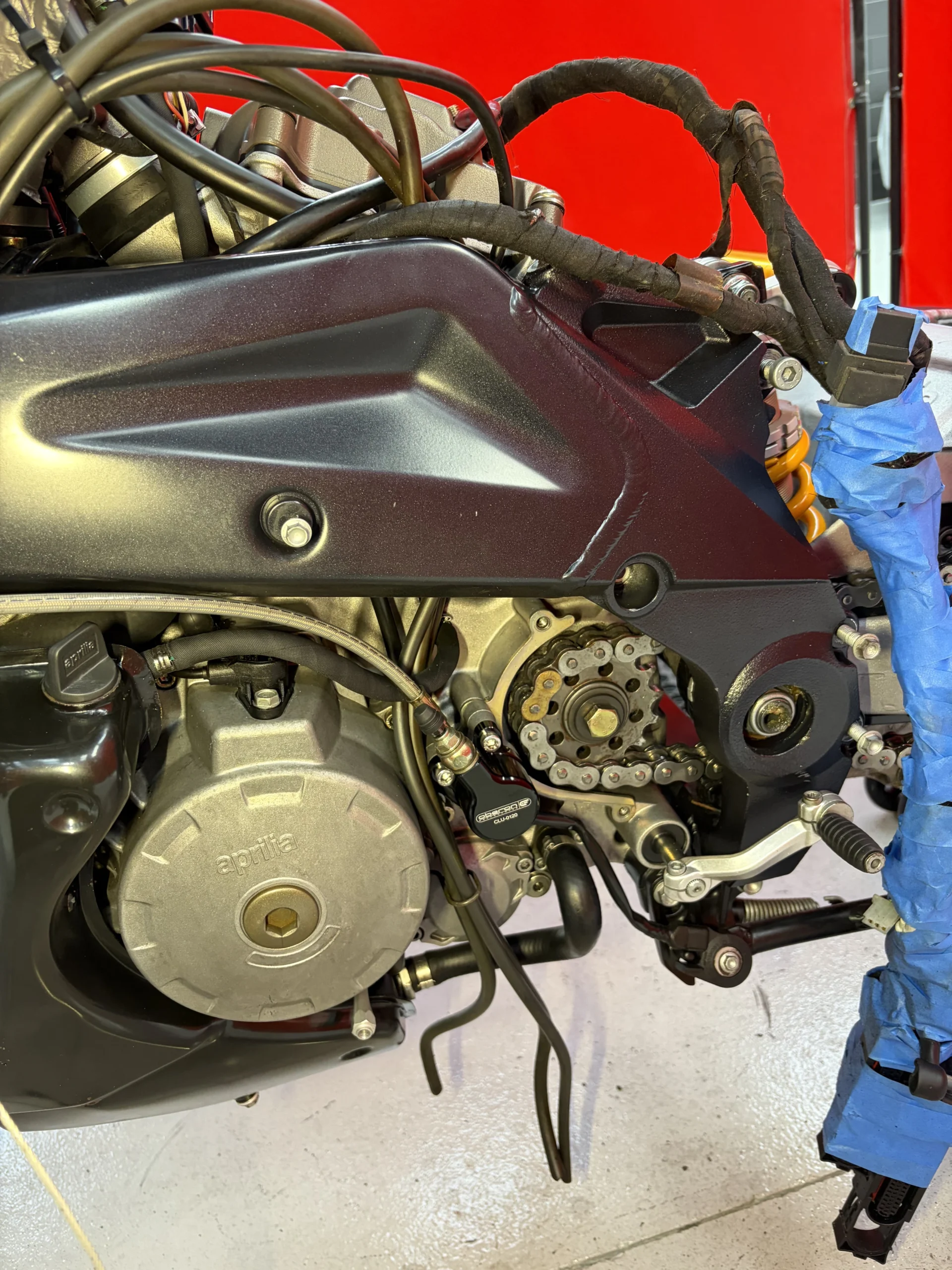
Everything the same dull grey-brown, wiring included.

Cases, headers and looms separating out again.
Everything with an opening got masked before the first pass — the blue tape and sheeting you can see in these frames is the sprocket cover, the open cam cover and the connectors. Dry ice is dry, but it is still energy: anything with a seal off gets covered.
One day on the stand

Baked-on film right across the underside of the motor.

Alloy back to its own colour; the headers just look like headers.
Every frame from the job. Filter to walk the bike through in one condition at a time, or open any shot full size.
The same walk around the motor, filmed on the stand before the first pass and again at handover. The footage is otherwise untouched.
Day one — cases, headers and swingarm, untouched.
Handover — same walk, same light.
The clutch cover. On day one it is the same flat brown as the header wrap beside it; by handover you can read the casting marks and the bolt heads.
Nothing in either clip is staged. Same stand, same lamp, same phone — the camera takes the same path both times, so the only variable is the dirt.
Both clips shot on the stand, right-hand side.
Full photo and video baseline. Connectors, the sprocket cover, breathers and anything with an open seal get taped and sheeted. Extraction positioned under the bike.
Wide nozzle, moderate pressure, working front to back. Lifts the loose road film and chain fling without loading the alloy with energy it does not need.
Narrow nozzle into the case seams, around the sprocket, the linkage and the header collars — the places a brush cannot reach with the motor in. This is where most of the hours go.
Sweep the floor, walk the bike with the owner, shoot the after set from the same marks as the before set. The bike leaves dry and ready to ride.
Tell us what the car is and what’s under it. We’ll tell you straight whether dry ice is the right call, what it’ll take, and what it won’t fix.